
Disclaimer: The views and opinions expressed in this article are solely those of the author. The mention of any products, services, or methods does not constitute an endorsement.
For a community that built its identity on precision, timing, and player-driven competition, input has always mattered. Long before built-in ranked systems and standardized peripherals, players in legacy arenas were already debating sensitivity curves, polling rates, and the feel of a keypress under pressure. Today, that conversation has evolved into something far more technical and, in many ways, more fragmented. Mechanical switches once dominated the landscape, but now magnetic and optical technologies are pushing the boundaries of what a keyboard can do.
This is not just a hardware debate. It is a philosophical one. It touches on fairness, skill expression, and how much technology should influence performance in competitive play.
Mechanical Switches: The Foundation of Competitive Input
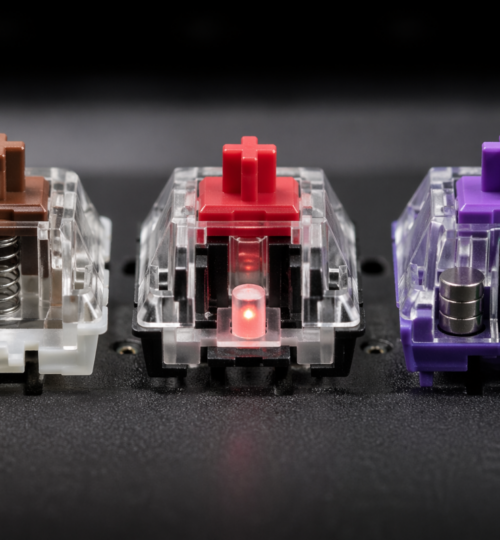
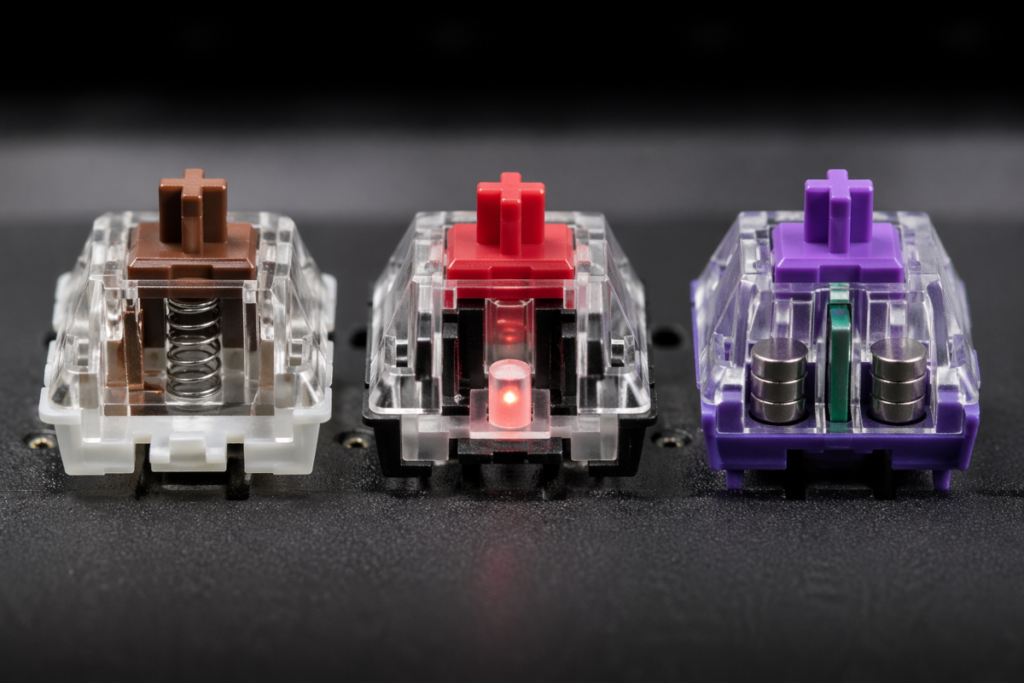
Mechanical switches remain the backbone of PC gaming keyboards. Their design is straightforward. Each keypress physically actuates a switch that closes an electrical circuit. The result is a tactile, consistent, and well-understood experience that has been refined over decades.
The strength of mechanical switches lies in their predictability. Whether a player prefers linear, tactile, or clicky feedback, the actuation point is fixed and reliable. This consistency is why mechanical keyboards became the standard during the rise of competitive PC gaming in the early 2000s. Players could build muscle memory and trust that every input would behave the same way, match after match.
There is also a cultural element. Mechanical keyboards are tied to the identity of PC gaming itself. From LAN tournaments to early ladder systems, they were part of the environment where competitive habits were formed.
However, mechanical switches are not without limitations. Their actuation distance is fixed, typically around 2 mm, with a total travel of about 4 mm. While this is comfortable for general use, it introduces a ceiling on how fast inputs can be registered. Debounce delay, which prevents accidental double inputs, can also add a small amount of latency.
For most players, these limitations are negligible. But at the highest levels of play, where milliseconds matter, they become part of a larger conversation about optimization.
Optical Switches: Light-Based Precision
Optical switches represent the first major departure from traditional mechanical design. Instead of relying on physical contact to register a keypress, they use a beam of light. When a key is pressed, it interrupts or completes this beam, triggering the input.
This design eliminates the need for electrical contact, which in turn removes debounce delay. The result is faster actuation and potentially lower latency. For competitive players, this is an attractive proposition.
Another advantage is durability. Because there is less physical wear on contact points, optical switches often boast longer lifespans. This makes them appealing not just for performance, but for longevity.
In practice, the difference in speed between optical and mechanical switches is measurable but not always perceptible. For many players, the feel of the switch still matters more than the raw speed. Optical switches can sometimes feel less defined compared to traditional mechanical options, depending on the implementation.
There is also the question of standardization. Mechanical switches benefit from a vast ecosystem of manufacturers and customization options. Optical switches are more proprietary, often tied to specific brands and designs. This limits user choice and can make it harder for players to fine-tune their setup.
Still, optical technology represents a clear step forward in reducing input delay. It challenges the idea that keyboards must rely on physical contact, opening the door for more innovation.
Magnetic Switches: Analog Control and Adjustable Actuation
Magnetic switches, often referred to as Hall effect switches, push the concept even further. Instead of using contact or light, they rely on magnetic fields to detect keypresses. A sensor measures the position of a magnet within the switch, allowing for precise tracking of how far a key has been pressed.
This is where things change dramatically.
Unlike mechanical and most optical switches, magnetic switches offer adjustable actuation points. Players can set how far a key needs to travel before it registers. Some keyboards even allow dynamic actuation, where the same key can trigger different actions depending on how deeply it is pressed.
This introduces analog-like control to a traditionally digital input device. For movement in games, this can mean smoother transitions and more nuanced control. In theory, it brings keyboard input closer to the flexibility of a controller while maintaining the speed and precision of a mouse and keyboard setup.
Magnetic switches also enable features like rapid trigger. This allows a key to reset its actuation point instantly as it is released, enabling faster repeated inputs. For games that rely on quick strafing or rapid tapping, this can provide a tangible advantage.
However, these benefits come with trade-offs. The increased complexity can lead to a steeper learning curve. Players must adapt not just to a new feel, but to a new way of thinking about input. Muscle memory built over years on mechanical switches may not translate directly.
There is also an ongoing debate about fairness. Adjustable actuation and rapid trigger features blur the line between skill and hardware advantage. In competitive environments, this raises questions about standardization and whether certain technologies should be restricted.
Performance in Practice: Does It Actually Matter?
At a glance, the differences between these switch types can seem dramatic. Faster actuation, lower latency, adjustable input. On paper, magnetic and optical switches appear to offer clear advantages.
In reality, the impact is more nuanced.
For the majority of players, the difference between a high-quality mechanical keyboard and a modern optical or magnetic one is marginal. Reaction time, game sense, and positioning still dominate outcomes. Hardware can enhance performance, but it rarely replaces skill.
At the highest levels, however, small advantages can compound. A slightly faster input or a more responsive reset can make a difference in tightly contested scenarios. This is especially true in genres like competitive shooters, where movement and timing are critical.
Even then, preference plays a major role. Some professional players continue to use mechanical keyboards because they trust the feel and consistency. Others adopt newer technologies to gain any possible edge.
The key takeaway is that there is no universal best option. Each technology offers different strengths, and the right choice depends on the player’s priorities.
The Feel Factor: Why Preference Still Wins
Despite all the technical advancements, one factor remains dominant in the switch debate. Feel.
The tactile experience of a keyboard is deeply personal. It affects comfort, fatigue, and confidence. A switch that feels right can improve consistency simply because the player is more comfortable using it.
Mechanical switches excel here because of their variety. Players can choose from a wide range of options, each with distinct characteristics. This level of customization is harder to match with optical and magnetic designs, which are often more limited in their offerings.
Magnetic switches are beginning to close this gap, with more manufacturers introducing different spring weights and tuning options. Optical switches are also evolving, but they still lag behind in terms of ecosystem depth.
In the end, performance metrics matter, but they do not override personal preference. A player who feels confident with their setup is more likely to perform well, regardless of the underlying technology.
Competitive Integrity and the Future of Input
As new switch technologies gain traction, the conversation around competitive integrity becomes more important. Features like adjustable actuation and rapid trigger introduce variables that did not exist in earlier eras of PC gaming.
For a community built on player-driven competition, this raises important questions. Should all players have access to the same hardware capabilities? Should certain features be standardized or restricted in competitive play?
There is no clear consensus yet. Some argue that innovation should be embraced, and that players should be free to use the best tools available. Others believe that too much variability can undermine the fairness of competition.
This debate mirrors earlier discussions around high refresh rate monitors, advanced mice sensors, and even internet latency. Each time, the community has had to adapt and redefine what constitutes a level playing field.
It is likely that switch technology will follow a similar path. As adoption increases, standards will emerge, either organically or through tournament regulations.
Choosing the Right Switch for Your Playstyle
For players returning to competitive environments or building a new setup, the choice between mechanical, optical, and magnetic switches can feel overwhelming. The best approach is to focus on how you play.
If consistency and familiarity are your priorities, mechanical switches remain a safe and proven choice. They offer reliability and a wide range of customization options.
If you are looking for lower latency and improved durability, optical switches provide a modern alternative with measurable performance benefits.
If you want to experiment with cutting-edge features and are willing to adapt, magnetic switches offer the most flexibility and potential for optimization.
Each option has its place. None of them guarantees better performance on its own.
The Return of the Input Debate
For those who remember the early days of competitive PC gaming, this debate feels familiar. It is another chapter in the ongoing evolution of how players interact with their games.
Back then, it was about finding the right mouse, the right sensitivity, the right setup to gain an edge. Today, the conversation has shifted to switch technology, but the core idea remains the same.
Players are always searching for ways to refine their input, to make their actions more precise and more consistent. The tools may change, but the goal does not.
Magnetic, optical, and mechanical switches each represent a different approach to that goal. They reflect not just technological progress, but the enduring drive of competitive players to push the limits of what is possible.
In the end, the debate is not just about which switch is better. It is about what kind of player you want to be, and how you choose to interact with the game in front of you.