
Disclaimer: The views and opinions expressed in this article are solely those of the author. The mention of any products, services, or methods does not constitute an endorsement.
For most of the history of PC gaming, Linux existed on the margins. Enthusiasts loved it for its openness, privacy, and control, but gamers rarely treated it as a serious platform for playing modern titles. The reason was simple. Compatibility barriers, missing drivers, and a long list of multiplayer games that refused to run due to anti-cheat systems made Linux feel like an experiment rather than a real gaming environment.
Over the past few years, that reality has started to change in meaningful ways. Linux gaming is no longer just a curiosity for hobbyists or programmers. It is becoming a legitimate option for players who want more control over their machines and fewer frustrations from the modern Windows ecosystem. One of the biggest barriers that kept Linux from reaching mainstream gamers has begun to crack. Anti-cheat compatibility, long considered the final locked door, is slowly opening.
At the same time, many players are growing increasingly dissatisfied with the direction of Windows itself. The combination of aggressive upgrade pushes, built-in advertising, background services, and the integration of AI tools like Copilot has created a new conversation inside the PC gaming community. For some users, Linux is no longer just an alternative. It is becoming a way to reclaim control over their computers.
The Historical Barrier: Anti-Cheat Systems
To understand why Linux gaming struggled for so long, it helps to understand how modern multiplayer games protect themselves from cheating.
Competitive games rely on anti-cheat software to detect and block players who modify game files, run memory scanners, or use automation tools to gain unfair advantages. These systems often operate at very low levels inside the operating system. Some run in the kernel itself, meaning they interact directly with the core of the OS.
Because Linux works very differently from Windows, many of these anti-cheat solutions simply refused to run on Linux machines. Developers built their systems around Windows drivers and security models. From their perspective, supporting Linux required additional engineering work and introduced unknown risks.
As a result, many popular multiplayer games locked Linux users out entirely. Even if the game itself could run through compatibility layers, the anti-cheat system would block it. For players who loved competitive shooters, esports titles, or large online games, that was a deal breaker.
Proton Changed the Conversation
The turning point for Linux gaming began when Valve introduced Proton, a compatibility layer built on top of the Wine project.
Wine had existed for years and allowed some Windows programs to run on Linux, but compatibility was inconsistent and often required technical tweaking. Proton changed that experience by integrating compatibility improvements directly into Steam.
With Proton enabled, many Windows games could run on Linux with a single click. Valve invested heavily in graphics translation technologies such as DXVK and VKD3D. These tools convert DirectX calls into Vulkan commands that Linux graphics drivers can understand. Suddenly thousands of Windows games became playable on Linux.
Performance also surprised many players. In some cases, Linux systems running Proton performed nearly the same as Windows. In a few cases, performance even improved due to Vulkan efficiency. But even with Proton solving many compatibility problems, the anti-cheat barrier remained.
Anti-Cheat Developers Begin to Adapt
The real shift started when major anti-cheat developers began adding support for Proton and Linux environments.
Two of the most widely used systems in modern multiplayer games are Easy Anti-Cheat and BattlEye. These tools protect many high-profile games across multiple genres. Historically they blocked Linux entirely. However, after the release of the Steam Deck, the landscape changed.
Valve needed a solution that allowed multiplayer games to run on its handheld device, which uses a Linux-based operating system called SteamOS. Supporting the Steam Deck meant addressing anti-cheat compatibility.
Both Easy Anti-Cheat and BattlEye eventually introduced support for Proton environments. This did not automatically enable every game. Developers still needed to activate compatibility in their own titles. But the technical pathway was finally available.
This moment was significant because it removed the biggest structural barrier that had kept Linux from entering the competitive gaming space. Once developers could enable support with minimal work, more games began to experiment with it.
The Steam Deck Effect
The success of the Steam Deck has also helped accelerate Linux gaming acceptance. When Valve released the handheld system, many players expected it to serve as a niche device for enthusiasts. Instead it became one of the most influential hardware launches in the PC gaming space in years.
The Steam Deck demonstrated that Linux could power a modern gaming platform without forcing players to become system administrators. Games launched directly from the Steam interface. Updates happened automatically. Controller support worked out of the box.
More importantly, the device showed that thousands of Windows titles could run on Linux without users needing to understand how compatibility layers worked.
For many players, the Steam Deck became their first experience with Linux gaming. That exposure helped normalize the idea that Linux was no longer a fragile experiment.
Growing Frustration with Windows
While Linux gaming has improved dramatically, another trend has quietly pushed players to reconsider their operating system choices. Many long-time Windows users are growing frustrated with the direction Microsoft has taken with its desktop platform.
Windows once dominated PC gaming largely because it stayed out of the way. Install the OS, install drivers, install your games, and play. Over time that experience has changed.
Modern Windows installations now include advertising placements in the interface, preinstalled applications that many users never asked for, and an increasing number of background services tied to cloud integration. Updates can appear at inconvenient times and sometimes change system behavior in ways users did not expect.
The push toward Windows 11 has intensified these concerns. Hardware requirements such as TPM support and newer CPU models have left some older gaming systems unable to upgrade even if they still perform well.
For players who built their own PCs and value long hardware lifespans, this requirement has created frustration.
The Copilot Factor
Another recent change shaping the conversation is the integration of AI tools into the operating system itself. Microsoft has been aggressively promoting Copilot features inside Windows. These tools promise productivity enhancements, automation, and AI assistance across different applications.
Some users welcome these capabilities. Others view them as unnecessary clutter. Gamers often prefer operating systems that remain lightweight and predictable. The idea of AI assistants running in the background raises questions about resource usage, privacy, and system complexity.
For players who treat their PCs primarily as gaming machines, these additions can feel disconnected from their needs. This perception has contributed to a broader narrative that Windows is becoming bloated compared to the leaner environments that Linux distributions can provide.
Linux Distributions Built for Gamers
As interest grows, several Linux distributions have begun focusing specifically on gaming. Projects such as Nobara, Pop!_OS, and Garuda Linux offer user-friendly environments with gaming drivers, Proton tools, and performance tweaks already configured.
For a new Linux gamer, the installation experience is far simpler than it was a decade ago. Graphics drivers for AMD and NVIDIA hardware have also improved significantly. Vulkan support is now mature, and many distributions detect and configure drivers automatically during installation.
Combined with Proton and Steam integration, these distributions make the transition from Windows far less intimidating.
Remaining Challenges
Despite the progress, Linux gaming is not perfect. Some multiplayer games still refuse to enable anti-cheat compatibility. Others run but require manual configuration or troubleshooting.
Game launchers outside of Steam can also introduce friction. Platforms such as Ubisoft Connect or Epic Games Launcher sometimes require additional compatibility steps. Driver support for certain hardware configurations can still create problems, especially for brand new GPUs.
These issues mean Linux has not yet replaced Windows as the default PC gaming platform. However, the gap has narrowed dramatically.
The Cultural Shift
Beyond technical improvements, a cultural shift is taking place inside the PC gaming community. For many years Linux gaming discussions revolved around limitations. Players talked about what would not work, which games were unsupported, and how many workarounds were required.
Today the conversation increasingly focuses on what does work. Large libraries of games run successfully through Proton. Multiplayer compatibility continues to expand. Performance differences are shrinking.
At the same time, the appeal of open platforms and user control resonates with many PC enthusiasts. Linux offers something that modern operating systems often struggle to provide. Transparency. Users can customize their environment, remove unwanted services, and build a system that reflects their own priorities rather than a corporate roadmap.
What the Future Might Look Like
It would be premature to claim that Linux will replace Windows as the dominant gaming platform. Windows still holds an enormous market share. Many developers continue to target it first. Some anti-cheat systems still rely heavily on Windows kernel behavior.
But the monopoly once enjoyed by Windows gaming is no longer absolute. For the first time in decades, PC gamers have a realistic alternative that does not require sacrificing their entire game library.
Valve’s continued investment in Proton, the success of the Steam Deck, and the gradual opening of anti-cheat systems suggest that Linux gaming will continue to grow.
As more players experiment with Linux and share their experiences, the platform’s reputation will likely evolve even further. The most interesting part of this shift may not be technical at all. It may be psychological. For years many gamers believed Linux simply could not run their games.
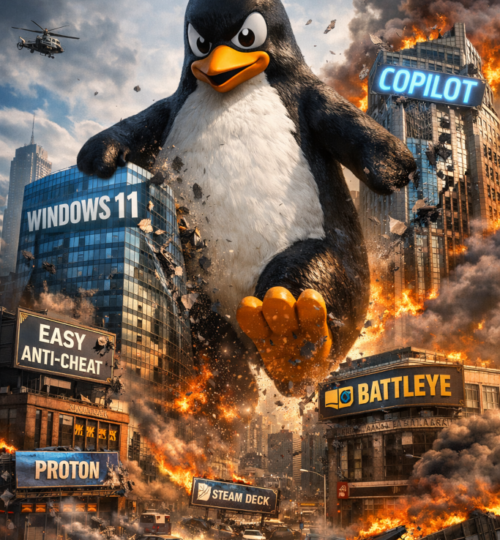
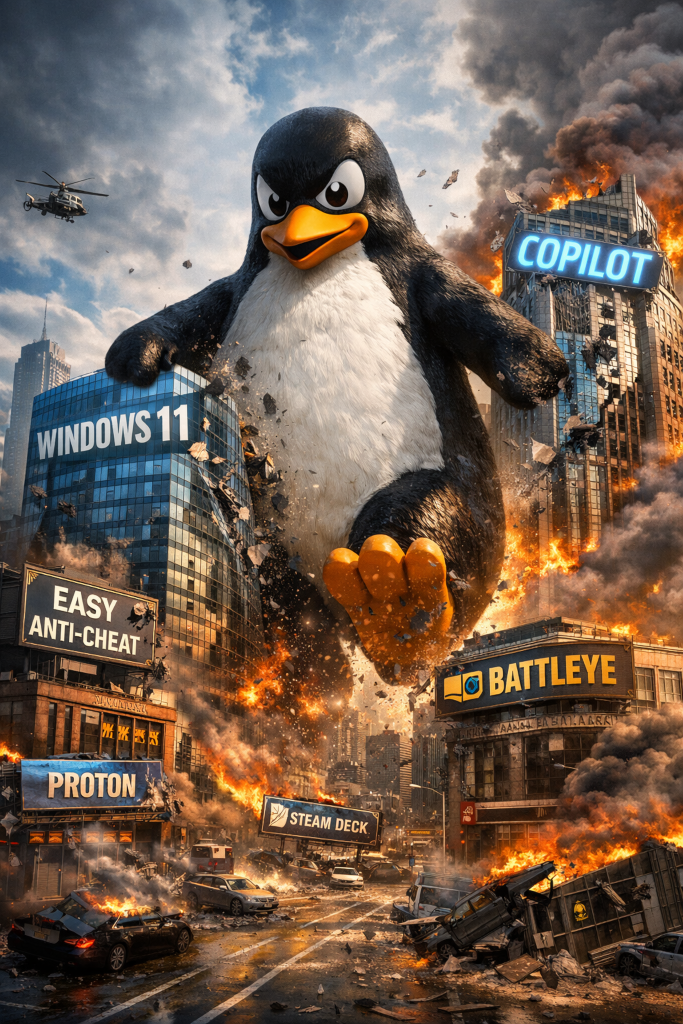
Now they are discovering that the penguin can play too.