The global esports calendar has always had its tentpole moments. From the early days of grassroots LAN tournaments to the polished arenas of today’s franchised leagues, each era has produced its defining stage. In 2026, that stage is shaping up to be the Esports World Cup 2026 in Riyadh from July 6 to August23, 2026. This event is set to feature 25 events in 24 esports and this year will feature one new game (the racing game “Trackmania 2020”), in the main lineup.
For a community like ours, one that traces its roots back to 2004 when ladders, forums, and player-driven competition defined the scene, the rise of a centralized global spectacle like this carries a mix of excitement, curiosity, and scrutiny. The question is not just what the Esports World Cup will be, but what it represents for competitive gaming as a whole.
As the road to Riyadh unfolds, expectations are escalating across multiple fronts. Prize pools, game lineups, publisher involvement, and the long-term structure of global esports are all under the microscope.
From Fragmentation to a Global Stage
For most of esports history, competition has been fragmented by design. Different publishers controlled their ecosystems, third-party organizers filled the gaps, and communities built their own ladders and tournaments to keep the competitive spirit alive. That fragmentation was not a weakness. It was the foundation.
What the Esports World Cup attempts to do is unify that scattered energy into a singular global event. Not permanently, but momentarily. It is less about replacing existing ecosystems and more about creating a convergence point where the best players, teams, and titles collide.
For veteran players, this feels like a modern reinterpretation of something familiar. In the early 2000s, large LAN events brought together communities that rarely intersected online. Today, the scale is exponentially larger, but the core idea remains the same. A shared competitive arena where reputations are tested outside of their usual environments.
The difference is that this time, the stakes are industrial.
The Weight of Investment and Expectation
The Esports World Cup is not just another tournament. It is backed by significant financial investment and positioned as a cornerstone of a broader push to establish a long-term esports hub in the region.
That level of backing changes expectations immediately. This is no longer about whether the event will succeed operationally. It is about whether it will redefine the ceiling of what esports events can be.
Prize pools are expected to be among the largest ever assembled across multiple titles. Infrastructure, production quality, and global reach are being framed not as goals, but as baseline requirements. Anything less would feel like a missed opportunity.
For players and organizations, this introduces a new layer of strategic importance. Performing well at the Esports World Cup is not just about a single title or season. It is about visibility on a global stage that reaches beyond traditional esports audiences.
For communities like ours, the question becomes more nuanced. Does this kind of centralized investment elevate the competitive ecosystem, or does it risk overshadowing the grassroots structures that built it?
The Expanding Game Lineup
One of the most anticipated aspects of the 2026 Esports World Cup is its game selection. Early iterations of the event have already demonstrated a willingness to span genres, from tactical shooters and MOBAs to fighting games and mobile titles.
Looking ahead, the expectation is not just expansion, but curation.
The titles included will signal where the industry sees competitive longevity. Established staples like Counter-Strike 2 and League of Legends are almost guaranteed anchors. Their ecosystems are too mature and too globally recognized to exclude.
But the real intrigue lies in what gets added.
Will newer competitive titles break into the lineup? Will legacy games receive a spotlight, appealing to long-time communities that still value structured competition outside of publisher-controlled environments? There is a growing appetite for that kind of inclusion, especially among players who remember when competition was not tied to seasonal battle passes or franchised leagues.
Fighting games, in particular, stand at an interesting crossroads. Their community-driven roots align closely with the spirit of independent competition, yet their presence on a stage like this would expose them to a broader global audience.
Mobile esports is another area to watch. With massive player bases in regions that traditional PC and console esports have struggled to penetrate, mobile titles could play a key role in expanding the reach of the event.
A Platform for Announcements
Beyond competition, the Esports World Cup is increasingly being viewed as a platform for major announcements.
Publishers are always searching for the right stage to reveal new content, expansions, or even entirely new competitive titles. A global event with concentrated attention from players, fans, and media provides exactly that.
There is growing speculation that the 2026 event could feature:
- New competitive modes or rule sets for existing esports titles
- Announcements of upcoming games designed with esports in mind from the ground up
- Cross-platform initiatives that further blur the line between console and PC competition
- Updates to ranking systems, tournament structures, or seasonal formats
For a legacy community, these announcements matter because they often dictate how accessible and competitive a game becomes. A new ranked mode or tournament system can either open the door for grassroots competition or lock it behind controlled ecosystems.
The hope is that developers recognize the value of both.
The Player Experience: Pressure and Opportunity
For players, the Esports World Cup represents a unique kind of pressure.
Traditional leagues provide a rhythm. Seasons, splits, and predictable schedules allow players to build consistency over time. A global event like this compresses that experience into a high-stakes environment where performance peaks must align perfectly with the moment.
That intensity can produce some of the most memorable moments in esports. Upsets, breakout performances, and unexpected champions thrive in these conditions.
At the same time, it introduces challenges. Travel, adaptation to unfamiliar setups, and the mental strain of competing on such a visible stage can impact even the most experienced players.
For rising competitors, however, the opportunity is unmatched. A single standout performance can redefine a career. In a landscape where visibility often depends on consistent league play, a global event offers a shortcut to recognition.
Teams and Organizations: Beyond the Game
For organizations, the Esports World Cup is not just about results. It is about brand positioning on a global scale.
Sponsorships, partnerships, and media exposure all intersect at events like this. Teams that perform well are not just winning matches. They are securing long-term value in an increasingly competitive business environment.
This is where the event begins to resemble traditional sports more closely. The narrative extends beyond the game itself. Storylines, rivalries, and identities become central to the experience.
For a community built on player-driven competition, this shift can feel both exciting and distant. The scale is impressive, but it also raises questions about accessibility. Can smaller teams and independent players still find their way onto this stage, or does it become the domain of established organizations?
The answer will shape how inclusive the event truly is.
Production, Spectacle, and the Viewer Experience
If there is one area where expectations are universally high, it is production.
Modern esports audiences expect more than just gameplay. They expect storytelling, analysis, and a viewing experience that rivals traditional sports broadcasts.
The Esports World Cup has the resources to deliver on that expectation. The question is how far it will go.
Will we see innovations in broadcast technology? Enhanced spectator modes that provide deeper insight into gameplay? New ways for fans to engage with matches in real time?
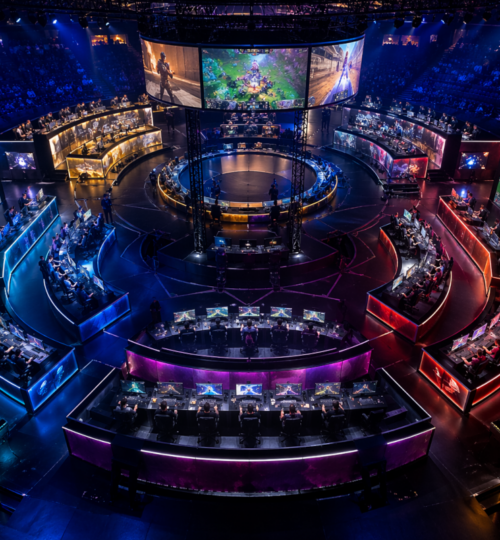
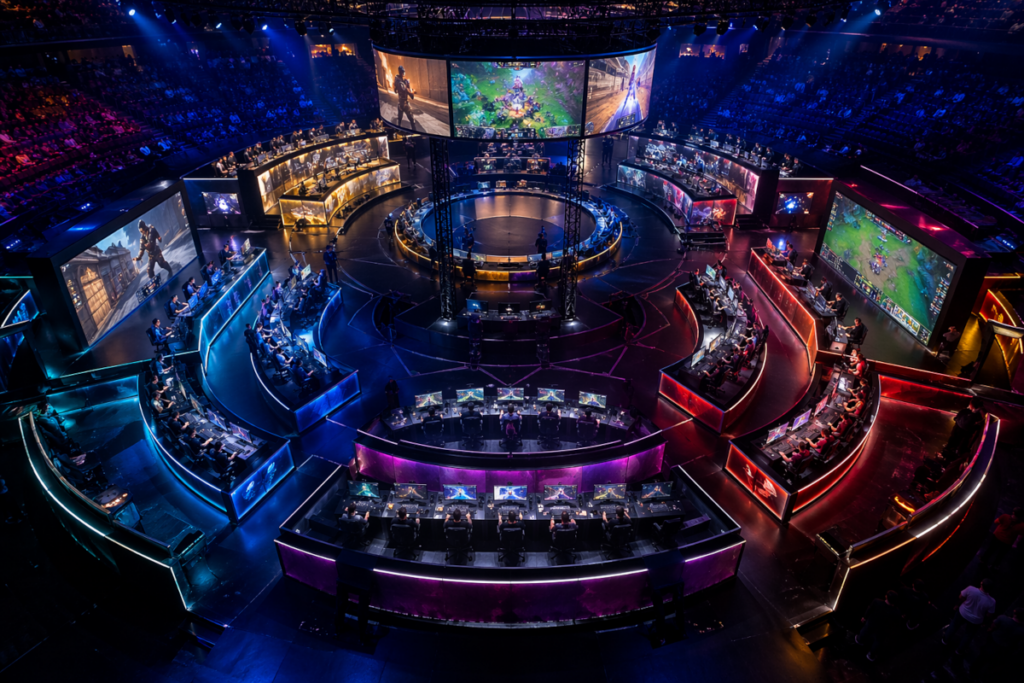
There is also the in-person experience to consider. Large-scale events are as much about atmosphere as they are about competition. The energy of a live crowd, the spectacle of a grand stage, and the sense of being part of something larger all contribute to the impact.
For those who remember packed LAN halls and local tournaments, this is the modern evolution of that feeling. Larger, more polished, but rooted in the same desire to witness competition at its highest level.
The Role of Community in a Centralized Era
One of the most important questions surrounding the Esports World Cup is how it interacts with community-driven ecosystems.
Events of this scale have the power to shape the direction of the industry. They can elevate certain games, influence how competition is structured, and redefine what success looks like.
But they cannot replace the foundation.
Communities built their own ladders, tournaments, and ranking systems long before large-scale investment entered the scene. That spirit still exists, even if it is less visible in the current landscape.
The ideal outcome is not replacement, but coexistence. A global event that showcases the highest level of play while still leaving room for independent competition to thrive.
For platforms like ours, this is where the opportunity lies. Bridging the gap between grassroots competition and global recognition. Providing players with a path that starts in community-driven environments and can, in theory, lead to stages like Riyadh.
Potential Challenges and Criticism
No event of this scale arrives without scrutiny.
There are ongoing discussions about the concentration of resources, the influence of external investment on the direction of esports, and the long-term sustainability of large-scale events.
Some critics argue that centralization risks homogenizing the competitive landscape. When a single event becomes the focal point, smaller tournaments and independent organizers may struggle to maintain relevance.
Others point to the importance of transparency. How teams qualify, how games are selected, and how prize distributions are structured all play a role in determining the legitimacy of the event.
These are not minor concerns. They are essential to the long-term health of the ecosystem.
For the Esports World Cup to succeed beyond its initial impact, it will need to address these questions openly and consistently.
What 2026 Could Define
The 2026 Esports World Cup is more than a tournament. It is a statement about where competitive gaming is headed.
If executed well, it could set a new standard for global events. A benchmark that future tournaments strive to match. It could also serve as a bridge between different eras of esports, connecting the grassroots origins of the scene with its modern, globalized form.
For veteran players and communities, there is a sense of watching history evolve in real time. The tools have changed, the scale has expanded, but the core remains the same.
Competition. Recognition. Legacy.
As the road to Riyadh continues, the anticipation is not just about who will win. It is about what the event will leave behind.
Will it inspire the next generation of players to compete? Will it encourage developers to invest more deeply in competitive systems? Will it strengthen the connection between global events and local communities?
Those answers will not come from announcements or projections. They will come from the matches played, the stories created, and the communities that continue to build around them.
And for those of us who have been here since the early days, that is what matters most.