When Team Fortress 2 launched in 2007, it entered a crowded shooter landscape that was rapidly shifting toward realism. Military aesthetics were dominating the genre. Brown and gray battlefields filled with modern weapons had become the norm. At the same time, competitive shooters were leaning heavily toward pure aim mechanics and symmetrical map design.
 Team Fortress 2 moved in the opposite direction.
Instead of realism, it embraced personality. Instead of symmetry, it embraced chaos. Instead of identical soldiers fighting with the same weapons, it built an entire game around distinct characters with unique roles.
Nearly two decades later, that design philosophy still stands as one of the most influential choices in multiplayer shooter history.
A Shooter Built on Identity
The first thing players notice when entering Team Fortress 2 is its visual identity. The art style draws inspiration from mid-century advertising illustration, exaggerated animation, and stylized proportions. Every character is instantly recognizable even at a distance.
That clarity is not just aesthetic. It serves gameplay.
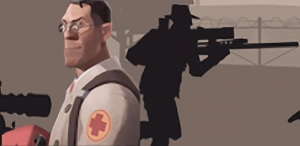
Each of the nine classes has a distinct silhouette and combat role:
- Scout thrives on speed and flanking pressure
- Soldier controls space through rocket splash damage
- Demoman dominates choke points with traps and explosive spam
- Medic sustains pushes and shifts momentum with ÜberCharge
- Heavy anchors defensive lines with raw firepower
- Pyro disrupts enemy formations at close range
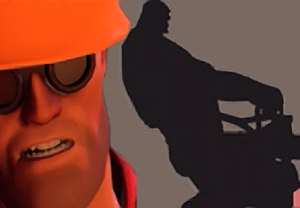
- Engineer builds infrastructure that shapes map control
- Sniper punishes careless positioning
- Spy breaks defenses through deception and timing
Because each class plays differently, Team Fortress 2 becomes less about individual weapon mechanics and more about how abilities interact across a team. That interaction is where the game’s depth truly begins.
The Power of Class Synergy
Many shooters emphasize mechanical skill above all else. Team Fortress 2 certainly rewards strong aim, but the deeper layer comes from how classes complement each other.
A single Soldier rocket jumping into enemy territory might secure a flashy kill. A coordinated push with Soldiers, Scouts, and a Medic with a fully charged Über can break an entire defensive hold.
The Medic class illustrates this perfectly. In most shooters, support characters exist in the background. In TF2, the Medic often dictates the tempo of the entire match. Managing ÜberCharge timing and positioning becomes one of the most critical decisions a team can make.
Push too early and the charge is wasted. Wait too long and the enemy team builds their own. That constant tactical tension keeps even familiar maps feeling unpredictable.
Maps Designed for Movement
Movement in Team Fortress 2 is far from static. Rocket jumping, sticky jumping, and strafing techniques allow experienced players to traverse maps in ways that casual players may not even realize are possible.
The Soldier and Demoman classes in particular can transform vertical space into a weapon. A skilled player can launch themselves across large portions of a map, reaching angles and flanking routes that would otherwise be inaccessible.
Because of this, many maps are designed with layered pathways and elevation changes that reward creative movement.
Maps like Badlands, Granary, and Process became staples of competitive play because they support fluid engagements rather than rigid defensive lines. Teams rotate through mid fights, flanking routes, and choke points in a rhythm that feels closer to a tactical dance than a traditional firefight.
Learning these maps is almost like learning a language. The routes matter. The timing matters. The positioning of health packs and ammo boxes matters.
Competitive Play and the 6v6 Format
Although Team Fortress 2 is often remembered for its chaotic public servers, the game quietly built a dedicated competitive scene.
The most widely accepted competitive format became 6v6 Standard, which emphasizes mobility and coordination. Teams typically field two Scouts, two Soldiers, one Demoman, and one Medic.
This composition maximizes speed and explosive damage while still preserving the importance of healing and support. Heavy, Engineer, and Sniper still appear in certain situations, particularly during defensive holds, but the core of the format remains focused on mobility.
Matches in this format move quickly. Teams contest control points, trade pushes, and attempt to force mistakes through positioning and timing. Because the player count is smaller than casual servers, every decision becomes amplified. A single lost fight can open the door for a full capture sequence.
For players who enjoy tactical depth and coordination, 6v6 TF2 offers a level of strategic nuance that many modern shooters still struggle to replicate.
Soldier Duels and Mechanical Skill
 While team coordination defines most competitive play, certain parts of the community gravitated toward 1v1 Soldier duels as a pure mechanical challenge. In these matchups, players face each other with identical tools. Victory comes down to movement, rocket prediction, splash damage control, and airshots.
The result is a surprisingly elegant form of combat. Players bounce across the map using rocket jumps while attempting to predict the opponent’s trajectory mid-air. Landing an airshot in TF2 carries a unique kind of satisfaction. The physics, the timing, and the precision all combine into a moment that feels both skillful and dramatic.
Even today, these duels remain a popular way for players to sharpen their mechanics.
A Game That Kept Evolving
Another reason Team Fortress 2 remained relevant for so long was its update cycle. Valve introduced a steady stream of new weapons, cosmetics, and gameplay adjustments through class update events and seasonal patches. Many of these updates significantly changed how certain classes were played.
The introduction of unlockable weapons gave players the ability to tailor their loadouts around different strategies. A Soldier might choose the Direct Hit for precision damage or the Black Box for survivability. A Medic might swap the stock Medigun for the Kritzkrieg, trading invulnerability for explosive critical hits.
These variations kept the game fresh without fundamentally breaking the class system. Of course, the update model also introduced debates within the community. Some weapons became controversial. Others required balance adjustments.
But the constant evolution helped TF2 maintain a sense of momentum long after most shooters would have faded.
The Community That Carried It
 Team Fortress 2 owes much of its longevity to its community. Custom servers, mods, maps, and game modes expanded the experience far beyond the official matchmaking system. Players created everything from jump training maps to entirely new rule sets.
Community servers became social spaces where regular players recognized each other. Rivalries formed. Friendships developed. Some servers specialized in competitive practice. Others embraced absurdity with custom weapons and unusual game modes.
This flexibility gave TF2 something many modern games struggle to maintain: a sense of ownership among its players. When communities feel like they have a hand in shaping the experience, they tend to stick around.
Humor and Personality
Another factor that helped Team Fortress 2 stand apart was its sense of humor. Every class has a distinct personality, delivered through voice lines and animated shorts that expanded the world beyond the battlefield.
The characters are exaggerated but memorable. The Heavy speaks in blunt confidence. The Scout delivers rapid-fire sarcasm. The Spy exudes calm arrogance.
Valve’s animated shorts such as Meet the Heavy and Meet the Medic helped cement these characters as icons within gaming culture. That personality turned TF2 into something more than a competitive shooter. It became a universe players wanted to spend time in.
The Challenges of Longevity
 Of course, no long-running multiplayer game is without challenges. Over the years Team Fortress 2 has faced periods of slower development, matchmaking concerns, and ongoing battles against cheating and bots.
These issues have sometimes frustrated the community, particularly during stretches where official updates became infrequent. Yet even during those quieter periods, players continued to log in. Servers remained active. Community events continued.
That persistence says a lot about the underlying strength of the game’s design.
Why Team Fortress 2 Still Matters
Nearly twenty years after its release, Team Fortress 2 still represents one of the most successful examples of class-based shooter design. Many modern games borrowed ideas from it. Hero shooters such as Overwatch clearly drew inspiration from TF2’s emphasis on unique characters and team synergy.
But even as the genre evolved, TF2 maintained something uniquely its own. The physics remain satisfying. The class system remains balanced in its core structure. The combination of humor, strategy, and mechanical skill remains difficult to replicate.
Most importantly, the game continues to remind players that competitive depth does not require realism. Sometimes the most enduring designs come from embracing creativity.
A Lasting Place in Shooter History
Team Fortress 2 may not dominate esports headlines the way newer games do, but its legacy within multiplayer shooters is undeniable. It demonstrated that personality could coexist with competitive depth. It proved that class-based gameplay could remain balanced across years of updates. It showed that communities can keep a game alive long after its initial release window.
For players who experienced it during its peak years, TF2 represents more than just a shooter. It represents a moment when online gaming communities were discovering new ways to organize competition, form teams, and test their skills.
And even today, jumping into a match still delivers that familiar mix of chaos, strategy, and humor that made the game stand out in the first place.
Team Fortress 2 is not just a relic of an earlier multiplayer era. It is one of the foundations that era was built on.
