Real-time strategy games helped build the foundation of competitive gaming long before the modern esports industry took shape. In the late 1990s and early 2000s, RTS titles filled LAN centers and tournament halls with players who tested their ability to multitask, strategize, and react in real time. Among those games, StarCraft and later StarCraft II stood at the center of the competitive scene. For many years the franchise defined what high level strategy competition could look like.
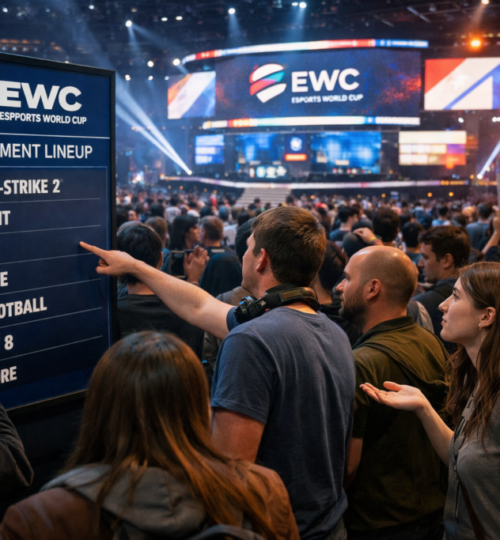
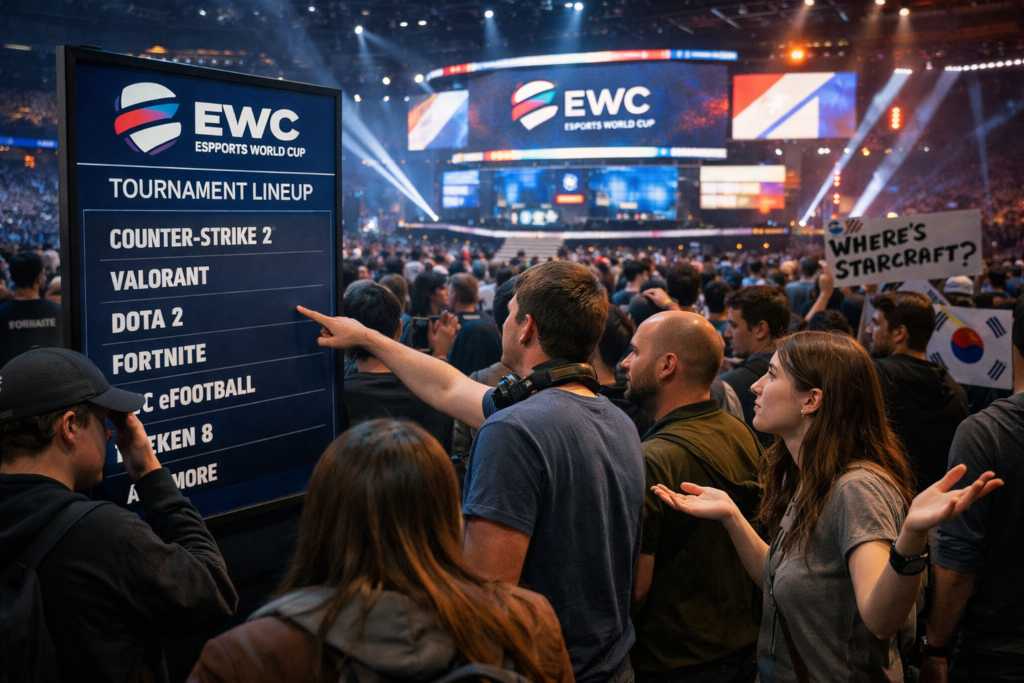
That is why the absence of StarCraft II from the Esports World Cup 2026 lineup has sparked conversation across the competitive gaming community. The decision does not erase the legacy of the game, but it does raise questions about where RTS games fit in the modern esports ecosystem. The genre still has passionate players and viewers, yet it occupies a very different space than it once did.
Understanding why StarCraft II is missing from a major global tournament requires looking at the broader shifts in esports, the economics behind large scale events, and the changing preferences of players and spectators.
The Long Competitive Legacy of StarCraft II
When StarCraft II launched in 2010, it arrived with enormous expectations. The original StarCraft had already established one of the most dedicated competitive communities in gaming history. South Korea built an entire broadcast ecosystem around professional play, with televised matches, team houses, and dedicated fan bases for individual players.
StarCraft II inherited that competitive culture and expanded it globally. Major tournaments appeared across North America, Europe, and Asia. The creation of the Global StarCraft II League and later the World Championship Series provided a structured path for professional players. Fans watched legendary competitors battle in matches that demanded both mechanical speed and strategic depth.
For years StarCraft II represented the pinnacle of one-on-one esports competition. Matches required hundreds of actions per minute, precise build orders, and the ability to adapt to constantly evolving strategies. A single mistake could shift the outcome of a game that lasted twenty minutes or more.
Even as other esports grew rapidly, StarCraft II maintained a strong competitive identity. It remained a staple at major tournaments such as DreamHack events, international invitationals, and global championship circuits. The game’s strategic depth kept experienced players engaged while its clear win conditions made it understandable to spectators who followed the scene.
Yet over time the environment around esports began to change.
The Rise of Team-Based Esports
One of the largest shifts in competitive gaming over the past decade has been the dominance of team-based titles. Multiplayer games built around squads or teams have become the center of the esports industry.
Games such as multiplayer online battle arenas, tactical shooters, and battle royale titles offer a format that fits well with modern streaming platforms and large arena events. Multiple players on each team create more storylines, more personalities, and more opportunities for teams to build recognizable brands.
Team esports also provide stronger opportunities for sponsorship and organization investment. Instead of supporting a single player, organizations can build entire rosters that represent a brand across multiple tournaments and seasons. Fans often develop loyalty to the team as much as the individual players.
Real-time strategy games traditionally focus on one-on-one competition. While that format produces intense strategic battles, it limits the number of players involved in each match. From a business perspective that can make large tournaments harder to scale compared to team-based competitions.
As esports grew into a global entertainment industry, many organizers shifted toward games that could support larger teams, more sponsors, and more complex narratives across seasons.
Viewer Trends and the Streaming Era
Another major factor shaping modern esports is the way audiences consume competitive gaming. Streaming platforms have become the primary way fans watch tournaments, follow players, and interact with communities.
Team games often create moments that translate well to highlight clips and live commentary. A dramatic team fight, a coordinated push, or a last-second defensive play can generate excitement that spreads quickly across social media.
Real-time strategy games present a different challenge. High level matches require viewers to track multiple events happening across the map simultaneously. Professional players often manage several bases, control multiple armies, and execute detailed economic strategies. For experienced fans this complexity is part of the appeal. For new viewers it can be difficult to follow without prior knowledge.
Tournament organizers increasingly prioritize games that can attract large audiences quickly. Titles with simpler visual readability or familiar multiplayer formats often perform better in that environment. This does not mean RTS games lack excitement. Instead it reflects the challenge of presenting complex strategic gameplay to a broad audience.
The Business Reality of Major Tournaments
Large international tournaments require significant financial investment. Venue costs, production teams, travel expenses, prize pools, and broadcast infrastructure all contribute to the scale of modern esports events.
Organizers must choose games that justify those costs through viewership, sponsorships, and community engagement. When evaluating a tournament lineup, factors such as active player base, global reach, and media visibility play major roles.
StarCraft II still maintains a dedicated competitive scene, but the scale of its audience is smaller than it was during its peak years. Many professional players have transitioned to other games or moved into streaming and content creation. While the remaining community remains passionate, the overall numbers are different from the early 2010s.
For a tournament the size of the Esports World Cup, organizers may prioritize games that currently dominate streaming platforms and attract millions of active players. This reality influences which titles appear on the event schedule each year.
The absence of StarCraft II from EWC 2026 likely reflects these broader economic calculations rather than a rejection of the genre itself.
The Enduring Appeal of RTS Competition
Despite these challenges, real-time strategy games still offer something unique within competitive gaming. The genre rewards a combination of skills that few other esports demand at the same level.
Players must manage economy, map control, scouting, production, and combat simultaneously. Every decision has consequences that ripple through the match. The ability to outthink and outmaneuver an opponent in real time creates a form of competition that feels closer to chess played at extreme speed.
For spectators who understand the mechanics, RTS matches provide dramatic tension. A player defending against a surprise attack while secretly preparing a counter strategy can produce some of the most memorable moments in esports history.
StarCraft II continues to deliver these experiences in regional tournaments and community events. Dedicated fans still gather online to watch top players compete. While the scene may be smaller than it once was, its strategic depth remains unmatched.
New RTS Projects and the Possibility of a Revival
The future of RTS competition may depend on the next generation of strategy games. Several developers have expressed interest in revisiting the genre with modern design philosophies and improved spectator features.
New RTS titles aim to reduce barriers for entry while preserving the strategic depth that longtime fans expect. Developers are experimenting with streamlined interfaces, clearer visual feedback, and mechanics that make matches easier to follow for spectators.
If these projects succeed, they could introduce real-time strategy to a new audience of players who grew up during the era of team-based esports. A modern RTS designed with streaming and competitive balance in mind could potentially return the genre to major tournament stages.
However, success is not guaranteed. Strategy games require careful balancing, strong developer support, and a community willing to invest time mastering complex mechanics. Building that ecosystem takes years.
Community Driven Competition
One of the most important strengths of the RTS genre has always been its community. Even when official support slows down, passionate players often keep games alive through grassroots tournaments, fan broadcasts, and independent leagues.
Community organizers have historically played a major role in sustaining competitive scenes. Online cups, amateur leagues, and smaller international events provide opportunities for new players to develop their skills while giving fans a place to watch high level matches.
These grassroots efforts demonstrate that competitive RTS gaming does not rely entirely on large corporate tournaments. A dedicated community can maintain a vibrant competitive environment even when the spotlight shifts elsewhere.
For longtime fans of StarCraft II, this grassroots spirit continues to define the scene. Community events still produce exciting matches and memorable storylines, reminding players why the genre captured their attention in the first place.
What the Future May Hold
The absence of StarCraft II from EWC 2026 highlights a moment of transition for real-time strategy esports. The genre is no longer the centerpiece of global tournaments, yet it remains deeply respected within the competitive gaming community.
Several paths could shape the future of RTS competition.
A new generation of strategy games could reignite interest in the genre and attract younger players. Tournament organizers might experiment with formats that highlight the unique strengths of one-on-one competition. Community leagues may continue building grassroots ecosystems that sustain competitive play outside of major corporate circuits.
Esports history shows that genres can rise, fall, and return again as technology and player preferences evolve. Fighting games, for example, have experienced multiple waves of popularity driven by both developer support and community dedication.
Real-time strategy games may follow a similar path. The strategic depth that defined classics like StarCraft II still holds tremendous appeal for players who enjoy complex competitive challenges.
A Genre That Refuses to Disappear
The story of real-time strategy in esports is not one of simple decline. Instead it reflects the shifting priorities of a rapidly evolving industry. As esports expanded into stadium events and global sponsorships, certain formats gained prominence while others moved into smaller but dedicated communities.
StarCraft II helped shape competitive gaming during a crucial period of its development. Its influence can still be seen in the strategic thinking, broadcast production, and professional player culture that define esports today.
Even without a place in the Esports World Cup 2026 lineup, the legacy of StarCraft II remains firmly embedded in the history of competitive gaming. Its players, fans, and community organizers continue to celebrate the unique challenges that RTS games provide.
Whether through new titles or renewed interest in existing classics, the genre still has the potential to evolve and surprise the esports world again. Real-time strategy may no longer dominate the spotlight, but its influence continues to shape how competitive gaming thinks about skill, strategy, and mastery.
And as long as players are willing to test their minds against one another in battles of timing, planning, and execution, the spirit of RTS competition will remain very much alive.