For a game that spent years drifting in uncertainty, Pragmata has quietly pulled off something rare in modern development cycles. Instead of another delay announcement, Capcom effectively did the opposite. They “undelayed” it. In an industry where release windows often slide further into the future, this reversal has caught attention across both veteran communities and newer audiences watching the current console generation evolve.
For a legacy competitive scene that remembers when release dates were commitments rather than placeholders, this shift feels both refreshing and a little suspicious. It raises questions about confidence, timing, and what kind of experience Pragmata is shaping up to be.
What Does “Undelaying” Actually Mean?
Capcom originally pushed Pragmata into the long list of titles that slipped into ambiguity. After its early reveal, the game faded from concrete timelines, with updates that suggested a distant launch. Then, unexpectedly, Capcom repositioned the release window forward.
Calling it an “undelay” is not official terminology, but it has become the most accurate way to describe what happened. Instead of announcing a delay from a fixed date, Capcom moved the target closer than expected after a period of silence.
This move signals a few possible realities behind the scenes.
First, development likely reached a stable milestone earlier than projected. That usually means core systems are locked, performance targets are met, and content pipelines are no longer in flux. Second, Capcom may be capitalizing on a favorable release window. With major titles clustering toward predictable holiday cycles, stepping slightly outside that congestion can give a game more breathing room.
There is also a strategic angle. Capcom has built strong momentum in recent years with consistent releases across multiple franchises. Delivering a new IP without delay reinforces that reputation. For longtime competitive players who value reliability, that matters more than marketing buzz.
The Premise: Isolation, Technology, and Human Connection
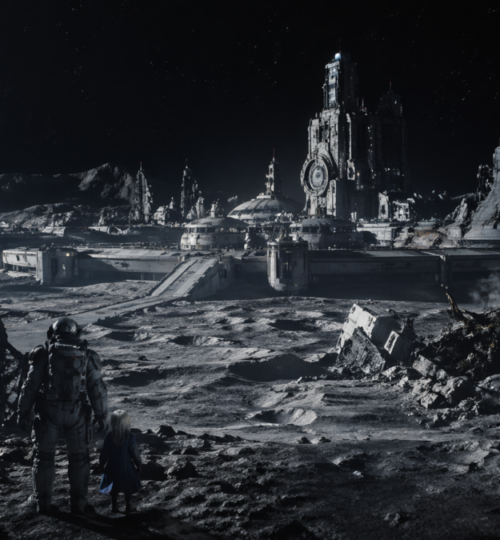
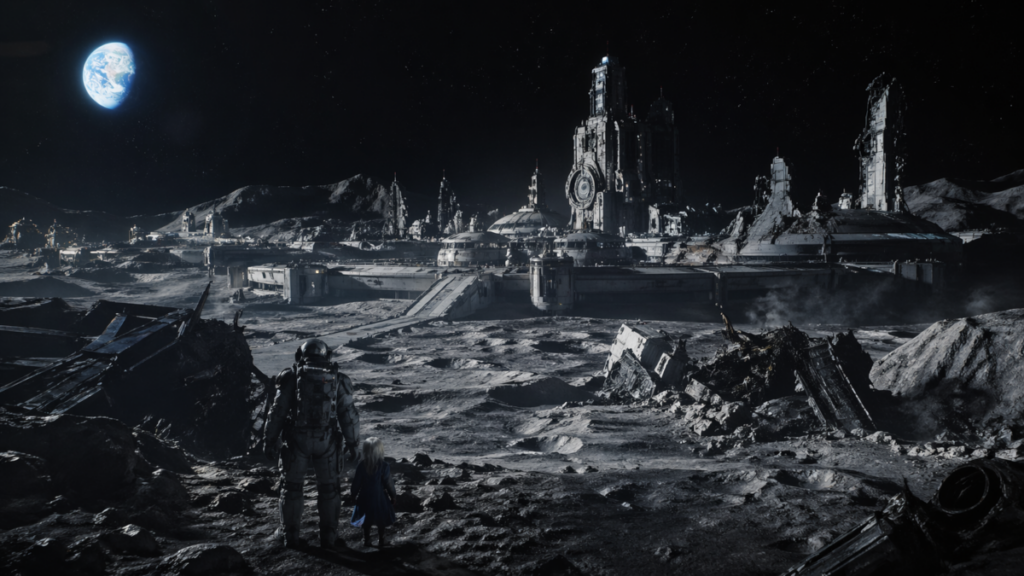
At its core, Pragmata is a science fiction narrative set in a near future shaped by advanced technology and off-world exploration. The early footage introduces a lone astronaut and a mysterious young girl navigating what appears to be a lunar or space-based environment.
The tone leans heavily into atmospheric storytelling. There is a sense of isolation that feels closer to survival sci-fi than traditional action spectacle. The relationship between the two central characters is clearly positioned as the emotional anchor, with the girl displaying abilities that suggest she is not entirely human.
From what has been shown, the game blends exploration, puzzle-solving, and action. The environments feel controlled rather than open-world, suggesting a curated experience where pacing and narrative delivery take priority over scale.
For players coming from competitive ecosystems, this may feel like a departure. Pragmata is not chasing the multiplayer-first design philosophy. Instead, it sits in the space where story-driven experiences still aim to leave a lasting impression.
Gameplay Direction: Hybrid Mechanics with a Strategic Layer
While Capcom has been careful not to overshare, the gameplay glimpses reveal something more layered than a standard third-person action title.
There are indications of dual-character mechanics. The astronaut handles physical movement and combat, while the girl appears to interact with digital systems. This creates a hybrid structure where players may need to manage positioning, timing, and environmental interaction simultaneously.
This design choice introduces a strategic rhythm that could resonate with competitive-minded players. It is not about raw reflexes alone. It is about coordination between systems.
Early impressions suggest elements such as:
- Environmental hacking or system manipulation through the companion character
- Tactical movement in confined or hazardous spaces
- Combat encounters that require setup rather than direct aggression
If executed well, this could create a gameplay loop that feels fresh without being overwhelming. If executed poorly, it risks becoming clunky or overly scripted.
That balance will define how the game is ultimately received.
Visual Identity and Atmosphere
Pragmata stands out visually, even in a market saturated with high-fidelity titles. The environments shown so far emphasize clean, almost sterile futuristic design contrasted with moments of environmental breakdown.
Lighting plays a major role. Reflections, shadows, and particle effects are used to create tension rather than spectacle. The emptiness of space or isolated structures becomes part of the storytelling.
Character design follows a similar philosophy. The astronaut is grounded and functional, while the girl introduces an element of mystery that borders on unsettling. This contrast reinforces the narrative themes without relying on heavy exposition.
For players who remember the early 2000s era of multiplayer communities, where atmosphere often took a backseat to mechanics, this level of visual storytelling represents how far the medium has evolved.
Community Reception So Far
The reception to Pragmata has been cautiously optimistic. There is curiosity, but also skepticism.
On one hand, Capcom’s recent track record has earned trust. Players have seen consistent quality across multiple releases, which gives Pragmata a solid foundation before it even launches.
On the other hand, the lack of extensive gameplay footage has left gaps. Veteran players are used to reading between the lines. When a game shows more concept than system, it raises questions about depth and replay value.
The “undelay” announcement itself has been interpreted in different ways:
- Some see it as a sign of confidence and strong internal progress
- Others wonder if it reflects a shift in scope or a desire to release sooner rather than later
For a community that has lived through both overhyped launches and quiet successes, that split reaction is natural.
Strengths: Where Pragmata Has an Advantage
Pragmata enters the market with several clear strengths that could set it apart if fully realized.
A Unique Concept – New IPs always carry risk, but they also bring the potential for originality. Pragmata is not tied to an existing formula, which gives it room to experiment with both narrative and mechanics.
Strong Publisher Momentum – Capcom’s recent consistency cannot be ignored. Delivering polished experiences has become part of their identity again. That momentum creates a baseline level of confidence.
Atmosphere and Tone – The game’s focus on mood and character interaction gives it a distinct identity. In a landscape filled with fast-paced shooters and open-world checklists, a more focused experience can stand out.
Potential for Strategic Gameplay – The dual-character system hints at a deeper layer of engagement. If players need to think as much as they react, it could appeal to those who enjoy systems-driven gameplay.
Weaknesses and Risks
For all its promise, Pragmata carries several risks that could impact its reception.
Limited Gameplay Transparency – There is still a lack of detailed, uninterrupted gameplay footage. Without seeing how systems connect over extended play, it is difficult to gauge depth.
Uncertain Replay Value – Story-driven experiences often struggle with longevity. For a community used to competitive loops and repeatable content, this could limit long-term engagement.
Balancing Dual Mechanics – Managing two characters or systems simultaneously can either feel innovative or frustrating. If the controls or pacing are not refined, it could create friction.
Expectations vs Reality – The longer a game exists in a state of mystery, the more expectations build. The “undelay” adds another layer of attention that the final product will need to meet.
Why the Timing Matters
The decision to move the release forward is not just about development progress. It is also about positioning.
Releasing in a less crowded window can allow a game like Pragmata to define its own narrative in the market. It avoids direct comparison with blockbuster titles that dominate attention cycles.
For a legacy esports audience, timing has always been a strategic factor. Whether it was tournament scheduling or ladder resets, when something launches can be just as important as what it offers.
Capcom appears to be applying that same logic here.
How It Fits Into Today’s Gaming Landscape
Pragmata arrives at a time when the industry is balancing two competing directions.
On one side, there is a push toward live-service ecosystems, persistent progression, and competitive integration. On the other, there is a renewed appreciation for focused, narrative-driven experiences that respect player time.
Pragmata clearly leans toward the latter.
For a community that built its identity on player-driven competition, this might seem like an outlier. But it also reflects something familiar. Many of the most memorable experiences from earlier eras were not built around endless progression systems. They were built around strong design and lasting impressions.
If Pragmata delivers on its concept, it could tap into that same feeling.
Final Thoughts: A Calculated Move With Real Potential
Pragmata is not trying to be everything at once. It is not chasing trends or forcing itself into the competitive mold. Instead, it is positioning itself as a focused experience with a distinct identity.
The “undelay” is more than a scheduling adjustment. It is a statement of intent. It suggests that Capcom believes the game is ready to stand on its own sooner than expected.
For veteran players who have seen cycles of hype, delay, and disappointment, the real test will come at launch. Does the game deliver a cohesive experience that justifies its mystery? Or does it fall into the trap of promising more than it can sustain?
Right now, Pragmata sits in a rare position. It has intrigue without overexposure, ambition without clear overreach, and a release strategy that breaks from the usual pattern.
That alone makes it worth watching.
And in a landscape crowded with predictable releases, being worth watching is already a win.