
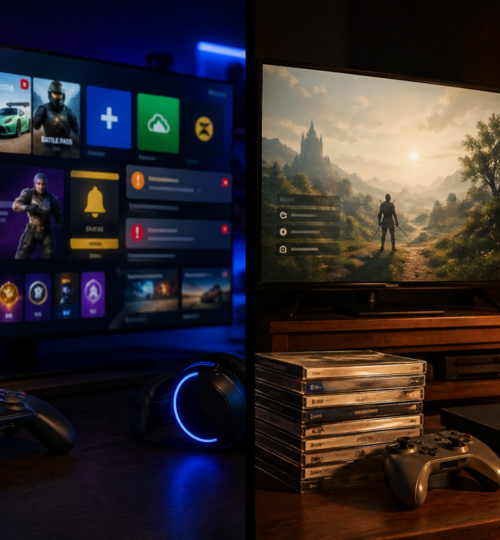
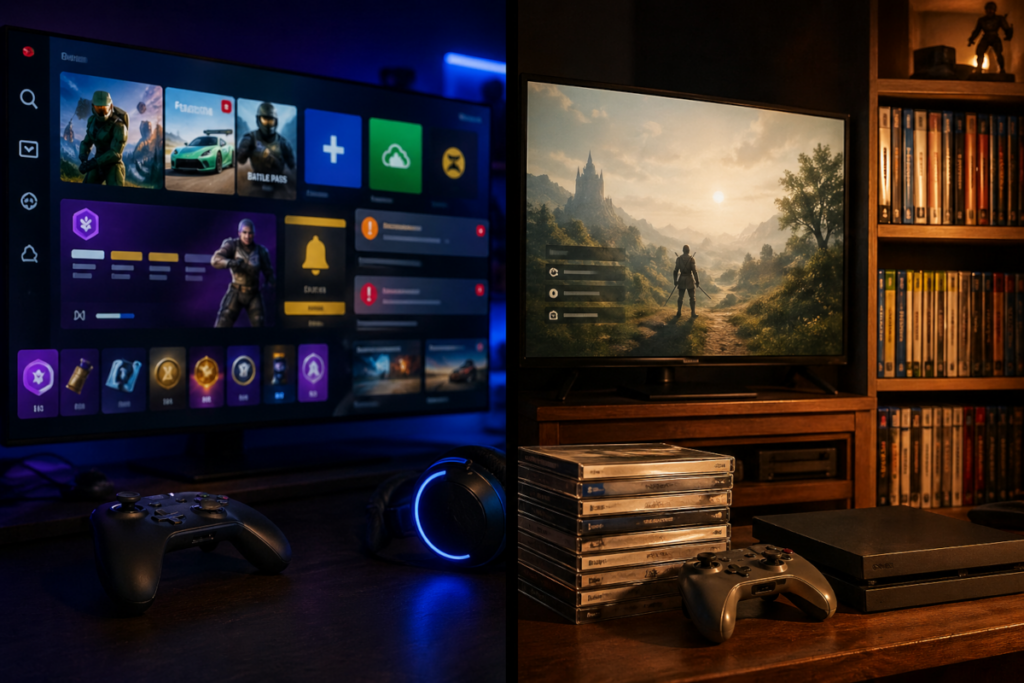
For years, the gaming industry has pushed forward under a simple assumption: players will keep paying. Whether it was the transition from boxed copies to digital storefronts, the rise of downloadable content, or the full-scale adoption of live service ecosystems, the model has consistently leaned toward recurring revenue. But something has shifted.
Across forums, Discord servers, and long-standing competitive communities like ours, there is a noticeable change in behavior. Players are no longer blindly following the industry’s pricing trends. They are slowing down, reassessing, and in many cases, pulling back entirely.
This is not a minor fluctuation. It is a meaningful correction driven by rising costs, shifting expectations, and a growing desire for ownership in a space that increasingly offers access instead.
Live Service Fatigue and the Ownership Debate
The rise of live service games promised something compelling: constant updates, evolving worlds, and a steady stream of content. Titles from major publishers have leaned heavily into this model, building ecosystems designed to keep players engaged indefinitely.
But the trade-off has become more apparent over time. Players are not buying games in the traditional sense anymore. They are buying access. That access can be altered, restricted, or removed entirely depending on publisher decisions.
This has created a growing divide between what players expect and what they receive. When someone spends money on a game, there is still an underlying expectation of permanence. Instead, many live service titles feel temporary, tied to servers, seasonal cycles, and monetization loops.
Veteran players especially, those who grew up in an era of LAN matches, server browsers, and community-run ladders, feel this shift deeply. Ownership used to mean something. Now it often feels conditional.
Subscription Models Under Scrutiny
The subscription model, led by services like Xbox Game Pass, initially felt like a breakthrough. A vast library of games for a monthly fee was hard to argue against. For many players, it offered incredible value. But price increases have started to change that perception.
When subscription costs rise while individual game prices also climb, players begin to question the long-term value. A service that once felt like a bargain starts to resemble another recurring bill in a growing list of monthly expenses.
More importantly, subscriptions do not provide ownership. Once the subscription ends, access disappears. For players already feeling the pressure of rising costs elsewhere, this becomes a harder sell.
Instead of subscribing indefinitely, many are choosing to buy fewer games outright, focusing on titles they know they will revisit. The mindset is shifting from abundance to intentionality.
Battle Pass Burnout
Alongside subscriptions, the battle pass system has become a cornerstone of modern monetization. Nearly every major multiplayer title now features some variation of it.
At first, battle passes were seen as a fair exchange. Players could earn rewards through play, often without needing to spend heavily. Over time, however, the model has expanded and, in some cases, become more aggressive.
Multiple games competing for attention means multiple battle passes running simultaneously. Each one demands time, engagement, and often additional spending. The result is a fragmented experience where players feel pressured to keep up across several titles.
For many, the solution has been simple. They opt out. Rather than juggling multiple progression systems, players are returning to games that respect their time. Titles that offer a complete experience without constant prompts to spend or grind are gaining renewed appreciation.
Hardware Costs and the New Upgrade Cycle
The financial pressure does not stop at software. Hardware costs have climbed significantly over the past several years. On the PC side, high-end components have reached price points that were once reserved for entire systems. Graphics cards, in particular, have become a major barrier to entry or upgrade. While performance gains are real, the cost-to-benefit ratio is no longer as clear for the average player.
Console pricing has also seen upward movement. Systems like the PlayStation 5 and Xbox Series X launched at already premium price points, and in some regions, prices have increased post-launch.
For many players, the response has been to extend the life of their current hardware. Instead of chasing the latest upgrades, they are optimizing what they already own. Older systems are being maintained longer, and game libraries are being revisited rather than replaced.
This behavior reflects a broader economic reality. When costs rise across the board, discretionary spending tightens. Gaming, despite its cultural importance, is not immune to that pressure.
The Return to Value and Ownership
One of the most interesting developments in this shift is the renewed interest in ownership. Players are gravitating toward games that offer a complete package, often at a lower price point.
Indie titles, remasters, and older classics are seeing increased attention. These games often provide dozens or even hundreds of hours of gameplay without requiring ongoing investment.
There is also a psychological factor at play. Owning a game creates a sense of permanence and control. It is part of a personal library, something that can be returned to at any time without additional cost.
For a generation of players raised on physical media and early digital ownership, this feeling still carries weight. Even for newer players, the appeal is becoming more obvious as subscription fatigue sets in.
Community-Driven Gaming Makes a Quiet Comeback
In legacy communities like ours, there is another layer to this conversation. The value of player-driven ecosystems is being rediscovered. Before matchmaking systems dominated the landscape, communities built their own competitive structures. Ladders, tournaments, and forums were the backbone of multiplayer gaming. They created a sense of ownership that went beyond the game itself.
As modern systems become more centralized and monetized, that sense of community ownership has diminished. But it has not disappeared. With restored leaderboards and revived competitive structures, players are finding reasons to return to older titles and community-driven environments. These spaces offer something that live service models often cannot. Stability, identity, and a sense of belonging.
Economic Pressure Is Reshaping Player Behavior
It would be a mistake to view this shift purely through the lens of gaming. The broader economic environment plays a significant role. Rising costs in everyday life mean less disposable income. When players are forced to prioritize, gaming budgets are often one of the first areas to be adjusted.
This leads to more deliberate spending. Instead of buying multiple new releases each month, players are choosing one or two carefully selected titles. Instead of upgrading hardware regularly, they are maximizing the lifespan of their current setups.
This behavior is not temporary. Once players adapt to a more selective approach, it tends to stick. Habits change, and expectations evolve.
Will the Industry Respond?
The critical question is whether developers, publishers, and hardware manufacturers will take notice.
From a business perspective, the answer should be yes. If revenue growth slows or declines, adjustments are inevitable. Companies exist to make money, and sustained losses force change. We may see several potential responses.
Pricing strategies could be reevaluated. Subscription tiers might be adjusted to offer clearer value. Battle passes could become less aggressive or more rewarding. Hardware manufacturers may look for ways to reduce costs or offer more accessible entry points.
There is also the possibility of a renewed focus on complete, standalone experiences. Games that deliver strong value upfront without relying heavily on ongoing monetization may become more attractive both to players and to developers looking for stable revenue.
However, change in the gaming industry is rarely immediate. Large publishers often move slowly, guided by data trends rather than community sentiment alone. The shift we are seeing now will need to translate into measurable financial impact before it drives widespread change.
A Defining Moment for Gaming’s Future
What we are witnessing is not a rejection of gaming. It is a recalibration. Players still love games. They still invest time, energy, and passion into the medium. But they are becoming more selective about where they spend their money.
This moment echoes earlier transitions in gaming history. The move from arcades to home consoles, from physical to digital, from peer-to-peer to dedicated servers. Each shift reshaped the relationship between players and the industry.
Now, the balance between access and ownership is being tested.
For legacy communities, this is an opportunity. A chance to reintroduce the values that defined earlier eras of competitive gaming. Player-driven systems, long-term engagement, and a focus on value over volume.
For the industry, it is a warning and an opportunity at the same time. Those who adapt to the changing expectations of players will find new ways to thrive. Those who do not may find their audience shrinking.
Conclusion: The Player Always Decides
At the end of the day, the gaming industry is shaped by its players. Trends can be pushed, monetization models can be tested, and prices can be raised. But none of it matters if players choose not to participate.
Right now, players are making a statement with their wallets. They are choosing ownership over access, value over volume, and longevity over constant replacement. The question is not whether the industry will notice. The question is how long it will take for meaningful change to follow.
Because if history has shown anything, it is this. When players push back, the industry eventually listens.