Modern gaming has changed the way communities form, compete, and survive. In the early ladder era, players bought a game, joined a clan, signed up for a league, and proved themselves through matches. The economy was simple. You paid for the box, maybe bought an expansion, and the rest was skill, commitment, reputation, and time.
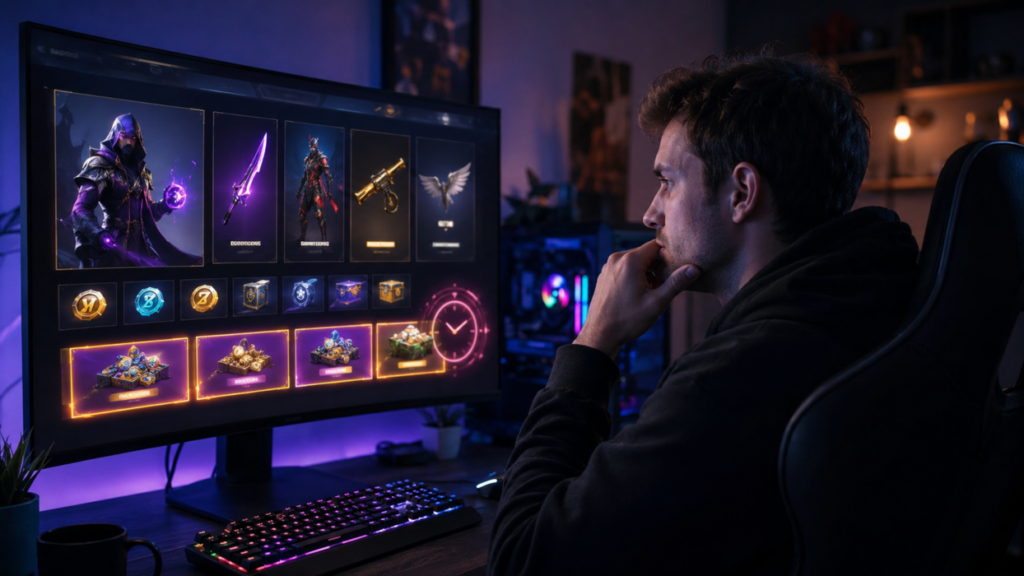
Today, games are living platforms. They have battle passes, rotating stores, premium currencies, cosmetics, boosters, subscriptions, founders packs, loot boxes, limited-time bundles, early access editions, and seasonal events. Some of these systems genuinely help games stay alive for years. Others cross a line by turning player psychology into a revenue engine. That line matters.
For a competitive community, monetization is not just a business topic. It affects fairness, trust, matchmaking health, player retention, and the culture surrounding the game. A strong in-game economy can fund updates, support esports, reward loyal players, and keep servers alive. A predatory one can burn out the audience, divide the player base, and make the game feel less like a battlefield and more like a casino lobby with better lighting.
Monetization Is Not the Enemy
The first honest point is this: developers need money. Servers cost money. Anti-cheat costs money. Live balance patches cost money. Community management, esports support, customer service, artists, engineers, designers, security teams, and infrastructure all cost money.
The old “one box sale forever” model worked better when games were more static. A shooter shipped, maybe received a few patches, perhaps got a map pack, and eventually the community moved on or hosted its own servers. Modern multiplayer games are different. Players expect years of updates, new content, stable online services, ranked support, events, cosmetics, progression, and seasonal refreshes.
So the ethical question is not, “Should games make money after launch?” Of course they should. The real question is: does the economy respect the player, or does it exploit the player? That distinction separates sustainable live-service design from short-term extraction.
The Three Pillars of Ethical In-Game Economies
An ethical game economy rests on three core principles: transparency, fairness, and restraint. Transparency means players understand what they are buying, what it costs in real money, and what they will receive. Confusing currency bundles, unclear odds, hidden recurring charges, and misleading discounts all weaken trust.
Fairness means spending money should not corrupt the competitive environment. In ranked play especially, players should win because of skill, teamwork, preparation, and execution, not because they purchased statistical advantages.
Restraint means the game avoids weaponizing pressure. Limited-time offers, streak systems, daily logins, fear of missing out, and social comparison are not automatically unethical, but they become dangerous when the design intentionally pushes players into spending before they can think clearly. A good monetization system says, “Here is something cool you may want.” A bad one says, “Act now or fall behind.”
Why Virtual Currency Is So Controversial
Premium currency is one of the most common monetization tools in modern games. On paper, it is convenient. Players buy a currency once, then spend it on skins, emotes, passes, or other items. Developers can standardize pricing across regions and platforms.
The problem is that virtual currency can obscure real-world cost. When a player buys 2,800 crystals, 1,100 coins, or 13,500 points, the emotional distance from actual money increases. That distance becomes even worse when currency bundles do not match item prices. A skin might cost 1,200 coins, but the store sells 1,000 and 2,500 coin packs. The player is nudged to overspend, then left with a small leftover balance that encourages another purchase later.
European consumer authorities have been paying close attention to this exact issue. In March 2025, the Consumer Protection Cooperation Network adopted key principles for in-game virtual currencies, including clearer real-money pricing and concerns around obscuring costs through currency exchanges. The European Commission later hosted stakeholder talks on applying those principles.
That is not just regulatory trivia. It points to a larger cultural shift. Players, parents, lawmakers, and consumer advocates are no longer treating virtual economies as harmless fantasy shops. They are treating them as real financial systems with real consequences.
Loot Boxes and the Trust Problem
Loot boxes remain one of the most debated monetization mechanics in gaming. The concern is simple: when players spend money for a randomized reward, the system begins to resemble gambling-like behavior, even if the legal definition varies by country.
Some players enjoy random rewards. Opening a pack can be exciting. Random drops have existed in games for decades. The issue is not randomness by itself. The issue is paid randomness combined with rarity tiers, limited-time availability, flashy presentation, near-miss psychology, and repeat purchase loops.
Different regions have handled loot boxes differently. Belgium has taken a strict approach toward paid loot boxes, while other jurisdictions have used disclosures, age ratings, industry principles, or case-by-case consumer protection enforcement. There is still no single global standard. The ethical standard, however, can be clearer than the legal one.
If a player pays money, they should know what they are getting. If randomness is involved, odds should be visible, understandable, and not buried in a submenu. If minors are involved, protections should be stronger. If the reward affects gameplay, the system deserves even more scrutiny.
For competitive communities, paid randomness creates a special problem. If the system affects weapons, stats, heroes, upgrades, perks, cards, or power progression, the economy can damage competitive legitimacy. A ladder loses meaning when the road to victory runs through a slot machine.
Pay-to-Win Is Still the Red Line
Few phrases ignite a multiplayer community faster than “pay-to-win.” Players may tolerate cosmetics, battle passes, expansions, and optional convenience features. But when money buys power, the conversation changes.
Pay-to-win does not always look obvious. It can appear as:
- A weapon available early through a paid bundle.
- A hero unlock that dominates the meta.
- An upgrade path that can technically be earned for free but realistically takes hundreds of hours.
- A paid booster that accelerates progression in a way that affects ranked readiness.
- A card, mod, rune, attachment, or unit that gives paying players a measurable edge.
Some developers defend these systems by saying everything can be earned through play. That argument only works if the grind is reasonable. If the free path is intentionally miserable so the paid shortcut feels necessary, the system is still exploitative.
Competitive games need a cleaner rule: money should never buy ranked advantage. Cosmetics are usually fine. Account services can be fine. Battle passes can be fine. Expansions can be fine if they do not fracture the ranked pool unfairly. But direct competitive power belongs on the field, not in the checkout menu.
Battle Passes: Fair Model or Digital Chore List?
The battle pass became popular because it solved several problems at once. Players got a clear reward track. Developers got predictable seasonal revenue. Communities got reasons to return.
At their best, battle passes are one of the more ethical monetization models. The player sees the rewards, knows the price, and can decide whether the time investment is worth it. At their worst, battle passes become digital labor contracts.
The pressure comes from expiration. If a player buys a pass but cannot finish it, they may feel punished for having a job, family, school, illness, travel, or simply another game they wanted to play. Games then become obligations. Instead of logging in because the match is fun, players log in because they do not want to “waste” their purchase.
An ethical battle pass should respect the player’s time. That might mean allowing old passes to be completed later, making progression reasonable, avoiding excessive daily chores, and ensuring the free track still feels meaningful. The goal should be engagement, not captivity.
Dark Patterns and Player Manipulation
The phrase “dark patterns” refers to design choices that push users into actions they might not otherwise take. In gaming, that can include confusing purchase flows, misleading buttons, hard-to-cancel subscriptions, hidden costs, aggressive countdowns, or interfaces that make buying easier than understanding.
The U.S. Federal Trade Commission has already taken action in this space. In December 2024, the FTC announced more than $72 million in refunds related to Epic Games and alleged unlawful billing practices involving Fortnite.
This matters because it shows that monetization design is not just a matter of taste. Interface choices can become consumer protection issues.
For players, the lesson is obvious. A game should not trick you into spending. For developers, the lesson should be even clearer. A purchase made through confusion is not a victory. It is a trust debt, and eventually that debt comes due.
The Special Responsibility Around Younger Players
Gaming audiences include adults, teenagers, and children. That creates an ethical responsibility that goes beyond normal retail design.
Younger players may not fully understand virtual currency, recurring purchases, odds, artificial scarcity, or the emotional pressure of limited-time content. They may also be more vulnerable to social comparison, especially when cosmetics signal status inside friend groups.
That does not mean games for younger audiences can never sell optional content. It means the guardrails need to be stronger. Parental controls, spending limits, clear receipts, refund paths, age-appropriate design, and reduced pressure mechanics all matter.
Industry self-regulation has attempted to address some of these concerns, especially around loot boxes. However, research has raised questions about whether voluntary principles are consistently followed or enforced in practice. One 2025 study of UK loot box self-regulation reported low compliance rates across several principles after July 2024.
When self-regulation fails, stricter regulation becomes more likely. The smarter path for the industry is to build better systems before lawmakers force the issue.
Cosmetics Are Usually the Healthiest Lane
For competitive multiplayer, cosmetics remain the cleanest monetization category when handled responsibly. Skins, banners, emotes, voice lines, finishers, sprays, charms, and profile items can let players express identity without affecting balance.
But even cosmetics can become unethical if the surrounding system is manipulative. A $20 skin with clear pricing is one thing. A rotating shop using artificial scarcity, premium currency leftovers, unclear discounts, and fear-driven countdowns is another.
Cosmetic monetization works best when it follows a few simple rules:
- Players should know the real price.
- Items should not be falsely advertised as scarce.
- Purchases should not create gameplay advantages through visibility, hitbox confusion, audio masking, or camouflage abuse.
- Players should have enough preview tools to understand what they are buying.
- Refund policies should be reasonable.
In competitive games, even visual design has balance implications. A skin that is harder to see on certain maps can become a paid advantage. Ethical cosmetic design needs art direction and competitive testing working together.
Esports Integrity Depends on Economic Integrity
For an esports ecosystem, monetization cannot be treated as separate from competition. The economy shapes who participates, how teams prepare, and whether the community trusts the result.
If new characters are locked behind grind walls, tournaments may become less accessible. If balance patches favor newly sold items, players notice. If ranked competitors feel pressured to buy boosters or unlocks, the ladder loses credibility. If cosmetics interfere with readability, broadcasts and match fairness suffer.
A serious competitive title should make sure tournament-ready content is accessible to all qualified players. That does not mean every cosmetic must be free. It means gameplay tools needed for fair competition should not be trapped behind unreasonable spending or grind. The best competitive economies support the scene without bending the rules of the scene.
What Ethical Monetization Looks Like in Practice
An ethical in-game economy does not have to be boring. It can still be profitable, stylish, and exciting. The difference is that it builds long-term loyalty instead of short-term pressure.
A strong model might include direct-purchase cosmetics with real-money prices clearly shown. It might include a battle pass that does not expire permanently. It might offer optional subscriptions that provide value without creating power gaps. It might sell expansions while keeping ranked balance intact. It might include earnable premium currency at a reasonable rate. It might rotate store items for presentation, but still allow players to access older items later.
Most importantly, it treats the player as a participant, not a target. That philosophy matters for legacy communities like ours. We remember when reputation was earned in public matches, clan wars, ladders, and tournaments. We also understand that modern games need revenue to survive. The challenge is not choosing between old-school purity and modern business. The challenge is building systems that fund the game without poisoning the battlefield.
The Future: Regulation, Reputation, and Player Standards
The direction is clear. Governments are watching. Consumer protection groups are watching. Parents are watching. Players are more informed than ever. Games that rely on confusing currencies, dark patterns, and gambling-like systems may still make money, but they are building on unstable ground. The studios that win long-term will be the ones that understand trust as a competitive advantage.
Players will support games that respect them. Communities will rally around developers who communicate honestly. Esports scenes will grow around titles where the economy does not undermine the match. Monetization will always be part of modern gaming, but it does not have to be predatory. The ethical path is not anti-business. It is good business.
A healthy in-game economy should make players feel excited to support the game, not pressured to keep up with it. It should reward loyalty without exploiting compulsion. It should offer style without selling power. It should fund the future without compromising the integrity of the present.
Because at the end of the day, a multiplayer game is more than a storefront. It is a shared arena. And if the economy breaks trust in that arena, no skin, bundle, pass, or premium currency pack can buy it back.