
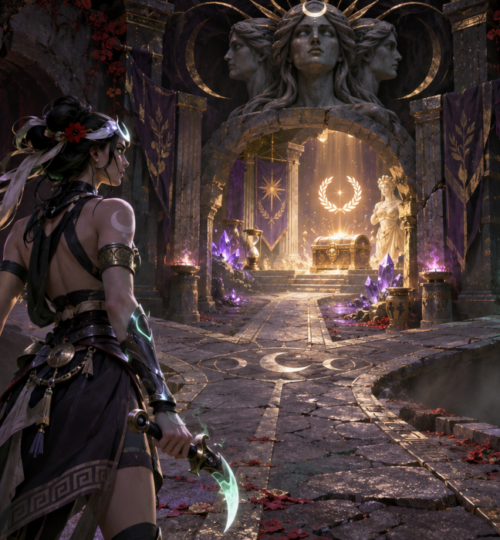
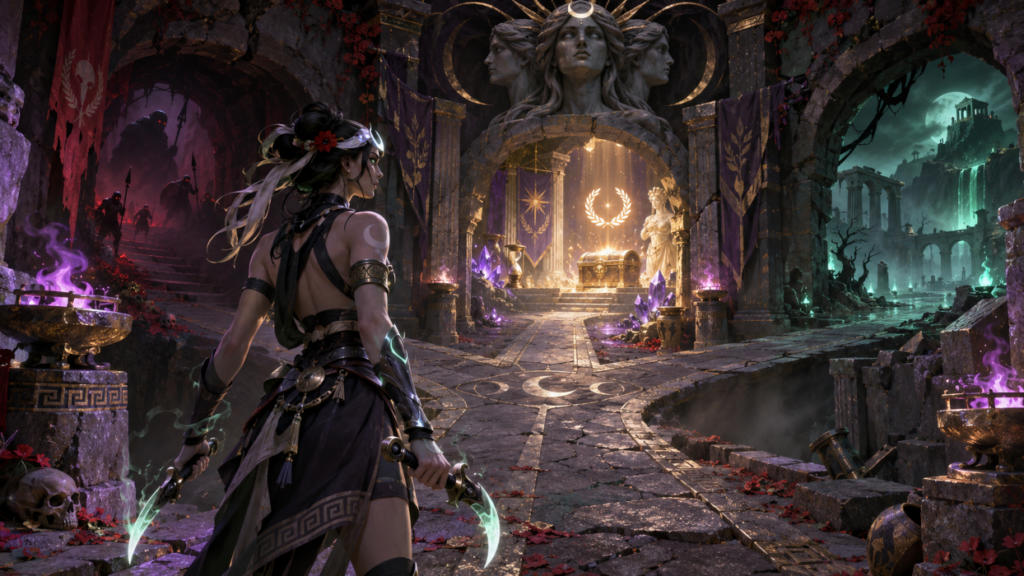
The difference between a memorable roguelike run and a forgettable one often comes down to decisions made between fights. Which reward is worth pursuing, how much health can be risked, and whether an unfamiliar combination of abilities deserves further investment can determine the outcome long before the final boss appears. Hades II builds on these familiar decisions with redesigned dungeon progression, larger environments, and multiple routes that fundamentally change how players approach its randomized encounters.
Supergiant Games had an exceptionally strong foundation to build upon. The original Hades combined responsive combat, randomized encounters, and character-driven storytelling into an unusually cohesive experience. Its sequel preserves those strengths while experimenting with how combat spaces, rewards, and progression choices are arranged. The result is a more expansive roguelike that offers greater strategic freedom, although its increased complexity occasionally disrupts the elegant pacing of its predecessor.
Following its full release on September 25, 2025, after an extended Early Access period, Hades II established itself as a substantial evolution of the original game’s design. The official launch announcement from Supergiant Games confirmed the completion of its central story alongside additional events, progression features, and late-game content. With both campaigns fully developed, the sequel provides a clearer picture of how Supergiant has reconsidered the relationship between randomized encounters and deliberate level design.
Procedural Generation With More Meaningful Choices
Procedural generation has always been central to the Hades formula. The games rely primarily on designed combat environments combined with changing encounter sequences, randomized rewards, and varying enemy arrangements. This approach gives Supergiant control over the quality and difficulty of individual encounters while ensuring successive runs rarely unfold in precisely the same way.
The original game handled this structure effectively. Players advanced through interconnected chambers, defeated enemies, and selected their next destination according to the rewards displayed above available exits. Olympian Boons encouraged experimentation, while the general progression through each region remained predictable. Once players became familiar with the available environments and enemy types, much of the strategic uncertainty shifted toward character builds and reward selection.
Hades II introduces considerably more variation into the relationship between chamber selection and progression. Some regions retain the traditional sequence of enclosed combat arenas, while others feature larger environments containing multiple rewards or central locations offering several possible destinations. These differences affect how players evaluate opportunities and manage resources throughout a run.
The changes become especially apparent when comparing regions. In one location, players must select a limited number of encounters from several available options. Elsewhere, they can collect multiple rewards within a single large chamber or decide whether additional fights are worth undertaking before confronting a boss. Randomization still determines which opportunities appear, but the surrounding level structure creates new ways to respond to them.
This is an effective direction for the sequel because experienced players gain more influence over the development of their builds. Understanding which rewards work together becomes increasingly valuable when several options are visible simultaneously. The additional flexibility does not guarantee a successful run, however, since enemy encounters and unpredictable Boon combinations can still undermine even a carefully planned strategy.
Two Distinct Routes Expand the Possibilities
One of the sequel’s most substantial additions is the ability to pursue two different campaigns. Melinoë, the Princess of the Underworld and younger sister of Zagreus, begins her struggle against Chronos by descending into the Underworld. As progression continues, players unlock an alternative journey across the surface toward Mount Olympus.
The Underworld route takes Melinoë through Erebus, Oceanus, the Fields of Mourning, and Tartarus. These regions introduce new enemy combinations and environmental challenges while retaining much of the original game’s progression structure. Players familiar with Hades will recognize the importance of planning around difficult boss encounters and selecting upgrades that complement their chosen weapons.
The surface campaign offers a different experience. Its progression begins in the ruined City of Ephyra, continues through the ship-filled Rift of Thessaly, and advances toward Mount Olympus and the Summit. Each region approaches combat and encounter progression differently, giving the surface journey an identity beyond its new enemies and visual presentation.
Supergiant gradually completed this second campaign during Early Access. The developer’s February 2025 Warsong Update introduced the final confrontation on the surface route and confirmed that the core structure of both campaigns was in place. This expansion was particularly valuable because the additional regions provided opportunities to experiment with progression systems that differed from the Underworld’s established format.
The two-route arrangement also improves long-term variety. Players encountering repeated difficulties in one campaign can pursue the alternative route while collecting resources, refining weapon strategies, and advancing other objectives. The additional environments reduce the frequency with which the same encounters must be repeated, although both routes still require substantial practice to master.
Access to this freedom comes gradually. Unlocking the surface involves the Crossroads’ Incantation system, and Melinoë initially faces additional restrictions that prevent unrestricted exploration. These requirements support the game’s progression structure, but they can make the opening hours feel slower than necessary for players primarily interested in combat experimentation.
The City of Ephyra Changes How Players Build a Run
The City of Ephyra provides one of the clearest examples of Hades II departing from traditional chamber progression. Rather than advancing through a straightforward sequence of rooms, Melinoë reaches a central plaza surrounded by multiple possible destinations. Progression requires destroying six Soul Pylons, allowing players to choose which encounters and associated rewards they want to pursue.
This arrangement introduces a stronger element of planning into the early stages of a surface run. Several available rewards can be evaluated before committing to individual encounters, giving players opportunities to prioritize the upgrades most useful to their current build. A strategy dependent on Magick can benefit from selecting appropriate resources, while a weapon-focused build may prioritize Boons that strengthen its primary attacks.
The difference becomes particularly apparent when compared with the original game’s conventional doorway choices. Instead of evaluating one or two immediate options before moving forward, players can develop a broader plan for the region. The Nintendo Life review of the completed game identifies Ephyra’s collection of available doors as a meaningful opportunity to guide build development.
Randomization remains important because the available rewards change between runs. A player hoping to develop a particular combination of Boons may discover that the necessary upgrades are unavailable, requiring adjustments before the next major encounter. The city’s design makes those limitations easier to evaluate because several opportunities are presented together.
Ephyra is among the sequel’s strongest level-design experiments. Its structure encourages informed choices without providing complete control over progression, and its collection of independent encounters gives the region a distinctive rhythm. The main drawback is that repeatedly examining available destinations can interrupt the flow of combat, particularly once players have developed a reliable strategy. Nevertheless, the additional decision-making gives this section more strategic character than a conventional sequence of randomized rooms.
The Fields of Mourning Redefine Chamber Progression
The Fields of Mourning introduce another substantial change to the formula. Instead of moving through numerous compact arenas containing individual rewards, players enter comparatively large environments with multiple encounters and opportunities for upgrades. These spaces change how combat and resource collection are organized within a single chamber.
Each major reward must be unlocked through its associated encounter, allowing players to determine the order in which they confront different enemy groups. This creates opportunities to prioritize upgrades that might improve performance in subsequent fights. The presence of multiple rewards also makes individual chambers feel more substantial than their counterparts in earlier regions.
Larger environments place greater emphasis on positioning and battlefield awareness. Movement becomes particularly valuable when facing groups of enemies whose attacks cover different portions of the arena. Players can use the available space to manage dangerous opponents, although the extended encounters sometimes make maintaining offensive pressure more difficult.
The region’s weaknesses emerge during repeated runs. Moving between objectives and fighting several groups of enemies can become tedious when the available rewards offer little improvement to an established build. The larger spaces also lack some of the concentrated intensity found in the game’s smaller combat arenas.
The Fields of Mourning demonstrate both the potential and limitations of expanding procedural encounters. Multiple objectives provide additional opportunities for planning, but the extra movement and combat can slow progression without always creating equally valuable decisions. The region remains a worthwhile experiment, even if its pacing is less consistent than Ephyra’s more focused design.
Tartarus Turns Shortcuts Into Calculated Risks
Tartarus introduces a different kind of strategic decision as players approach Chronos. Certain chambers offer numbered exits that advance toward the final confrontation, alongside optional encounters that provide additional rewards. This structure allows players to influence how much preparation they undertake before facing the Underworld’s final boss.
The decision depends heavily on the condition of the current build. A player with strong offensive abilities and sufficient survivability may benefit from advancing directly toward Chronos, avoiding unnecessary opportunities to lose health. Another player struggling with damage output or resource management might choose additional encounters in hopes of obtaining upgrades.
The calculation becomes more difficult when health is already low. An optional fight might provide the Boon or additional survivability needed to defeat Chronos, but taking damage during that encounter could eliminate the advantage. The quality of the available reward must therefore be weighed against the risks involved in obtaining it.
Tartarus gives players a welcome degree of responsibility for their final preparations. The ability to pursue additional rewards or shorten the journey prevents every run from following an identical sequence before the boss. More importantly, the decision reflects how successfully the player has assembled and managed a build throughout the preceding regions.
Randomized Boons and Weapons Gain Greater Strategic Depth
Changes to dungeon progression would have limited value without a combat system capable of supporting more varied strategies. Hades II expands the interactions between weapons, divine abilities, and character upgrades, making randomized rewards particularly influential.
Melinoë’s arsenal supports several approaches to combat, including close-range aggression, ranged attacks, and abilities designed to control enemy movement. Her weapons also feature charged Omega techniques powered by Magick, introducing additional considerations when determining how to distribute offensive resources during an encounter.
Olympian Boons can dramatically alter these abilities. Damage-over-time effects encourage different tactics from upgrades emphasizing immediate burst damage, while crowd-control abilities can make otherwise dangerous enemy groups easier to manage. Combining these effects with individual weapon characteristics produces a wide range of viable strategies.
The GameSpot review of Hades II examines these combat changes, particularly Melinoë’s Cast ability and the expanded offensive options provided by Omega attacks. These additions allow players to develop strategies that depend on positioning, resource management, and coordinated ability effects rather than relying exclusively on rapid attacks.
The randomized reward system reinforces this flexibility. A promising build may develop according to plan, but an unexpected Boon can sometimes provide a stronger alternative than the combination originally intended. Recognizing those opportunities is an important skill, particularly when a familiar strategy becomes impractical because the necessary upgrades fail to appear.
Preparation offers some influence over that uncertainty. Keepsakes can help players pursue particular divine abilities, while Arcana Cards provide passive advantages selected before beginning a run. These systems reward knowledge of weapon mechanics and available Boons without eliminating the unpredictable combinations that make repeated attempts worthwhile.
Melinoë’s Combat Style Changes the Rhythm of Encounters
The transition from Zagreus to Melinoë involves more than replacing the protagonist and introducing new weapons. Her movement and offensive abilities encourage a more deliberate approach to combat, particularly when using charged techniques and managing Magick.
Zagreus relied heavily on rapid movement, frequent dashes, and aggressive combinations. Melinoë retains responsive defensive movement but emphasizes sprinting and a Cast ability that restricts enemy movement within a defined area. Her Omega attacks can deliver considerable damage, although charging them requires careful timing and an understanding of nearby threats.
These mechanics interact effectively with the sequel’s varied environments. Larger arenas allow players to reposition and control enemy groups, while the confined spaces aboard ships in the Rift of Thessaly demand more precise movement. Certain combinations of weapons and Boons become particularly useful in specific environments, giving arena design a meaningful influence on combat strategy.
The additional control options introduce a learning curve. Players accustomed to Zagreus’ rapid evasive movement may initially find Melinoë less responsive, particularly when attempting to charge an attack while enemies are approaching. Once the timing becomes familiar, however, her abilities support a broader range of tactical responses.
This relationship between movement, enemy placement, and environmental design is one of the sequel’s strongest mechanical achievements. The randomized chambers retain their importance because the effectiveness of a build depends partly on the circumstances in which its abilities are used. Strong damage output remains valuable, but movement control and the ability to manage crowded encounters can be equally important.
Expanded Progression Systems Create Uneven Pacing
The most persistent weakness in Hades II comes from the number of progression systems competing for attention. Arcana, Incantations, weapon upgrades, familiars, Keepsakes, gathering resources, and additional challenges all require decisions and investment. Individual systems generally provide meaningful benefits, but their combined requirements can make the opening hours unnecessarily complicated.
Gathering materials for an Incantation may require visiting specific regions, while other upgrades depend on resources obtained from particular encounters. This creates a progression cycle in which completing practical objectives can occasionally take precedence over experimenting with combat. Some of these requirements provide useful direction, although others feel like additional steps between the player and the game’s strongest content.
The PC Gamer review similarly identifies the opening hours as a weaker portion of the experience, observing that the expanded customization systems become more rewarding after the initial progression barriers have been overcome. That assessment reflects one of the game’s central design compromises. The eventual freedom to experiment is considerable, but reaching that point requires patience with systems that initially offer limited options.
The larger scope also influences the narrative. Melinoë’s campaign involves a broader conflict than Zagreus’ personal struggle to escape the Underworld, with a larger supporting cast and two campaigns developing the confrontation with Chronos. The additional environments provide opportunities for new character interactions, but the main story sometimes loses momentum amid the many objectives required to advance.
The presentation remains exceptionally strong throughout. Supergiant’s detailed environments, expressive character portraits, and distinctive musical direction give individual regions recognizable identities. Scylla and the Sirens provide a particularly memorable example of how music, characterization, and boss mechanics can reinforce one another.
The broader campaign receives a more mixed assessment when examining its narrative payoff. Video Games Chronicle’s review praises the mechanical design while questioning whether the larger story delivers the emotional impact of the original. The criticism has merit because additional progression objectives sometimes delay major developments without strengthening their eventual resolution.
These weaknesses do not erase the quality of the underlying game, but they affect how consistently its strongest elements are delivered. Combat experimentation becomes increasingly satisfying as additional systems open up, while the story occasionally struggles to maintain the same momentum. Players primarily interested in developing complex builds may find the expanded structure more rewarding than those drawn to the original game’s comparatively focused narrative progression.
Replayability Extends Beyond Randomized Rooms
Long-term replayability remains one of Hades II‘s greatest strengths, particularly once its primary progression systems are established. The two campaigns already provide substantial environmental variety, while additional challenge systems create further reasons to revisit familiar encounters.
The Oath of the Unseen allows players to increase difficulty through modifiers known as Vows. These restrictions alter the conditions under which encounters are completed, requiring greater precision and more deliberate planning. Higher difficulty settings make previously manageable fights dangerous again, especially when established strategies become less reliable under the selected restrictions.
Chaos Trials provide another approach to replayability through predefined equipment, abilities, and starting conditions. Instead of freely assembling a preferred loadout, players must adapt to the circumstances established for each trial. These challenges encourage experimentation with unfamiliar combinations and can reveal strengths in weapons or abilities that players might otherwise overlook.
The additional systems work particularly well because Hades II already offers considerable variety in how individual regions operate. A build capable of clearing the Underworld efficiently may struggle against the different enemy arrangements found on the surface. Similarly, a strategy designed around controlling large groups may perform differently when facing a powerful boss with limited opportunities for sustained attacks.
At higher difficulty settings, the strategic decisions introduced by the game’s redesigned environments become increasingly consequential. Choosing an additional encounter in Tartarus can provide the resources needed to survive Chronos, while selecting the wrong rewards in Ephyra may leave a build poorly prepared for later challenges. These decisions create opportunities for experienced players to apply their understanding of the game’s systems throughout an entire run.
The most effective difficulty comes from those situations where the player has several reasonable options but no guaranteed outcome. An extra reward can improve a promising build, yet the fight required to obtain it may consume the resources needed for the next boss. By allowing its environments to influence when and how those decisions are made, Hades II gives the familiar roguelike process of managing risk a more demanding and varied form.