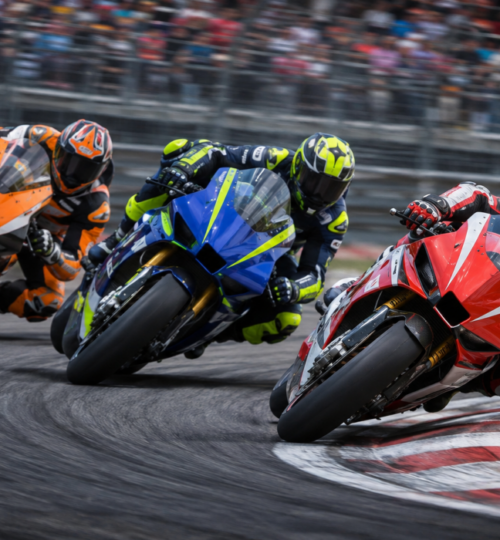
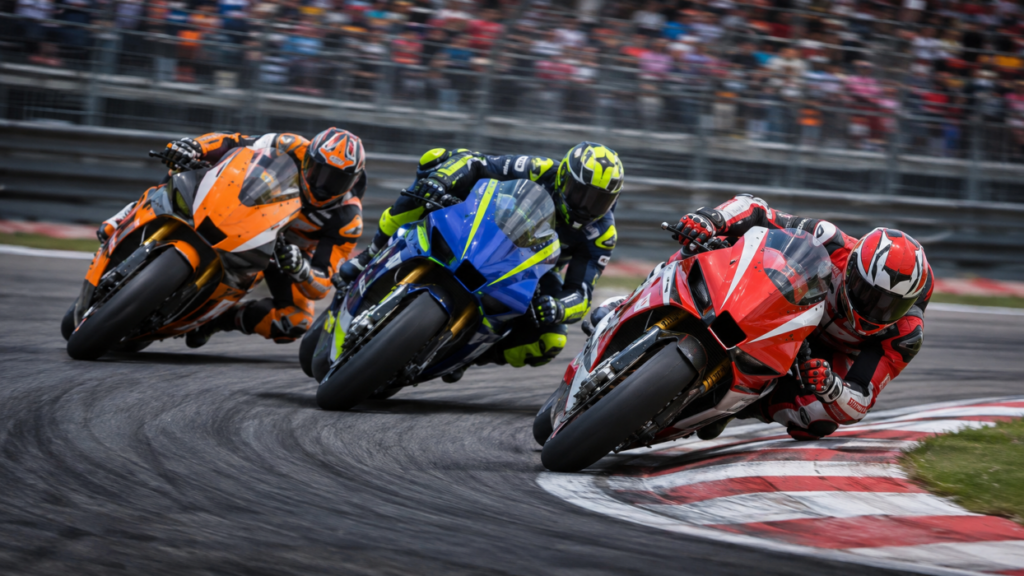
Motorcycle racing games demand a particular kind of precision. Braking too late, shifting weight at the wrong moment, or applying too much throttle while leaned over can turn a promising lap into a trip through the gravel. With MotoGP 26, developer Milestone has rebuilt its approach to motorcycle handling, placing greater emphasis on the physical relationship between rider movement and machine behavior.
Released on April 29, 2026, MotoGP 26 features the official championship across MotoGP, Moto2, and Moto3, alongside an expanded career mode and updated multiplayer competition. The headline addition is Rider-Based Handling, a revised physics system intended to make steering, braking, and weight transfer feel more natural. Career mode introduces press conferences, personal management, and opportunities to rewrite the careers of established riders. Together, these changes raise expectations for an annual franchise that already offers one of the more demanding experiences in racing games.
Rider-Based Handling Changes How Motorcycles Respond
The most substantial technical revision in MotoGP 26 concerns how steering inputs translate into motorcycle movement. Previous installments primarily interpreted directional inputs as commands to steer the motorcycle, with rider animations following those movements. The new system reverses that relationship, giving the rider’s body position and weight distribution a more direct role in determining how the motorcycle responds.
Milestone outlined the system in its official MotoGP 26 technical and gameplay announcement. Rider positioning now contributes more directly to stability, corner entry, braking, and transitions between leaning positions. Revised animations accompany these mechanical changes, making the rider’s movements appear more closely connected to the motorcycle’s behavior. The system applies to both Arcade and Pro experiences, although the difficulty of controlling the motorcycle differs considerably between them.
There is an important distinction between the new physics system and the game’s underlying technology. MotoGP 26 continues using Unreal Engine 5, which Milestone introduced to the series with MotoGP 25. The current release concentrates on rebuilding motorcycle handling and improving rider feedback rather than introducing another rendering engine. This helps explain why the game can feel mechanically different while retaining much of its predecessor’s visual presentation.
Independent evaluations suggest the most noticeable improvement comes during changes of direction. Motorcycles respond more readily to steering corrections, while transitions between opposite lean angles appear smoother and more closely connected to rider movement. These adjustments become especially relevant through consecutive corners, where maintaining momentum requires precise timing rather than aggressive steering corrections.
The difference is meaningful without making earlier experience obsolete. Veteran players will recognize much of the established handling behavior, but the revised responsiveness can affect braking habits, cornering precision, and the timing of steering inputs. The system provides a promising foundation for further improvements, although several longstanding physics problems remain.
Braking and Stability Remain the Greatest Challenges
Braking is where motorcycle simulations become particularly unforgiving. A racing motorcycle must shed enormous speed while maintaining enough stability to enter a corner, often with the rider progressively releasing brake pressure as the lean angle increases. The relationship between braking force, available tire grip, and steering input leaves relatively little room for careless corrections.
MotoGP 26 continues demanding considerable precision through these moments. Carrying too much brake pressure into a corner can overwhelm the front tire, while releasing the brakes too early may leave the motorcycle traveling too quickly to reach the apex. The revised handling makes certain adjustments more responsive, but players must still develop consistent braking techniques to complete competitive laps.
The new model also introduces some questionable behavior. In its review of MotoGP 26, Top Gear praised the improved connection between rider movement and motorcycle control while identifying instability following abrupt inputs. The reviewer described situations where aggressive throttle application or steering corrections produced prolonged oscillations that were difficult to recover from. Such behavior raises concerns about whether the simulation consistently distinguishes between recoverable handling mistakes and severe losses of stability.
Kerb interactions remain another source of criticism. Real motorcycle racers frequently use sections of a circuit’s kerbing to maximize their racing lines, although the consequences depend on speed, lean angle, suspension loading, and the kerb’s design. In MotoGP 26, certain kerbs can still produce disproportionately severe reactions, occasionally unsettling a motorcycle or sending it airborne under circumstances that appear excessive.
These limitations have practical consequences for competitive racing. Players need to understand why a mistake occurred so they can adjust their technique, particularly when pursuing small improvements in lap time. Demanding physics can produce rewarding competition when their behavior remains consistent. Unpredictable reactions, however, make it harder to determine whether a poor result came from rider error or an exaggerated response from the simulation.
Arcade and Pro Experiences Serve Different Racing Styles
Milestone retains the two handling approaches introduced in MotoGP 25. Arcade Experience provides a more forgiving interpretation of motorcycle physics, while Pro Experience places greater responsibility on the rider to manage braking, throttle application, and stability. Both incorporate the revised Rider-Based Handling system, allowing players to experience its changes without adopting identical difficulty settings.
Arcade Experience remains an appealing option for players who enjoy close racing without committing to the steepest learning curve. It permits more aggressive inputs and provides additional tolerance when entering corners or accelerating out of them. Mistakes are less likely to end a race immediately, although the motorcycles still retain recognizable differences in performance and behavior.
Pro Experience demands greater consistency across an entire lap. Riders must consider their approach speed, the amount of braking force remaining as they begin turning, and whether the motorcycle is sufficiently upright before applying substantial power. These considerations become more demanding during longer races, where tire condition, changing weather, and traffic can interfere with an otherwise effective racing line.
Artificial intelligence introduces another complication. Dynamic AI attempts to adjust opponent performance according to the player’s pace, reducing the need to select a fixed difficulty setting. The approach can produce close racing, but reviewers have reported situations where opponents suddenly become faster after the player gains several positions. Rapid adjustments can make competition feel inconsistent, particularly when a strong opening lap appears to trigger an immediate increase in opponent speed.
Career Mode Adds More Responsibility Away From the Circuit
Career mode receives several additions intended to give players greater influence over their professional progression. A redesigned 3D paddock serves as the central area for managing race weekends, relationships, development priorities, and career decisions. The presentation provides a more recognizable representation of professional motorcycle racing, where competition extends beyond what happens on the circuit.
Thursday press conferences are among the most visible changes. Players respond to journalists and establish objectives that can influence rivalries, reputation, and relationships with teams. Some decisions involve competitive targets, while others concern motorcycle development or future professional opportunities. The system connects statements made before a race weekend with objectives pursued during competition.
The concept fits naturally within a MotoGP career. Professional riders operate under contractual obligations, compete against teammates for recognition, and regularly face questions about their performance and potential transfers. Giving players some influence over those relationships creates reasons to consider the wider championship rather than concentrating exclusively on race results.
The implementation has limitations, however. Press conferences rely heavily on dialogue selections, and the absence of voice acting reduces their presentation quality. The available choices can also become repetitive over a long season, particularly when similar objectives appear across multiple race weekends. These interactions establish useful context, but they rarely provide the complexity associated with a dedicated motorsport management simulation.
A personal manager adds another layer to professional progression. This character assists with contract negotiations, manufacturer relationships, and movement through the rider transfer market. Strong performances can create opportunities with more competitive teams, while relationships and negotiations influence the available career paths.
The transfer market gives championships room to develop beyond their initial starting grids. Riders can change teams, creating alternative competitive scenarios as successive seasons unfold. This flexibility helps prevent every championship from feeling identical, although the resulting transfers can occasionally produce combinations that seem unlikely compared with the real sport.
Real Riders and Dynamic Ratings Expand Career Possibilities
One of the more appealing career additions is the ability to assume control of established MotoGP riders. Instead of creating an entirely fictional competitor, players can select a familiar name and construct an alternative career. The feature allows scenarios in which an established champion begins in a lower category or a current rider follows a different route toward the premier class.
The freedom comes with restrictions. As OverTake’s examination of the career mode explains, players cannot necessarily begin with their selected rider’s actual team. Available starting teams are restricted, even when the chosen rider currently competes for a leading manufacturer. This produces unusual scenarios when an established champion begins a career with machinery that differs considerably from their real-world motorcycle.
The game also treats these alternative careers as fictional starting points within the current championship framework. Selecting an experienced MotoGP veteran and beginning in Moto3 does not recreate that rider’s younger career with historically accurate teams, motorcycles, or racing seasons. The result provides flexibility for fictional career scenarios, while players seeking a faithful recreation of the current championship may prefer Championship mode.
Dynamic Rider Ratings provide another connection to the real-world sport. Riders receive evaluations based on time attack, race pace, head-to-head performance, and reliability. These ratings are designed to change according to results from the actual MotoGP championship, reflecting developments in the competitive order as the season progresses.
The feature offers useful context when comparing competitors, particularly as individual performances fluctuate throughout the year. Its contribution to career management is less substantial than the headline addition might suggest. Ratings help represent the strengths of individual riders, but the deeper career experience still depends primarily on team relationships, development objectives, and the player’s racing results.
Motorcycle Development Still Needs Greater Depth
Motorcycle development remains an important part of career mode, with players influencing technical improvements through conversations with their teams. Feedback provided after races can guide development priorities, potentially improving performance as the championship progresses. Over multiple seasons, development can substantially change the competitive position of a manufacturer, allowing initially weaker motorcycles to become championship contenders.
The limitation lies in how much technical involvement players actually receive. Research resources, engineering schedules, and competing development programs are largely outside their direct control. Many decisions take place through brief dialogue selections, leaving relatively few opportunities to manage the compromises that shape real motorcycle development.
This concern also appears in Traxion.GG’s evaluation of MotoGP 26, which identifies the limited development system as an area where the franchise continues to trail more elaborate motorsport career experiences. Motorcycle racing offers considerable potential for meaningful technical decisions involving braking stability, acceleration, electronics, and cornering behavior. A deeper system could make those characteristics competing development priorities rather than general improvements that accumulate throughout a season.
The revised physics could provide an effective foundation for such changes. Riders struggling with corner entry might prioritize improvements to braking stability, while those consistently losing time on corner exits could pursue better acceleration and traction. Connecting development choices to identifiable handling weaknesses would make technical progression more relevant to the actual racing experience.
Race Off Introduces Production Bikes and More Training Options
Outside the championship, Race Off returns with several disciplines designed to provide alternatives to prototype motorcycle racing. Motard, Flat Track, and Minibikes remain available, while the new Canterbury Park environment expands the selection of training locations. These activities reflect the variety of motorcycles professional riders use to develop and maintain their racing skills.
The largest addition is Production Bikes, which introduces manufacturer-specific events featuring high-performance 1000cc road motorcycles. Riders from different championship categories can participate in events associated with the same manufacturer, creating encounters that would not normally occur during Grand Prix weekends. The different handling characteristics also provide a change from the behavior of dedicated racing prototypes.
Production Bikes are an appealing addition because they connect professional competition with motorcycles derived from road-going machinery. Their inclusion broadens the available riding experiences without requiring the game to abandon its official MotoGP identity. However, event availability and circuit restrictions limit opportunities to experiment with these motorcycles outside their designated competitions.
The other training disciplines have also received mixed assessments. Flat Track, in particular, has attracted criticism for handling that can feel disconnected from the expected relationship between traction and motorcycle movement. Motard provides a different challenge, while Minibikes offer a more compact and accessible racing format.
The longer-term value of Race Off depends on how effectively these activities contribute to career progression. Optional events become more purposeful when participation improves relationships, creates opportunities, or provides a practical reason to develop different riding techniques. During a lengthy championship season, additional competitions need sufficient variety and relevance to justify the time spent away from the main racing calendar.
Multiplayer Competition and Post-Launch Improvements
Online racing remains an important part of MotoGP 26, particularly for players who prefer competing against human opponents. Cross-platform multiplayer connects compatible PlayStation, Xbox, and PC versions, with racing grids accommodating up to 22 participants. Nintendo Switch and Switch 2 operate without cross-play and have smaller multiplayer grids.
The larger grids create opportunities for more realistic championship events, although they also increase the importance of reliable matchmaking, consistent contact physics, and race administration. Small collisions between motorcycles can have severe consequences, especially during closely contested braking zones. Competitive multiplayer therefore places considerable pressure on the accuracy and predictability of the handling model.
Milestone continued adjusting the online experience after release. Its July 27, 2026 update introduced Online Ranked Races and Race Director mode for supported PC, PlayStation 5, and Xbox versions. The same update addressed Moto3 AI performance at Mandalika and refreshed several elements of the championship presentation. Subsequent hotfixes resolved certain online lobby crashes and a career-related livery issue.
Ranked racing and race administration provide useful tools for structured multiplayer competition. They create opportunities to organize more consistent events and distinguish players according to competitive performance. Their presence does not automatically establish the quality of matchmaking or race management, however, since those systems must remain reliable during actual competition.
The game also retains local split-screen racing and customization tools for helmets, rider numbers, and motorcycle liveries. Cross-platform sharing of user-generated designs is available on supported systems, excluding both Switch versions. These features provide additional personalization, particularly for players participating in regular online races with recognizable team identities.
Does MotoGP 26 Offer Enough Improvement Over MotoGP 25?
The most difficult comparison for MotoGP 26 is with its immediate predecessor. MotoGP 25 already introduced Arcade Experience, Race Off training disciplines, and Unreal Engine 5. Several features that make the current game approachable and entertaining were therefore established before this year’s release.
For newcomers, the amount of available content is substantial. The official 2026 championship includes more than 70 riders across 38 teams, while the return of the Brazilian Grand Prix brings Goiânia into the circuit selection. Multiple racing classes, career progression, alternative motorcycle disciplines, and multiplayer competition provide considerable opportunities to develop racing skills.
Returning players face a more complicated purchasing decision. Rider-Based Handling represents a genuine mechanical revision, and career mode offers additional interaction with the professional side of motorcycle racing. The underlying structure remains familiar, though, with several progression systems and longstanding limitations carried forward from previous installments.
Annual sports franchises regularly face this challenge because their basic competitive experience is already established. Maintaining current riders, teams, and championship calendars has value, but players who invest hundreds of hours mastering an earlier release generally expect meaningful improvements before purchasing another. The revised physics provide the strongest argument for MotoGP 26, particularly for riders who appreciate relatively subtle changes in motorcycle control.
Career mode is less convincing as a reason to upgrade on its own. Press conferences and personal management improve the presentation of professional racing, but limited development decisions and repetitive interactions prevent the experience from becoming a substantially different career simulation. Players primarily interested in completing championship seasons will find a capable continuation of the existing formula, while those expecting a more demanding management experience may remain disappointed.
A productive direction for future development would be to connect career decisions more closely to the experience of controlling the motorcycle. Development programs that influence identifiable handling characteristics could allow riders to compensate for personal weaknesses or pursue machinery suited to their preferred techniques. Team relationships could affect engineering support, while rivalries might establish competitive objectives extending across several seasons.
Such improvements would give successive career seasons greater mechanical and strategic variety. MotoGP 26 already provides demanding motorcycle racing, an extensive championship roster, and a technically revised handling system that rewards precision. Giving players more control over the machinery they develop and the professional decisions surrounding each race would make the career experience more rewarding over the long term.