
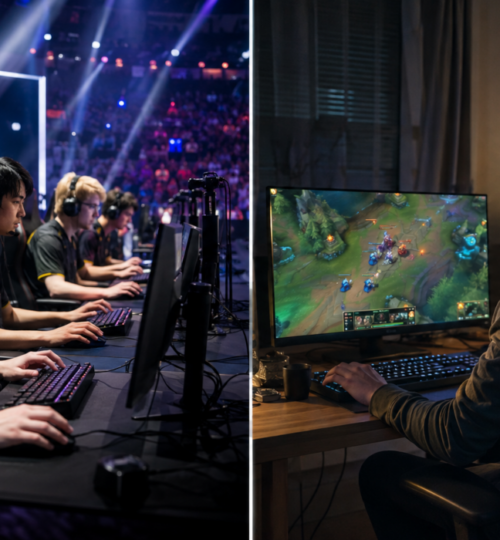
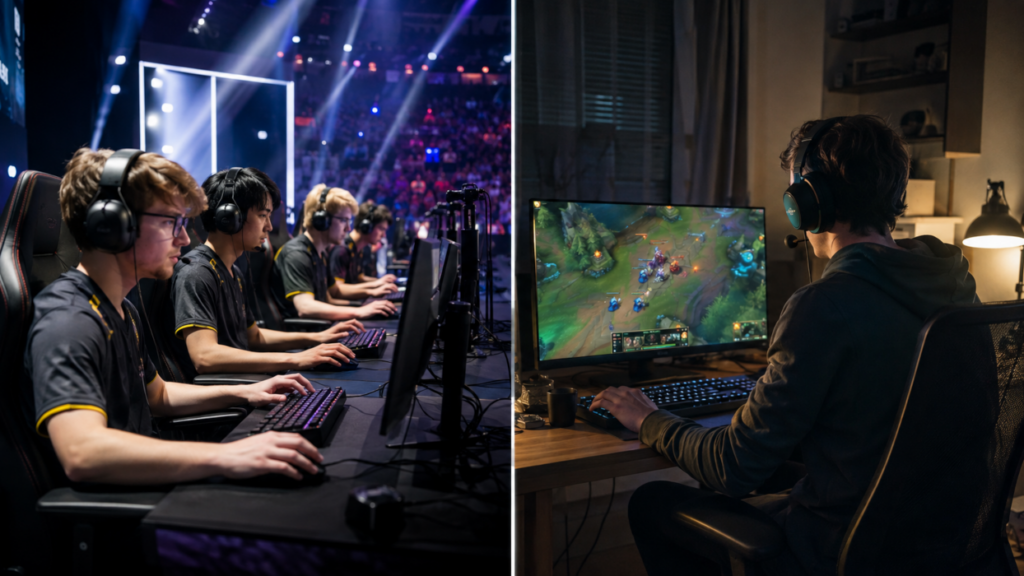
Competitive games are built on a contradiction. The same rules must serve the player grinding ranked at midnight, the newcomer learning basic movement, the streamer playing eight hours a day, and the professional team preparing for a championship worth millions. They are all technically playing the same game. In practice, they are playing several different versions of it.
That split is where balance arguments begin. A character can feel useless in ordinary matchmaking while controlling professional drafts. A weapon can post average statistics across the player base yet become oppressive in the hands of players with elite timing and coordination. A mechanic that produces brilliant tournament moments can make casual matches miserable.
Developers cannot patch only for the majority. They also cannot treat professional play as the sole source of truth. Every adjustment sends pressure through the full player population, and each skill bracket reacts differently.
The Same Patch Hits Different Games
Balance data becomes harder to read as player skill rises. In lower and middle ranks, mechanical mistakes, weak communication, poor map awareness, and inconsistent team composition create enormous statistical noise. Strong tools may appear ordinary because players fail to use them correctly. Straightforward tools may look dominant because they demand less execution.
At the highest level, that noise shrinks. Professional teams practice set plays, study opponent habits, coordinate cooldowns, and punish tiny positioning errors. A character with a difficult setup can become much stronger once five players understand exactly how to support it. An ability that seems merely annoying in public matchmaking can decide an entire round when paired with perfect timing.
League of Legends has openly separated its balance analysis into multiple skill groups, including average, skilled, elite, and professional play. Riot has also described different triggers for intervention at each level because one universal win-rate line cannot explain how a champion behaves across the whole population.
That is the heart of the issue. A 48 percent win rate does not automatically mean a character is weak. A 52 percent win rate does not automatically mean it is broken. Pick rate, ban rate, mastery, team coordination, map selection, matchup spread, and tournament presence can tell a very different story.
Professional Play Exposes the Ceiling
Top players do not merely perform ordinary strategies more cleanly. They discover interactions that most of the audience never sees. They calculate timing windows, build compositions around narrow advantages, and repeat successful patterns until opponents are forced to answer them.
This is why a character can dominate tournaments without dominating ranked play. The professional version of that character may depend on disciplined spacing, practiced utility chains, or coordinated protection. Those conditions rarely exist in a solo queue lobby filled with strangers.
Riot’s published goals for League professional play have included champion diversity and limits on excessive pick and ban presence. The concern is not just whether a champion wins. It is whether teams feel compelled to draft it or remove it before the match begins.
Forced presence is a warning sign. Once a hero, agent, champion, weapon, or strategy becomes mandatory, competitive choice starts to collapse. Drafts become predictable. Teams spend practice time solving the same narrow puzzle. Viewers see repeated compositions. The game may still be technically balanced by win rate, but the competitive experience has become stale.
Professional play therefore acts as a stress test. It reveals the highest possible value of every system. That information matters, even though only a tiny percentage of players can reproduce the result.
The 99% Still Pays the Bill
The wider audience keeps the game alive. Casual players buy cosmetics, fill matchmaking queues, create community content, invite friends, and provide the population required for a healthy ranked ladder. A patch that improves tournament diversity but makes ordinary matches less enjoyable can solve one problem while creating a larger one.
The most common failure is the heavy nerf aimed at professional coordination. A character may be weakened because elite teams can combine its abilities too efficiently. The casual player, who was already struggling to produce value, receives the same reduction. Their favorite pick goes from difficult to disappointing.
This creates a perception problem. Players read that a character is dominating professional play, then open their own match history and see poor results. The explanation may be valid, but it feels disconnected from their experience.
VALORANT’s balance team has described a wider set of inputs than raw win rate, including pick frequency, rank, map performance, mastery curves, and the difference between broad popularity and deep specialist play. That approach is necessary because the average player is not a smaller version of a professional. Their matches have different rhythms, different communication, and different error patterns.
A game that repeatedly punishes the majority for strategies seen only in tournaments risks teaching ordinary players that their own experience does not count.
Easy Power and Difficult Power
The cleanest balance problems involve tools that are too strong everywhere. The harder cases involve accessibility.
Some characters produce value with simple inputs. Others require precision, deep game knowledge, or coordination. If both have the same theoretical ceiling, the easier option may overwhelm lower ranks. If the difficult option has a much higher ceiling, it may take over professional play.
Developers often try to shift power rather than simply remove it. A forgiving ability may lose raw damage but gain a more skill-dependent reward. A professional staple may retain its identity while losing the safest part of its kit. A beginner-friendly character may receive clearer weaknesses that stronger opponents can exploit.
VALORANT’s Chamber changes are a useful example of this style of thinking. Riot said it wanted to preserve the agent’s identity while reducing the influence that had made him a defining pick across ranked and professional matches. The changes pushed him toward more deliberate setup and tighter positional limits rather than deleting his core concept.
That kind of adjustment is healthier than flattening every character into the same power curve. Competitive games need specialists, risky picks, mechanical monsters, and accessible entry points. Equality of outcome is not the goal. Fair counterplay is.
Spectator Balance Is Real
Esports adds another audience that does not appear in matchmaking statistics. Viewers need matches that are understandable, varied, and dramatic. A strategy can be fair to play against while still being awful to watch.
Slow defensive metas may reward discipline but produce long stretches with little action. Burst-heavy metas may create exciting clips while making fights difficult to follow. Repetitive drafts can reduce team identity. Excessive visual effects can hide the skill that decided a play.
Developers patching around major events are therefore shaping both competition and entertainment. That does not mean every update should chase highlight reels. It means tournament health includes more than mathematical fairness.
The danger appears when broadcast appeal starts driving the game too aggressively. Frequent meta disruption can make professional preparation feel disposable. Large patches near qualification events can reward adaptation, but they can also turn months of practice into a gamble. Players need enough stability to build expertise, while viewers need enough change to prevent repetition.
That tension never disappears.
Ranked Statistics Can Mislead Everyone
Players often treat public win-rate sites as final proof. Those numbers are useful, but they rarely explain the full problem.
A low pick rate can inflate the performance of a character played mostly by specialists. A popular beginner character can post a weak win rate because inexperienced players select it. A difficult champion can look harmless across all ranks while becoming oppressive after hundreds of games. Map pools, role distribution, team composition, and patch timing can distort the sample further.
Even professional statistics require care. Tournament sample sizes are small compared with global matchmaking. Teams may copy a strategy before fully testing alternatives. A character can gain draft priority because it fits the rest of the current meta, not because it is individually overpowered.
This is why strong balance teams mix data with observation. They examine how power is expressed, how opponents respond, and whether the interaction creates meaningful decisions. Numbers can identify a fire. They do not always identify what started it.
Separate Rules Are Tempting but Dangerous
One apparent solution is to balance professional play and public matchmaking separately. Give tournament clients one set of values and ranked players another. The idea sounds efficient. It also cuts against one of esports’ strongest traditions.
Competitive gaming works because viewers can play the same game they watch. The strategies may be far beyond their ability, but the rules are familiar. A fan can see a professional use an ability, load the game later, and attempt the same play.
Separate balance versions weaken that connection. Patch discussions become confusing. Practice outside official environments becomes less reliable. Community guides split. Spectators must remember which version of an ability is active.
Limited separation can work in specific areas. Tournament map pools, draft rules, item restrictions, or disabled content may differ without changing the basic feel of combat. Full numerical separation should remain a last resort.
The better answer is usually system design that scales more cleanly across skill levels. Abilities can gain power through accuracy instead of guaranteed value. Team effects can include clearer counterplay. High-level combinations can require more commitment. Beginner tools can remain dependable without becoming unbeatable.
Communication Is Part of Balance
Players tolerate changes more readily when developers explain the target. A patch note that says a character is “too strong” invites arguments. A note that identifies excessive professional presence, low counterplay in coordinated setups, or poor performance among new players gives the community something concrete to judge.
Riot’s public balance frameworks became influential because they exposed the categories behind decisions. Players could still disagree, but the argument moved beyond guesswork.
Good communication also admits tradeoffs. A professional-focused nerf may hurt average players. A casual-focused buff may create risk in elite competition. Pretending every patch improves every bracket only damages trust when the effects become obvious.
Developers should say who a change is for, what behavior it targets, and what evidence would cause a reversal. Patch notes are not marketing copy. They are part of the competitive ruleset.
Balance Is a Moving Target by Design
A perfectly balanced competitive game would not stay perfect for long. Players learn. Strategies spread. Counters appear. New maps, characters, equipment, and system changes alter old relationships. Even without a patch, the game changes because its players understand it better.
That means some imbalance is discovery. A newly dominant strategy may need time before intervention. Immediate nerfs can prevent the community from developing an answer. Waiting too long can lock the game into months of repetition.
The best live-service teams know the difference between discomfort and damage. Discomfort pushes players to adapt. Damage removes meaningful choice.