
Disclaimer: The views and opinions expressed in this article are solely those of the author. The mention of any products, services, or methods does not constitute an endorsement.
For years, the gaming gear market seemed obsessed with speed. Faster mice, lighter shells, slicker skates, glass pads, hybrid pads, low-friction surfaces, and “effortless glide” became the language of modern aim culture. On paper, it made sense. Less resistance should mean quicker reactions, cleaner tracking, and less fatigue. But competitive aiming has never been that simple.
Across tactical shooters, arena-inspired aim trainers, and competitive FPS communities, a quieter shift has been building: many precision-focused players are moving back toward high-friction cloth mousepads. Not because speed is bad, but because control has become valuable again. In games where a missed pixel can decide a round, stopping power, stability, and repeatable muscle memory matter just as much as raw glide.
For legacy multiplayer communities like ours, this trend feels familiar. Long before modern peripheral marketing turned mousepads into a science project, competitive players already knew that the desk surface under your mouse could change everything.
What is different now is that the language has caught up. Players are no longer just saying a pad feels “fast” or “slow.” They are talking about static friction, dynamic friction, stopping power, humidity resistance, foam firmness, glide consistency, and whether a surface helps them hold angles under pressure. The humble cloth pad has become tactical equipment.
Speed Was the Hype, But Control Wins Rounds
The rise of ultra-light gaming mice helped push the industry toward faster surfaces. When mice dropped from 100 grams to 80, then 60, then sometimes even lighter, players suddenly needed less force to start and stop movement. Pair that with smooth PTFE skates and a slick mousepad, and the mouse could feel almost weightless.
That can be amazing for certain games. Fast pads shine in tracking-heavy shooters, movement shooters, and games where wide, constant mouse movement is part of the skill ceiling. If you are tracking airborne targets, rapidly changing vertical angles, or playing a hero shooter with chaotic movement, speed can feel freeing.
But tactical shooters like Counter-Strike 2, Valorant, Rainbow Six Siege, and similar precision-first games ask different questions. Can you stop exactly on a head? Can you hold a tight angle without drifting? Can you micro-correct under pressure without overflicking? Can you make the same movement in round 22 that you made in round 2?
That is where high-friction cloth pads have regained attention. ZOWIE, a brand long associated with competitive FPS hardware, markets its esports mousepads around consistent control and stopping power, emphasizing precise cursor placement as a major advantage. ProSettings’ current CS2 mousepad guide also describes several popular cloth control pads in terms of high static and dynamic friction, including models aimed squarely at players who prioritize controlled glide over raw speed.
The point is not that every player should use the slowest pad possible. The point is that precision aiming often depends on controlled deceleration. A flick is not only about how quickly you get to the target. It is about how reliably you stop when you arrive.
What “High-Friction” Actually Means
High-friction cloth pads are often described as “control pads,” but that phrase can be vague. In practical terms, friction shows up in two main ways.
Static friction is the resistance you feel when starting mouse movement from a dead stop. If static friction is high, the mouse feels more planted. This can help prevent accidental drift when holding an angle, but it can also make tiny micro-adjustments feel harder if the pad is too slow for your sensitivity.
Dynamic friction is the resistance you feel while the mouse is already moving. Higher dynamic friction slows the glide and gives the player more feedback during movement. This can make flicks feel more controlled and reduce overshooting.
Then there is stopping power, which is the pad’s ability to help the mouse settle quickly when the player stops moving. This is the big one for tactical FPS players. A pad with good stopping power lets the hand brake confidently. You do not feel like the mouse wants to keep sliding after your brain says “stop.”
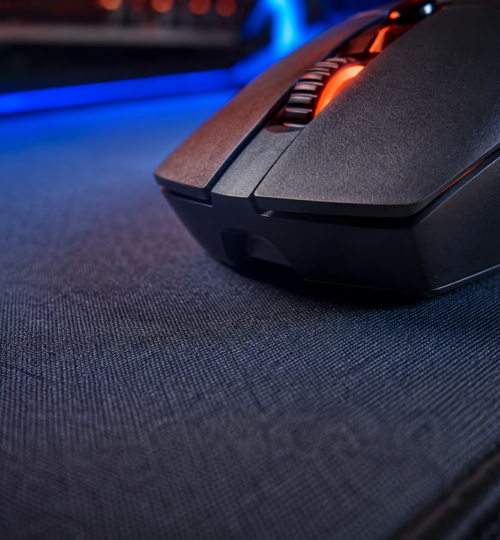
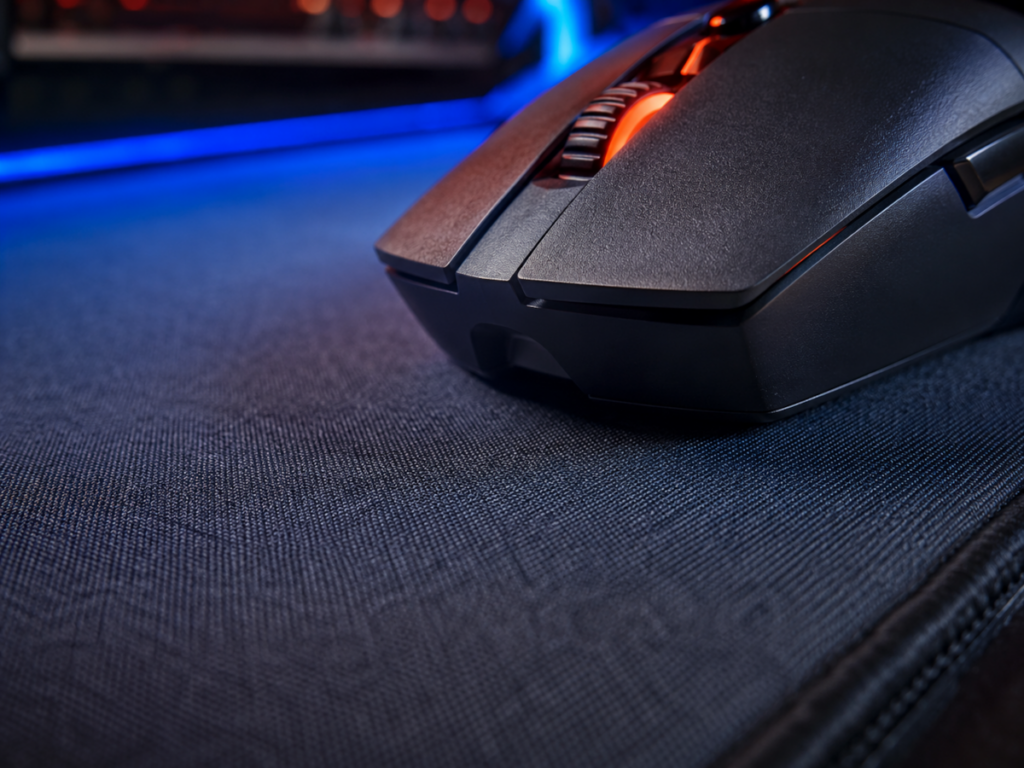
High-friction cloth pads usually combine a textured cloth surface with a rubber or foam base that creates a more grounded feeling. The exact feel depends on the weave, thickness, foam firmness, humidity resistance, mouse skates, and even how much pressure the player applies through the hand.
That last part matters. Two players can use the same pad and disagree completely. A light-handed wrist aimer may think a pad feels balanced. A heavy-handed arm aimer may think the same pad feels muddy. A player using large PTFE skates may feel less friction than someone using smaller skates. Gear is personal, and mousepads may be the most personal part of the setup.
Why Tactical FPS Players Keep Coming Back to Cloth
The strongest argument for high-friction cloth pads is not nostalgia. It is consistency. In tactical FPS games, aim is often less about constant motion and more about controlled bursts. You clear an angle, hold crosshair placement, flick to a shoulder peek, counter-strafe, reset, and prepare for the next duel. The mouse spends a lot of time either still or making short, decisive movements.
On a very fast surface, those small corrections can become twitchy. The mouse may feel great in an aim trainer when you are warmed up and focused, but less forgiving during a real match when your hand is tense, your heart rate is up, and the enemy appears half a second earlier than expected.
A slower cloth pad gives the player a margin of control. It can help absorb panic movement. It can make crosshair placement feel steadier. It can reduce the feeling of “floating” over the pad.
This is especially important for players who rely on low sensitivity. Low-sens players often use larger arm movements for turning and wider flicks, then smaller hand or finger adjustments to finish the shot. A high-friction pad can help them throw the mouse confidently while still braking at the end of the motion.
For veteran players, this is not new. Many old-school competitive communities were built around heavy mice, cloth pads, and low sensitivity. Modern gear has changed, but the underlying aim problem is the same: speed gets you there, control keeps you there.
The Glass Pad Countertrend
To understand why cloth control pads are gaining ground, it helps to look at the opposite trend: glass mousepads. Glass pads have become popular among some aim enthusiasts because they offer extremely low friction, high durability, and a very consistent surface. They do not wear down like cloth in the same way, and they can feel incredibly smooth. For tracking-heavy games, they can be powerful tools.
But glass is not universally loved for tactical FPS. The common criticism is that the lack of stopping power demands extremely disciplined mouse control. If your mechanics are clean, a fast pad can feel surgical. If your mechanics are inconsistent, it can expose every flaw.
That has pushed many players toward a middle ground. They may experiment with glass or hybrid pads, then return to cloth because it gives them confidence during actual matches. The community discussion around glass versus cloth often comes down to this: fast pads can reward precision, but control pads can protect precision under stress. That distinction matters. Competitive matches are not lab tests. They are messy, loud, emotional, and full of imperfect inputs.
Control Does Not Mean “Slow and Muddy”
One mistake players make is assuming every control pad feels like dragging a mouse through wet carpet. That is not true anymore. Modern cloth control pads cover a wide range. Some are very slow and heavily controlled. Others are balanced, offering a controlled stop without making movement feel sluggish.
Some pads, like the Artisan Zero, are often discussed as controlled compared with faster Artisan models, but not necessarily “muddy” compared with the slowest cloth pads on the market. Artisan’s own selection guide notes that surface choice and base type both change how a pad feels, which is why two versions of the same surface can behave differently depending on softness and construction.
This is where the market has matured. Players are no longer stuck choosing between a cheap cloth rectangle and a hard plastic speed pad. The modern mousepad scene includes slow cloth, balanced cloth, hybrid cloth, textured control surfaces, humidity-resistant coatings, poron-style bases, stitched edges, soft bases, firm bases, and deskpad-sized options.
The new control movement is not anti-speed. It is anti-sloppiness. A good high-friction cloth pad should still allow smooth movement. It should not fight the player on every correction. The goal is not to make aiming harder. The goal is to make stopping easier and repeatable.
The Role of Mouse Weight and Skates
Mousepads do not exist in isolation. The shift toward control pads is partly a reaction to how light modern mice have become. A 55-gram mouse on fresh PTFE skates can feel wildly different from a 95-gram mouse on worn skates. As mice got lighter, many players discovered they could afford to use a slower pad without feeling sluggish. In fact, the slower pad often brought the setup back into balance.
This is why a high-friction cloth pad can feel amazing with one mouse and terrible with another. Large, rounded PTFE skates may glide smoothly even on a control surface. Small skates may dig in more. Glass skates can make cloth pads feel faster, sometimes too fast or inconsistent depending on the surface. Worn skates can make a pad feel slower than it really is.
Sensitivity also changes the equation. A low-sensitivity player may appreciate extra friction because they are making larger movements and need braking power. A high-sensitivity player may find too much static friction annoying because tiny corrections become harder.
That does not mean high-sens players cannot use control pads, but they need to be more careful. Too much resistance can make micro-adjustments feel sticky. The best setup is not the fastest setup. It is the setup where your mouse, skates, pad, sensitivity, and aiming style work together.
Why Precision Aiming Is Psychological Too
There is also a mental side to this trend. A high-friction cloth pad can make players feel locked in. That phrase gets overused, but it describes something real. When your mouse feels stable, you trust your crosshair more. When you trust your crosshair, you hesitate less. When you hesitate less, your mechanics look cleaner.
In tactical shooters, confidence is mechanical. A player who feels their mouse is too slippery may overcorrect, tense their grip, or second-guess flicks. A player who feels grounded may commit more naturally.
This does not mean the pad magically improves aim. It means the pad can reduce uncertainty. At high levels, reducing uncertainty is performance.
The same logic applies to keyboards, monitors, audio, and network settings. Competitive players obsess over gear because small inconsistencies become mental noise. A mousepad that feels predictable removes one more variable.
The Downsides of High-Friction Cloth
Control pads are not perfect. The same resistance that helps stopping power can create problems. First, slow pads can make rapid target switching feel harder. If a game requires constant 180-degree turns or wide tracking, a very slow pad may feel restrictive.
Second, high static friction can make micro-corrections difficult. This is the classic “stuck then jump” feeling. The player applies force, the mouse resists, then suddenly breaks free and moves too far. Good control pads minimize this, but it is still something to watch for.
Third, cloth pads wear down. Oils, dust, sweat, humidity, and cleaning habits can all change the surface over time. Some cloth pads become slower with use. Others develop inconsistent spots. ZOWIE and other manufacturers have worked on more consistent surfaces and improved humidity resistance, but cloth still requires maintenance.
Fourth, climate matters. A pad that feels perfect in a dry room may feel slower in a humid room. Players who compete online from home may not care much, but LAN players and serious competitors should think about portability and consistency. Reviews of higher-end cloth pads often pay attention to whether they ship flat, resist creasing, and remain usable after transport. The takeaway is simple: control is powerful, but too much control can become drag.
How to Know If You Should Switch
A high-friction cloth pad may be worth trying if you often overshoot targets, struggle to stop flicks, feel shaky while holding angles, or play mostly tactical shooters where first-shot accuracy matters. It may also help if your current setup feels too slippery after switching to a lighter mouse.
On the other hand, you may want to avoid going too slow if you play tracking-heavy games, use very high sensitivity, rely on tiny micro-adjustments, or already feel like your mouse is hard to start moving.
A smart approach is to change one variable at a time. Do not buy a new mouse, new skates, new pad, and new sensitivity all at once, then try to figure out what helped. Start with the pad. Keep your sensitivity the same for a while. Give yourself several sessions before judging it. A slower surface can feel awkward at first because your hand is used to a different braking distance.
Also, do not judge a pad only in an aim trainer. Play real matches. Aim trainers are useful, but competitive pressure changes how you grip the mouse, how tense your arm gets, and how quickly you need to reset between fights.
The Bigger Shift: From Flashy Gear to Functional Gear
The renewed interest in high-friction cloth mousepads reflects a larger maturity in gaming hardware culture. Players are becoming less impressed by raw specs and more interested in fit.
The lightest mouse is not automatically the best mouse. The fastest pad is not automatically the best pad. The highest DPI is not automatically better. The best gear supports the player’s game, role, mechanics, and comfort.
For a revived legacy esports hub, that lesson fits perfectly. Competitive gaming has always been about adaptation. The old-school players who built communities around ladders and clan matches understood that consistency wins. Modern players are rediscovering the same principle through better tools and sharper language.
High-friction cloth pads are not a step backward. They are a correction. After years of chasing speed, many precision aimers are remembering that control is not a limitation. It is a weapon. In a shooter where one pixel decides the duel, the mousepad is not just a surface. It is where the shot either stops on target, or slides past it.