
Disclaimer: The views and opinions expressed in this article are solely those of the author. The mention of any products, services, or methods does not constitute an endorsement.
For much of gaming’s history, buying a full-priced video game was a relatively straightforward transaction. Players purchased the available content and occasionally paid for an expansion that introduced substantial new material. Publishers depended heavily on initial software sales, while successful multiplayer games could maintain active communities for years without requiring regular additional purchases from their players.
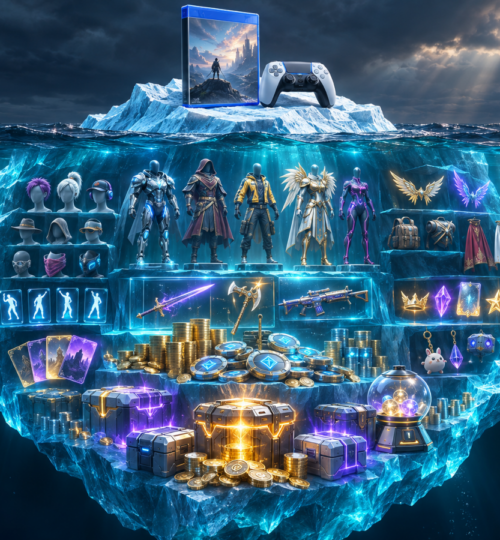
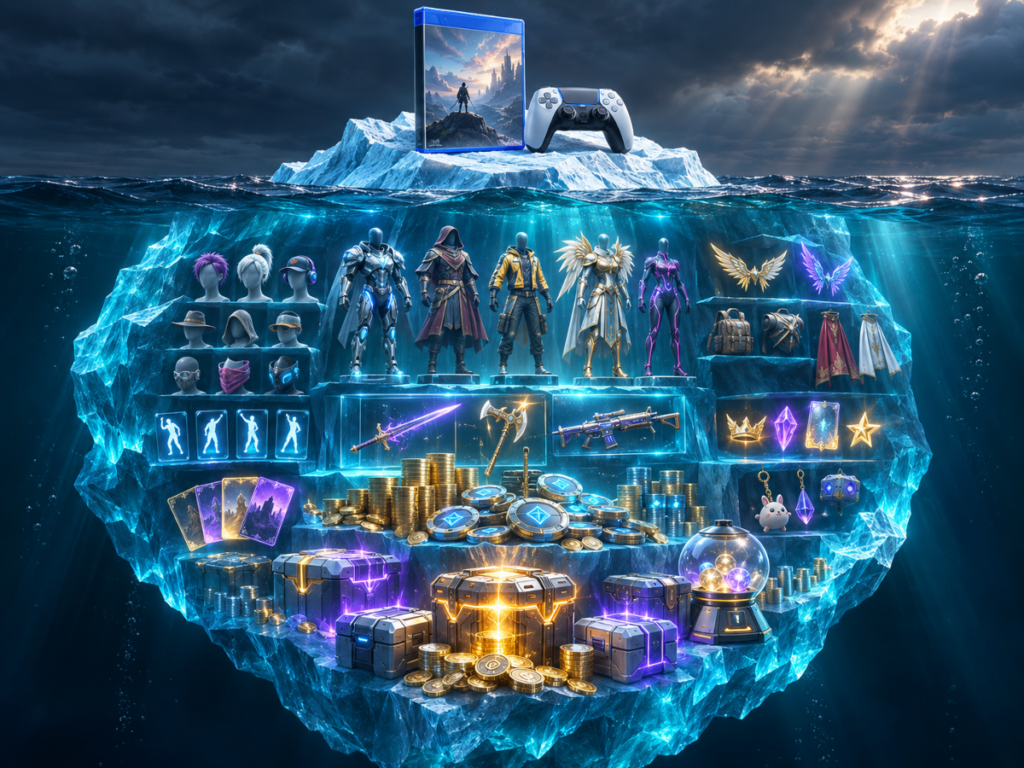
A modern $69.99 game can include premium editions, seasonal battle passes, cosmetic bundles, virtual currencies, paid expansions, and additional progression systems. Some of the industry’s largest publishers now generate considerably more revenue from ongoing player spending and related services than from full-game sales. Despite this change in how games make money, the premium entry price remains firmly established across many major franchises.
Rising development costs provide a legitimate argument for higher game prices, but the commercial success of live-service models complicates that justification. Publishers can recover portions of their development investments through initial sales while continuing to generate revenue from the same customers throughout a game’s supported lifespan. The value of that arrangement for players depends on what the initial purchase provides, how subsequent content is distributed, and how extensively commercial systems influence the experience.
The Traditional Argument for Higher Game Prices
The transition from $59.99 to $69.99 became particularly noticeable during the introduction of the PlayStation 5 and Xbox Series X|S generation. Publishers argued that modern games had become increasingly expensive to produce while standard retail prices had remained relatively stable throughout much of the preceding console generations. Adjusted for inflation, a $60 game purchased during the mid-2000s represented a considerably larger financial commitment in terms of purchasing power than a $60 game does today.
Modern blockbuster productions can involve hundreds of employees working across multiple studios for several years. Character animation, motion capture, environmental design, localization, accessibility features, quality assurance, and platform-specific optimization all contribute to production expenses. Marketing campaigns and post-launch commitments can add further costs to projects that already require substantial financial investments.
The scale of these investments became unusually visible in 2023 when court documents revealed development budgets for two major PlayStation releases. As detailed in GameSpot’s reporting on the disclosed Sony development budgets, Horizon Forbidden West cost approximately $212 million to develop, while The Last of Us Part II required approximately $220 million. Both projects took around five years or longer to produce, with hundreds of full-time employees involved during peak development periods.
Recovering investments of that size requires substantial commercial success, particularly after accounting for marketing, distribution expenses, discounts, and the financial risks associated with unsuccessful projects elsewhere in a publisher’s portfolio. These two games, however, are predominantly single-player productions that depend heavily on software sales. Their financial requirements help explain premium pricing, but they cannot establish whether the same price is necessary for a multiplayer franchise designed to generate recurring revenue over several years.
Live-Service Revenue Has Changed the Economics of Gaming
Electronic Arts provides a particularly useful example of how publisher revenue has shifted beyond traditional game sales. In its fiscal year 2026 annual report filed with the Securities and Exchange Commission, the company reported total annual net revenue of approximately $7.53 billion for the fiscal year ending March 31, 2026. Full-game sales accounted for approximately $2.15 billion, while live services and other revenue accounted for approximately $5.38 billion.
That places roughly 71.5 percent of EA’s annual revenue within its live services and other category. The company reported approximately $4.09 billion in revenue specifically attributable to additional game content, with its Ultimate Team offerings remaining a significant contributor. The broader revenue category also includes subscriptions, licensing, and advertising, so the entire $5.38 billion should not be interpreted as microtransaction revenue.
Take-Two Interactive demonstrates a similar dependence on continued consumer spending. Its second-quarter fiscal 2027 financial results, covering the three months ending September 30, 2026, reported that recurrent consumer spending accounted for 81 percent of both total net bookings and reported net revenue. That category includes purchases of virtual currencies, additional content, in-game items, and advertising revenue. Although recurrent spending declined compared with the same quarter of the previous year, it remained the company’s dominant source of revenue.
Neither company’s financial results establish the profitability of every individual live-service game. Revenue must be considered alongside development expenses, operating costs, and other financial obligations, while both publishers operate across multiple platforms and business models, including mobile and free-to-play games. What the figures establish is the considerable financial importance of retaining customers beyond their initial purchase, giving publishers opportunities to earn revenue without relying exclusively on the release of another full-priced title.
Paying for Admission to a Digital Marketplace
Premium retail pricing increasingly coexists with monetization systems commonly associated with free-to-play games. A publisher can collect revenue from millions of initial software purchases while establishing an internal marketplace intended to generate additional spending from those same customers. The two revenue streams serve different commercial purposes, even when they operate within the same game.
Battlefield 6 offers a useful example of this approach. EA’s official Battlefield 6 and REDSEC Season 2 roadmap identifies a $69.99 suggested retail price for the standard edition and $99.99 for the Phantom Edition. Alongside the premium game, EA operates the free-to-play Battlefield REDSEC experience and offers additional seasonal purchases, including Battlefield Pro benefits.
This arrangement allows EA to serve different audiences within the same franchise. Players interested in the premium Battlefield experience purchase the base game, while REDSEC removes the financial barrier for players interested in its available modes. Seasonal purchases provide further revenue opportunities across the broader Battlefield ecosystem, including opportunities to earn money from players who never purchased the premium game.
Call of Duty follows a comparable commercial strategy. Activision’s Black Ops 7 edition announcement established a $69.99 suggested retail price for its standard editions while offering a $30 Vault Edition upgrade that included additional digital content and access to one season of BlackCell. These were separate purchasing decisions before players considered subsequent seasonal content.
Offering premium editions and optional cosmetic purchases is a reasonable way to accommodate customers with different spending preferences. The concern arises when premium customers encounter commercial systems that closely resemble those found in games distributed without an admission fee. Paying $70 establishes expectations regarding available content, progression, customization, and the prominence of commercial offers throughout the interface. A player who has already purchased the game should be able to experience satisfying progression without feeling that regular additional payments are necessary.
The Ongoing Costs of Supporting Multiplayer Games
Running a modern multiplayer game involves expenses that continue long after development teams deliver the initial release. Dedicated server infrastructure, bandwidth, matchmaking services, anti-cheat development, security updates, customer support, and moderation require continued investment. Content teams may also spend years producing additional maps, equipment, characters, and game modes while addressing technical problems discovered after launch.
EA’s fiscal 2026 annual report identifies online hosting and data infrastructure among its business expenses. The company also attributed an increase in online hosting fees primarily to the release of Battlefield 6, providing a documented example of how launching and operating a major multiplayer game can increase expenses beyond its initial development budget.
Veteran multiplayer gamers may remember an era when some of these responsibilities were distributed differently. Community-operated dedicated servers allowed clans and gaming organizations to manage their own hosting arrangements, competitive settings, administration, and player moderation. Server expenses still existed, but players and independent hosting providers often assumed responsibilities that centralized multiplayer services now place more directly on publishers.
Centralized infrastructure offers benefits that independently operated servers could struggle to provide consistently. Cross-platform matchmaking, synchronized progression, account management, and coordinated security updates can make multiplayer gaming more accessible across different devices. Maintaining those systems costs money, particularly when a game serves a geographically dispersed audience with expectations of reliable access and regular updates.
Public financial statements rarely provide enough game-specific information to determine how much recurring revenue is necessary to maintain these services. Without detailed development and operating figures, players cannot reliably establish whether a particular game’s monetization is required to sustain its operations or primarily intended to increase commercial returns. The existence of ongoing expenses supports the case for continued revenue, but it does not establish that every available monetization system is necessary.
When Seasonal Content Replaces Traditional Expansions
Earlier expansion packs established a recognizable commercial exchange between publishers and customers. Players purchased additional campaigns, multiplayer maps, factions, or other substantial content after deciding whether an expansion offered sufficient value. Those who declined the purchase could generally continue playing the original game, although multiplayer communities sometimes became fragmented between different groups of content owners.
Seasonal content distribution has improved certain aspects of that arrangement. Publishers can introduce maps and gameplay updates without separating players into different matchmaking pools according to expansion ownership. Maintaining a shared collection of playable content is particularly beneficial for smaller multiplayer communities, where dividing the available population can make organized competition and routine matchmaking more difficult.
Battle passes introduce different purchasing conditions. Access to a premium progression track often requires players to spend additional time completing objectives before receiving all the associated rewards. Seasonal deadlines can create pressure to participate regularly, particularly for customers who have already paid for a pass and want to obtain everything included in their purchase before the season expires.
Consider a hypothetical $70 game offering four $10 premium battle passes throughout its first year. A customer purchasing each pass would spend $110 before buying any standalone cosmetic bundles, additional expansions, or required platform subscriptions. Although purchasing those passes may be entirely optional, the example illustrates how the financial commitment of an engaged player can extend well beyond the advertised retail price.
The seasonal model also changes how players distribute their time between games. Someone who previously purchased several multiplayer titles and rotated between them may now find that each maintains a separate schedule of challenges, rewards, and limited-time events. Publishers compete for continued participation because active players provide more opportunities for future purchases, even when the content necessary to keep those players engaged is distributed without an additional charge.
The Competitive Implications of Premium Monetization
Competitive multiplayer games require particular care in how they monetize progression. Players expect match outcomes to reflect mechanical skill, tactical decisions, teamwork, and familiarity with the game. Commercial systems that interfere with those expectations can weaken confidence in the competitive environment, particularly when the effects of purchased advantages are difficult to distinguish from ordinary progression.
Purely cosmetic items generally present fewer problems, provided their visual designs do not interfere with character recognition or visibility. Players purchasing weapon finishes or character outfits can support continued development without necessarily gaining a mechanical advantage over opponents. Even cosmetic design requires consideration in competitive games, where visibility, recognizable character silhouettes, and consistent visual information can influence split-second decisions.
Monetization becomes more complicated when purchases provide accelerated access to gameplay equipment, competitive roster options, progression advantages, or other resources that can influence performance. Making those resources available through regular gameplay does not automatically eliminate concerns about competitive fairness. Significant differences in the time required to obtain them can affect which options are available to players during a competitive season.
Organized gaming communities depend on consistent rules and confidence in competitive results. Tournament organizers may need to establish restrictions or account for differences in available equipment and characters when commercial progression systems influence gameplay. For players who have already purchased a premium competitive game, spending additional money to obtain timely access to competitively relevant content can undermine the value of their initial investment.
Free-to-Play Games Have Complicated the Premium Market
Games such as Fortnite, Counter-Strike 2, Valorant, Apex Legends, and Rocket League demonstrate that multiplayer games can attract substantial audiences without requiring a traditional retail purchase. Their monetization systems differ, and some charge for access to particular features or competitive services, but all provide access to their core gameplay without an upfront game purchase.
Removing the initial price offers considerable advantages for multiplayer communities. Friends can introduce new players to a game without asking them to spend $70 before determining whether they enjoy it, while returning players can rejoin an established community without purchasing another edition. Prospective competitive players also have greater freedom to experiment with different games before deciding where to commit their time.
Premium multiplayer releases face an additional challenge because every prospective customer must make that initial purchasing decision. A smaller population can affect matchmaking quality, regional availability, queue times, and the viability of specialized competitive modes. Charging more may generate greater revenue per initial customer, but the price can also discourage participation that would otherwise improve the experience for existing players.
Free-to-play development carries considerable financial risks of its own. A studio must attract enough players and convert sufficient numbers of them into paying customers to cover development and operating expenses. A premium price can provide valuable early revenue and reduce dependence on uncertain future spending, although that argument becomes less persuasive when an expensive game subsequently employs many of the same aggressive monetization techniques as its free-to-play competitors.
The Risk of Paying Full Price for a Temporary Experience
Historically, many multiplayer games remained playable through community-hosted servers, local network support, or unofficial infrastructure long after publishers stopped actively supporting them. Players could continue organizing matches and competitions as long as compatible software and functioning hosting options remained available. The longevity of some older multiplayer communities demonstrates the practical value of allowing players to maintain their own gaming environments.
Modern games that depend entirely on centralized authentication and publisher-operated infrastructure may offer considerably less independence. When supporting services disappear, portions of a game or its entire playable experience can disappear with them. Purchasing a physical disc or retaining installed game files provides little protection when essential functionality depends on servers that no longer operate.
Sony’s Concord demonstrated how quickly an online game’s commercial prospects can collapse. In September 2024, Sony published an official announcement regarding Concord’s removal from service, confirming that the game would go offline on September 6 and that customers would receive full refunds. Although Concord launched at a lower price than the $70 standard discussed here, its failure illustrates the risks associated with purchasing games that depend entirely on continued publisher support.
Refunds protected Concord’s customers from losing their initial purchase price in that particular situation. Games that operate for several years before shutting down present more complicated circumstances, especially for players who have accumulated substantial collections of purchased digital content. The amount spent throughout a game’s supported lifespan can considerably exceed its original purchase price, with little assurance that the associated content will remain accessible afterward.
Offline functionality, LAN support, private dedicated servers, and other independent hosting options could improve the long-term value of certain premium games. Implementing these features requires development resources and may introduce security, licensing, or maintenance complications. Their inclusion, where technically practical, would nevertheless provide customers with greater opportunities to continue enjoying portions of their purchase after official support ends.
Publishers Must Justify More Than Development Costs
Large development budgets, years of production, increasing technical complexity, and continued multiplayer support can provide reasonable justification for a $70 purchase price. A well-developed game that delivers hundreds of hours of entertainment can represent excellent value compared with many other recreational expenses. The difficulty lies in treating that price as an appropriate starting point regardless of how a game is designed, how much content it provides, or how extensively it monetizes customers after launch.
Publishers have several alternatives to the increasingly familiar combination of premium admission and recurring seasonal purchases. A lower entry price could attract a broader multiplayer audience while retaining optional cosmetic sales. A higher-priced game could include several seasons of premium content within its initial purchase, giving customers a clearer understanding of what their money provides. Traditional paid expansions also remain a reasonable option when they introduce substantial content without compromising the original experience or unnecessarily dividing multiplayer populations.
Greater transparency around monetization could help players evaluate these purchasing decisions. Explaining which features are included in the base game, how future gameplay content will be distributed, and whether premium purchases influence competitive progression would establish clearer expectations before release. Publishers could also distinguish long-term support commitments from seasonal content plans that may change according to commercial performance.
For established multiplayer franchises, maintaining an active community may become more commercially valuable than maximizing the amount collected from every customer on launch day. Players who remain involved for several years contribute to matchmaking populations, competitive participation, community events, and the experience of everyone sharing that environment. Their participation helps make the game worth playing for customers who do purchase additional content, giving even non-spending community members an economic value that conventional sales figures cannot fully capture. Pricing strategies that recognize this contribution could improve both the longevity of multiplayer communities and the commercial prospects of the games they support.