Disclaimer: The views and opinions expressed in this article are solely those of the author. The mention of any products, services, or methods does not constitute an endorsement.
The $70 Era Was Only the Opening Move
For years, the video game industry treated the $59.99 boxed release like sacred ground. It was not perfect, and it was never universal, but it became the mental anchor for what a “full-priced” console game was supposed to cost. Then the current console generation normalized $69.99 for many major AAA releases. At first, that looked like the new ceiling. Now it looks more like the new floor.
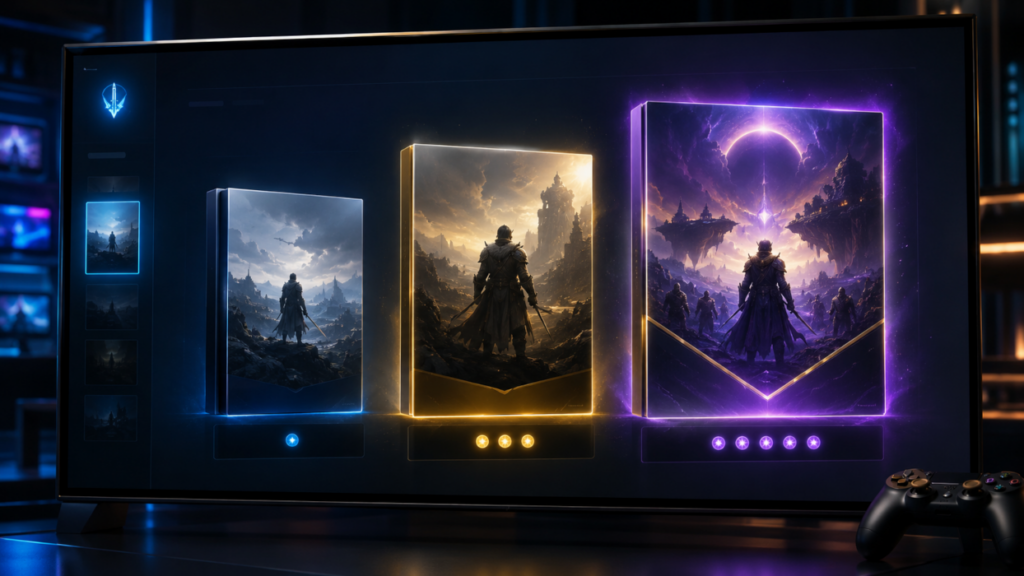
The industry is moving into a different pricing phase. Instead of simply asking whether every big game will become $80, publishers are rebuilding the old ladder of value around multiple editions, upgrade paths, early access windows, premium bundles, post-launch passes, and platform-specific enhancements. The result is not one new price point. It is a return to tiered pricing, where the same game can exist as a $40 AA release, a $70 standard release, an $80 flagship release, a $100 deluxe release, or a $130 super deluxe package depending on how much content, access, and loyalty pressure is wrapped around it.
That matters for competitive gaming communities because pricing affects player population. A shooter, fighting game, sports title, extraction game, or team-based multiplayer release lives or dies by how quickly it builds a matchmaking pool. When publishers split access by edition, early launch windows, platform upgrades, or content packs, they are not just changing store pages. They are shaping who shows up on day one, who waits for a sale, and who feels locked out before the first ranked match even begins.
The $80 Question Is Real, But It Is Not the Whole Story
The most visible part of this shift has been the debate over $79.99 games. Nintendo made that conversation unavoidable when it listed Mario Kart World at $79.99 for Nintendo Switch 2 while Donkey Kong Bananza remained at $69.99, making it clear that even first-party pricing would not necessarily follow one flat rule.
Microsoft also tested the waters. In 2025, Xbox announced that some new first-party titles would move to $79.99, alongside hardware and accessory price increases. But consumer pushback mattered. The Outer Worlds 2 was initially positioned as an $80 title before Microsoft and Obsidian moved it back to $69.99, with reporting at the time describing the change as a response to market expectations and player resistance.
That back-and-forth shows the real state of the market. Publishers clearly want more pricing flexibility, but they also know that not every brand can carry the same premium. A new Mario Kart can probably survive at $80 because it is a system-selling franchise with massive family appeal and long-tail multiplayer value. A sequel to a respected RPG may face a harder fight if players feel the price increase is testing their tolerance rather than rewarding their loyalty.
The lesson is simple: $80 is not yet a universal standard. It is becoming a selective weapon. The biggest franchises may use it directly, while everyone else experiments with tiers.
Tiered Editions Are the Safer Price Increase
Instead of making every player swallow a higher base price, publishers are increasingly using edition ladders. This is where the pricing model gets sneakier, and arguably more effective.
A standard edition keeps the public-facing price at $69.99. A deluxe edition adds skins, cosmetics, bonus missions, currency, mastery points, or digital art. A premium edition folds in an expansion pass or major post-launch content. A super deluxe edition might include multiple DLC packs, future characters, early unlocks, and exclusive customization items.
Ubisoft’s Assassin’s Creed Shadows is a clean example of this structure. Its standard edition is listed at $69.99, while the Digital Deluxe Edition is listed at $89.99 and the Premium Edition at $109.99, with the higher tiers adding content such as the Deluxe Pack, mastery points, and expansion content.
2K’s Borderlands 4 pushed the ladder even further. The official 2K announcement listed a Super Deluxe Edition at $129.99, including bonus digital content and the Vault Hunter Pack with post-launch story packs, new Vault Hunters, new regions, gear, weapons, and cosmetics.
This approach lets publishers claim the base game is still “only” $70 while nudging the most invested fans toward $90, $100, or $130 purchases. It is a softer form of price inflation because it feels optional. But for franchise loyalists, content collectors, and competitive players who want every advantage or every mode at launch, optional can start to feel mandatory.
AA Games Are Finding Their Own Pricing Lane
The return of tiered pricing is not just a AAA story. AA studios are also being pushed into clearer price identities. For a long time, the middle market struggled. If a game looked too small for $60 or $70, players waited. If it launched too cheap, the studio risked leaving money on the table.
Now AA developers have more flexible lanes. A polished AA game can launch at $39.99 or $49.99, use a deluxe tier to capture enthusiastic fans, then rely on discounts, subscriptions, and DLC to extend its life.
This matters because the gap between indie, AA, and AAA is no longer defined only by budget. Some AA games have better mechanical depth than bloated AAA releases. Some indie games generate more trust than franchises with aggressive monetization. Players are becoming more price literate. They do not just ask, “How much does it cost?” They ask, “What am I actually getting?”
That shift creates opportunity. AA teams can win by being honest. A $40 game with strong systems, stable servers, crossplay, and fair post-launch support can feel like a better deal than a $70 title selling a $100 edition before reviews are even live.
Early Access Has Become a Pricing Tier
One of the most controversial pieces of modern tiered pricing is paid early access. This is not the same as early access in the traditional PC development sense, where players buy into an unfinished game and help shape development. In AAA publishing, “early access” often means the game is finished enough to launch, but players who buy the more expensive edition get in several days before everyone else.
Sports games, shooters, and RPGs have all used this strategy. EA’s EA Sports FC 26 promoted a seven-day early access period beginning September 19, 2025 for certain versions, with the standard launch arriving later.
For single-player games, this is mostly a convenience tax. For multiplayer games, it can create real competitive tension. Players who pay more may learn maps sooner, unlock systems earlier, test balance faster, and enter the official launch window with a head start. Even if the advantage is temporary, it can feel ugly to communities built around fair starts and earned rank.
For legacy esports players, this hits a nerve. Competitive scenes thrive when everyone enters the arena under the same rules. Paid early access does not automatically ruin competition, but it does create a perception problem. If the first wave of players has already mapped the meta before standard edition buyers arrive, the ladder is not starting from zero. It is starting with a cover charge.
Platform Upgrades Add Another Layer
The new pricing ladder also includes upgrade paths. Nintendo’s Switch 2 strategy showed how platform upgrades can become part of the price conversation. Some Switch 2 upgrade packs for existing games were reported at $9.99 or $19.99 depending on whether the update focused mainly on performance and visuals or added more substantial content.
That creates a new kind of tier: the same game across generations, but with different upgrade costs. For players who already bought the original, this can feel fair when the upgrade is meaningful. Better frame rates, higher resolution, new modes, and added content can justify a fee. But when upgrades feel like basic compatibility patches, players may see them as double dipping.
The danger for publishers is trust erosion. Gamers understand that development costs money. They are not allergic to paying for value. What they hate is paying twice for the same promise.
Why Publishers Are Doing This
The business argument is not hard to understand. AAA development has become expensive, slow, and risky. Big games require huge art teams, motion capture, localization, licensed music, server infrastructure, accessibility work, anti-cheat systems, QA, marketing, platform certification, and years of support after launch. One bad release can damage a studio for a decade.
At the same time, the audience has become fragmented. Some players buy at launch. Some wait for reviews. Some wait for patches. Some wait for Game Pass, PlayStation Plus, Steam sales, or complete editions. A single fixed price no longer captures the whole market.
Tiered pricing lets publishers segment the audience. The most dedicated fans pay more on day one. Casual players pay the standard price. Patient players come in later during discounts. Subscription users enter through service deals. The same game can monetize different player behaviors without relying entirely on one sticker price. From a business angle, that is logical. From a community angle, it can become messy fast.
The Community Risk: Fragmentation
The biggest risk is not that games cost more. The biggest risk is that communities become divided by purchasing tier. If a deluxe edition includes only cosmetics, the split is manageable. If it includes early access, exclusive missions, important progression boosts, or post-launch characters that affect competitive balance, the player base starts to fracture. Competitive communities are especially sensitive to this because fairness is part of the social contract.
A fighting game with paid DLC characters can still thrive if balance is strong and tournament rules are clear. A shooter with paid cosmetics is usually fine if hitboxes and visibility are fair. But a multiplayer title that locks maps, modes, weapons, or meaningful progression behind premium tiers risks weakening its own matchmaking pool.
Veteran players have seen this before. Map packs once split multiplayer communities so badly that many publishers moved away from paid map DLC in favor of free maps funded by cosmetics or battle passes. The industry learned that keeping players together is often more valuable than charging every player for every content drop. Tiered pricing works best when it rewards support without breaking the arena.
What Players Are Really Judging
Gamers are not purely anti-price increase. They are anti-bad deal. A $100 edition can feel reasonable if it includes a complete expansion pass, meaningful story content, future characters, and a studio with a history of delivering. A $70 game can feel insulting if it launches broken, sells premium currency on day one, and asks for patience while basic features get patched in later. That is the real standard now: trust.
Players judge price through the lens of performance, content, stability, monetization, server quality, communication, and respect. A premium price magnifies every flaw. If a game launches at $80 or sells a $130 edition, players expect polish.
They expect the servers to work. They expect the PC port not to melt. They expect the competitive systems to be ready. They expect monetization to stay in its lane. When those expectations are not met, the backlash is stronger because players feel like they were charged premium money for beta energy.
The Future: Flexible Pricing, Not One Price
The next few years will probably not produce one clean answer. We are unlikely to see every AAA game become $80 overnight. Instead, the market will become more layered.
The safest prediction is that major platform holders and top-tier franchises will continue testing $79.99 for select releases. Standard AAA pricing will mostly hover around $69.99, but premium editions will keep stretching upward. AA games will lean into $39.99 to $59.99 pricing, with deluxe tiers used to capture extra revenue from the most committed fans. Subscription services will complicate the picture further by making the “real” price of access feel different from the store price.
For multiplayer communities, the best models will be the ones that keep competition unified. Charge more for art books, cosmetics, expansions, soundtrack bundles, campaign content, and long-term DLC. Be careful with early access. Be very careful with gameplay advantages. Keep maps and core competitive modes available to everyone whenever possible. That is the line between smart tiered pricing and self-inflicted community damage.
Final Take: The Price Tag Is Becoming a Ladder
The return of tiered pricing is not just about publishers getting greedy, although players are right to question where the money goes. It is also about an industry trying to survive ballooning budgets, longer development cycles, rising platform expectations, and a player base that no longer buys games in one predictable way.
But there is a warning here. A tiered model only works when each tier feels honest. Standard buyers should feel respected. Deluxe buyers should feel rewarded, not manipulated. Competitive players should never feel that the ladder was tilted before they even logged in.
For a legacy multiplayer community, that is the part worth watching. The future of game pricing will not be decided only in boardrooms or storefronts. It will be decided in lobbies, Discord replacements, clan forums, ranked queues, and player communities that either accept the value or reject the model. The industry can bring back tiered pricing. The question is whether it can do it without breaking the trust that keeps players in the fight.