
Disclaimer: The views and opinions expressed in this article are solely those of the author. The mention of any products, services, or methods does not constitute an endorsement.
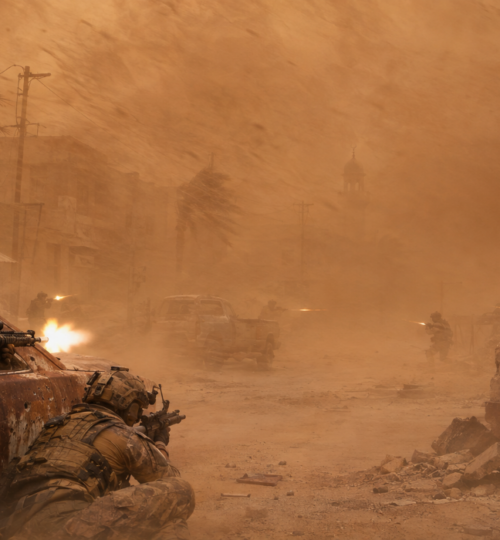
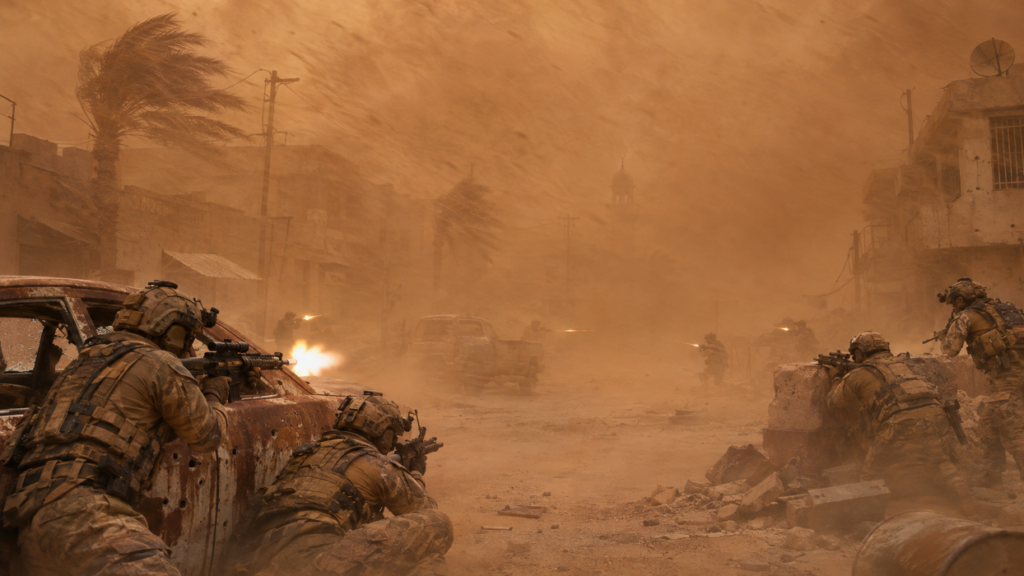
A competitive team can spend hours learning a map, rehearsing rotations, identifying defensive positions, and establishing reliable lines of sight. Those preparations become considerably more complicated when a sandstorm reduces visibility, a building collapses across a familiar route, or an explosion removes the cover protecting an objective. The battlefield that existed when the match began may look and function very differently by the time the final engagement takes place.
Dynamic map environments introduce variables that traditional map knowledge cannot completely account for. Weather systems can alter visibility and movement opportunities, while destructible terrain can eliminate established defensive positions or create unexpected routes. For competitive teams accustomed to executing rehearsed strategies, these changes demand adjustments while opponents attempt to exploit the same disruption.
Games such as Battlefield, Rainbow Six Siege, PUBG: Battlegrounds, and THE FINALS demonstrate different approaches to environmental change. Some systems introduce unpredictable conditions, while others allow players to deliberately reshape the battlefield. Their mechanics also raise a difficult design question about how much environmental uncertainty competitive multiplayer can accommodate without diminishing the importance of player decisions.
How Dynamic Weather Changes Competitive Strategies
Weather can dramatically change the tactical value of a familiar location without modifying its physical structure. A rooftop overlooking a major intersection might offer excellent visibility under clear skies, but dense fog can render that position ineffective against enemies approaching from a distance. A team that built its defense around long-range coverage must either reposition or accept that opponents can move through areas that were previously dangerous to cross.
Battlefield 1 demonstrated this relationship through a weather system that changes conditions during multiplayer matches. In its official explanation of dynamic weather, Electronic Arts described how fog reduces visibility and spotting distance, while sandstorms on maps such as Sinai Desert can severely restrict aerial operations. Heavy rain can also interfere with visual awareness, making it more difficult to identify distant movement even when visibility range remains largely unchanged.
These conditions create opportunities for attacking and defending teams. A squad facing entrenched opponents might use reduced visibility to approach a contested objective without exposing itself to the same long-range fire. Defenders, meanwhile, may need to abandon observation points and establish closer positions where enemy movement can be monitored more reliably. The timing of the weather change determines how much opportunity either side has to reorganize.
Weather also affects the information available to a team. Players who normally identify movement through distant silhouettes or familiar landmarks lose some of those advantages when visibility deteriorates. Nearby observations, audio cues, and teammate communication become more valuable, although environmental sounds can complicate those methods as well. Even when conditions affect the entire map, their competitive consequences depend heavily on where each team is positioned when the weather changes.
When Weather Changes the Terrain Itself
Some environmental systems affect more than visibility. Snow, flooding, ice, and other terrain conditions can alter the routes available to players, changing the strategic value of entire sections of a map. These effects become particularly relevant in games where positioning and movement between objectives determine whether a team survives its next engagement.
In December 2025, PUBG: Battlegrounds introduced its Erangel: Subzero update, demonstrating how weather and terrain modifications can influence battle royale gameplay. The official Update 39.1 patch notes described frozen waterways, snow-covered terrain, damaged infrastructure, and changing winter weather. Dynamic winter conditions were included in Normal, Ranked, and Custom Matches.
The update combined persistent map modifications with weather conditions that could develop during play. Frozen waterways offered different travel opportunities, while changing weather could reduce visibility during parachuting and movement. For competitive squads, these conditions affected decisions about crossing exposed ground, securing positions, and choosing routes toward the next safe zone.
Battle royale competition makes such decisions particularly consequential because teams are already responding to shifting safe-zone boundaries. Environmental conditions introduce another consideration into rotations constrained by nearby opponents and limited time. A route that appears reasonable on the map may become dangerous if poor visibility prevents a squad from identifying enemies holding the next position.
Effective preparation requires understanding the modified terrain while recognizing how changing weather affects the immediate fight. Memorizing a route remains useful, but teams must continually evaluate whether that route offers the same advantages when they reach it.
Destructible Environments Rewrite Established Map Control
Environmental destruction introduces a different form of uncertainty because players can often influence when and where the battlefield changes. A well-placed explosive can remove cover, expose an entrenched defender, or create an entrance into an objective area. Depending on the game, larger destruction events may reorganize significant portions of the playable space.
Battlefield 4 provided a memorable example through its Levolution system. On Siege of Shanghai, players could trigger the collapse of a skyscraper, dramatically changing the surrounding combat area. Electronic Arts explained in its multiplayer map overview that the collapse shifted fighting from the tower to rubble at street level.
The strategic consequences extended beyond the destruction itself. An elevated position disappeared, movement patterns changed, and teams had to establish new defensive arrangements around the transformed area. Previously protected routes could become exposed, while the resulting wreckage created different opportunities for cover and close-range combat.
Rainbow Six Siege approaches environmental destruction on a smaller, more deliberate scale. Its destructible walls, floors, and hatches allow teams to create openings and firing angles through their own actions. Ubisoft’s official strategy guide explains how destruction can open pathways, establish sightlines, and support unexpected attacks through floors or other vulnerable surfaces.
In Siege, much of the environmental change results from deliberate tactical decisions, allowing teams to prepare specific breaches and anticipate common responses. Larger destruction events in other games may disrupt several parts of a map simultaneously, forcing more extensive adjustments. Both approaches reward map knowledge, but players must understand which surfaces can be destroyed, what becomes visible afterward, and how those changes affect defensive coverage.
THE FINALS Pushes Destruction Into Competitive Decision-Making
Few multiplayer shooters place environmental destruction as directly at the center of objective combat as THE FINALS. Its arenas allow players to damage buildings, destroy floors, and manipulate the spaces surrounding contested objectives. Structural damage frequently becomes part of the tactical process rather than an occasional event occurring around the fight.
The game’s October 20, 2026, PRIME TIME update expanded those systems considerably. Embark Studios introduced gradual destruction that allows structures to bend, sag, and partially collapse, along with swinging suspended structures, blast waves, and debris that changes the playable environment. The official Season 12 patch notes detail these additions and the accompanying modifications to arena layouts.
These mechanics create situations in which maintaining control of an objective requires constant attention to the surrounding structure. A defensive position established on an upper floor may become vulnerable when attackers destroy its supports or open the floor beneath it. Cover damaged during an earlier engagement can also affect how subsequent teams approach the same location.
Consider a team defending a Cashout Station inside a multistory building. Its initial setup might rely on controlling stairways and exterior entrances, but attackers can change those access points through destruction. Defenders must then evaluate whether to contest the newly created opening, relocate within the building, or establish control from another position before attackers exploit the damage.
Teams can study a building and understand its structural weaknesses, but the exact arrangement of damaged surfaces and debris depends on what happens during the match. A position that worked during practice may become unsuitable after several engagements. Recognizing those changes quickly is particularly demanding when players must simultaneously manage the objective, track opponents, and preserve enough resources to defend against another attack.
Changing Environments Disrupt Team Rotations and Crossfires
Rotations are among the first elements of organized team play to suffer when a map changes unexpectedly. A route rehearsed during practice may depend on a doorway remaining accessible, an elevated position providing cover, or a particular corridor staying outside enemy sightlines. Environmental destruction can invalidate those assumptions during an ongoing engagement.
The immediate challenge is deciding whether to continue the original movement or abandon it. A team rotating through a damaged structure may discover that an opening has exposed its position to an opponent holding an unexpected angle. Continuing without checking the altered area could turn an otherwise disciplined rotation into an avoidable elimination.
Defensive crossfires face similar problems. Two players positioned to cover complementary approaches may lose their supporting angles when a wall collapses or visibility falls. If one player can no longer observe the expected route, the other may become isolated against an advancing opponent. Maintaining an effective defense requires identifying the missing coverage and deciding which teammate can restore it without exposing another position.
These changes increase the importance of communication that describes the current environment rather than relying entirely on familiar location names. Calling out a newly opened wall, collapsed walkway, or compromised floor provides information that teammates cannot obtain from the original map layout. The description must be specific enough for the squad to understand which positions have become dangerous.
Teams also need to distinguish between environmental changes they can exploit immediately and those requiring a defensive response. An unexpected opening might offer a promising flank, but taking advantage of it could leave the original objective unprotected. The decision depends on available information, teammate positions, and the time remaining before the objective must be secured.
Environmental Hazards Can Become Tactical Opportunities
Large-scale environmental events can create opportunities that would be difficult to reproduce through ordinary movement or equipment. A storm may temporarily conceal movement, while a dangerous environmental event can force opponents away from a position they would otherwise prefer to defend. These opportunities carry risks because the same conditions can interfere with the team attempting to exploit them.
Battlefield 2042 explored this concept through tornadoes and other major environmental events. Electronic Arts described how its tornado system could disrupt safe positions while allowing specialists equipped with wingsuits to use storms for movement. The official Battlefield 2042 briefing presented these hazards as events players could respond to and potentially exploit for tactical advantage.
Such mechanics introduce decisions involving both opportunity and risk. A squad might use an environmental disturbance to reposition, but the event can also interfere with movement or expose players to threats they cannot easily predict. Whether the disruption helps or harms a team depends on the circumstances, available equipment, and its ability to coordinate a response.
Environmental changes can also create opportunities for deception. Players may exploit reduced visibility to move away from an expected defensive angle, forcing opponents to verify positions they previously considered secure. In a game with destructible terrain, a coordinated team might use structural damage to draw attention toward one approach while attacking through another.
The effectiveness of these strategies depends on understanding the environmental system’s limitations. Treating every storm or collapse as an opportunity encourages unnecessary risks, particularly when the team lacks reliable information about enemy positions. Sometimes maintaining a secure position remains the better tactical decision.
The Competitive Fairness Problem With Random Events
Dynamic environments raise legitimate questions about competitive integrity. In organized competition, teams generally expect results to reflect execution, coordination, and decisions made under a shared ruleset. Random environmental events complicate that expectation when they create advantages that neither side could reasonably predict or prevent.
An unexpected storm may affect everyone on the map, but its consequences are rarely identical for both teams. A squad already positioned inside a protected structure might benefit from reduced visibility, while opponents attempting a long-distance rotation suffer a significant disadvantage. A sudden environmental hazard could interrupt an attack at a moment when the defending team has little time remaining.
The distinction between unpredictable events and player-controlled destruction is particularly relevant. When a team deliberately destroys a wall, opponents can often anticipate that possibility and prepare a response. An independently triggered environmental event may provide less warning, making its effect on competitive balance harder to evaluate.
Fairness therefore depends partly on whether players can recognize and respond to an environmental change. Clear warning signals, consistent mechanics, understandable damage effects, and reasonable opportunities for counterplay help make these systems suitable for competition. An event becomes more problematic when it produces a decisive advantage without giving the affected team a meaningful decision.
Tournament organizers face additional questions when choosing which environmental settings to allow. A competition might preserve dynamic systems central to a game’s mechanics while restricting particularly disruptive conditions where the available settings permit it. Those decisions require careful consideration of competitive rules, match consistency, and the strategies that could disappear if certain mechanics were disabled.
Eliminating every unpredictable element would also change the character of games built around environmental disruption. The more useful distinction is whether uncertainty demands informed tactical responses or introduces excessive randomness into otherwise well-executed competition.
Technical Performance and Visual Clarity Matter
Environmental systems also create technical challenges that can affect competitive play. Destruction may generate unusual collision geometry, while debris, smoke, and weather effects can make player models harder to distinguish. These problems become especially frustrating when they interfere with basic combat readability or cause inconsistent performance during important engagements.
Embark Studios acknowledged one aspect of this problem in its October 2026 THE FINALS update, temporarily disabling the Foggy Night condition on SYS$Horizon while addressing readability issues. The same update included performance improvements and changes intended to make partially damaged structures easier to interpret. Such adjustments illustrate the practical work required to maintain clear combat information alongside more complex environmental effects.
Multiplayer synchronization creates another technical demand. Players need a consistent understanding of which surfaces have been destroyed and where the resulting debris exists. If destruction states or collision behavior differ between clients, a position that appears safe to one player may behave unexpectedly for another.
These considerations extend to esports broadcasts. Spectators need to understand where teams are positioned, which routes remain available, and why particular decisions succeed or fail. A collapsing building may create an impressive visual moment, but its competitive relevance depends on which position was lost, where a new opening appeared, and how the teams responded.
Observer tools and replay systems can help explain these situations by showing the battlefield from different perspectives. An overhead view might reveal that a destroyed passage forced one team into an exposed rotation, while a player perspective demonstrates how that team attempted to recover. Without that context, a carefully executed tactical play can appear to be environmental chaos.
Preparing Competitive Teams for Unpredictable Conditions
Traditional map preparation emphasizes repeatable situations. Teams practice opening routes, establish positions around objectives, and develop responses to common enemy strategies. Dynamic environments make that preparation more demanding because the same encounter can develop under different physical conditions.
Rather than rehearsing only ideal executions, teams can practice variations based on environmental changes. A defensive exercise might begin with established cover and then continue after that cover becomes unusable. Another scenario could require a squad to cross exposed ground without its usual long-range observation support.
The objective is to build reliable decision-making habits rather than memorize every possible environmental outcome. Players should understand which positions remain viable when sightlines change, where alternative routes exist, and how quickly the team can reorganize when its initial strategy becomes impractical. Teams that prepare several responses to common disruptions have more options available when an unexpected situation develops.
Role flexibility becomes particularly valuable. A player assigned to provide long-range coverage may need to support closer engagements during heavy fog, while someone responsible for protecting a fixed entrance may have to cover several newly created openings after structural damage. These adjustments work best when teammates understand how their responsibilities overlap and can redistribute coverage without lengthy explanations.
Reviewing match recordings can help identify weaknesses in these responses. A team may discover that an environmental event did not directly cause an elimination, but that several seconds of indecision afterward allowed opponents to gain position. Identifying the actual mistake provides a better basis for practice than attributing every unsuccessful engagement to the environment.
A useful training scenario involves defending an objective after losing the team’s primary position. Players must identify which sightlines have disappeared, redistribute their defensive coverage, and determine whether the remaining terrain favors holding the objective or contesting the enemy’s approach. Repeating the exercise with different forms of destruction can expose weaknesses that ordinary drills might never reveal.
Preparation becomes more demanding when both teams can actively alter the battlefield. Destroying an opponent’s cover may simultaneously expose a friendly position, while opening a new route can give the enemy access to the same passage. A successful breach therefore requires considering how the resulting changes affect both teams, including opponents who may exploit the opening later.
In-game leaders must make these evaluations while managing the immediate demands of the match. A familiar defensive setup may become unsuitable after structural damage, and the replacement must account for remaining cover, available equipment, teammate positions, and the objective timer. Teams with established fallback positions and clear communication habits can make those adjustments without turning every unexpected event into a prolonged discussion.
As destruction and weather systems become more complex, accurate environmental information becomes an increasingly valuable part of competitive decision-making. A newly exposed firing angle may exist for only a few seconds before opponents recognize it, while a damaged structure can remain a liability for the rest of an engagement. Teams that identify these conditions, communicate their consequences, and act before the opposing side adjusts can turn a changing battlefield into a tactical advantage.