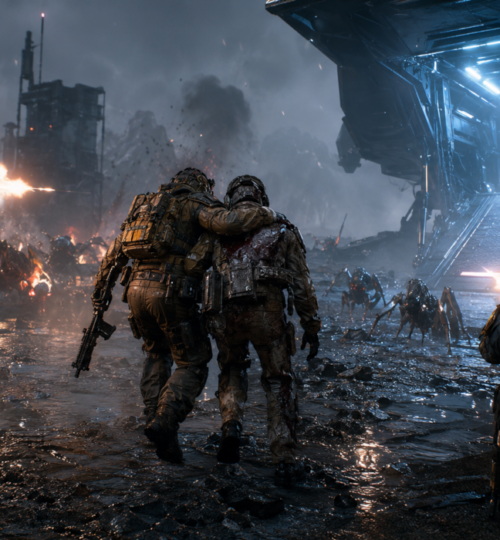
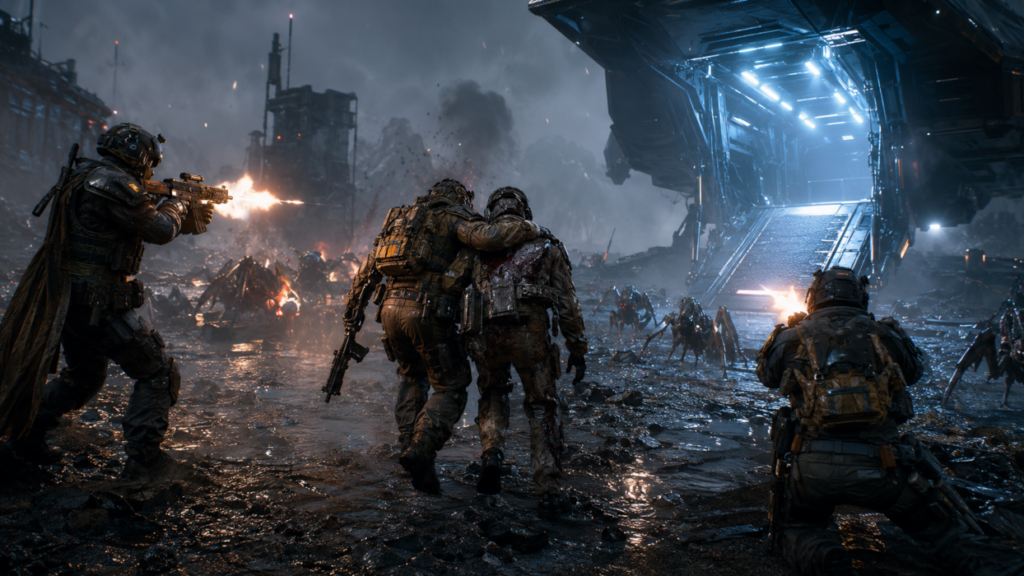
For years, online multiplayer was dominated by competition. Ranked ladders, battle royales, esports circuits, seasonal rewards, MMR systems, and high-pressure matchmaking shaped the way many players experienced multiplayer gaming. That competitive era is not going away, and for a legacy online gaming community, it remains part of the foundation. But something interesting is happening across the industry: co-op games are becoming cool again.
Not just couch co-op nostalgia. Not just casual side modes. Full co-op experiences are once again driving sales, streaming moments, community discussion, and long-term player loyalty. From chaotic PvE shooters to survival sandboxes, two-player narrative adventures, extraction-style team play, and monster-hunting ecosystems, co-op has reentered the spotlight because players are hungry for something competitive multiplayer does not always provide: shared achievement without constant social friction.
The comeback of co-op is not an accident. It is the result of changing player habits, burnout from hyper-competitive matchmaking, better cross-platform support, smarter game design, and a renewed appreciation for games that let friends build stories together.
The Competitive Burnout Problem
Competitive multiplayer is still one of gaming’s strongest pillars, but it comes with pressure. Ranked modes can be thrilling, but they also create stress. Every match can feel like a judgment of skill, every mistake can become a team argument, and every loss can feel like time wasted. For veteran players who came up through ladders, clans, scrims, and tournaments, that pressure was part of the culture. But modern matchmaking often intensifies it.
Today’s players are dealing with skill-based matchmaking debates, smurfing, cheating concerns, battle pass deadlines, meta shifts, balance patches, and public stat tracking. For some, that ecosystem is exciting. For others, it becomes exhausting.
Co-op gives players a different kind of multiplayer identity. Instead of asking, “Can I beat you?” it asks, “Can we survive this together?” That one shift changes the emotional temperature of a session. The game can still be hard. The mechanics can still demand communication, timing, and skill. But the social energy is pointed in the same direction.
That matters. A tough co-op mission can create frustration, but it rarely creates the same kind of blame culture that appears in competitive queues. When a squad wipes in a PvE mission, players are more likely to laugh, reset, rethink their approach, and try again. When a ranked team loses because one player missed a key play, the room can get colder fast.
Co-op is thriving because it offers challenge without always turning friendship into performance review.
The Helldivers Effect
One of the clearest signs of the co-op comeback has been the success of Helldivers 2. The game became one of the major multiplayer stories of 2024, selling 12 million copies in its first 12 weeks and becoming PlayStation’s fastest-selling game at the time.
What made Helldivers 2 stand out was not just that it was co-op. It was that it understood co-op as theater. Friendly fire, desperate extraction timers, overwhelming enemy waves, global war progress, and squad-based chaos turned ordinary sessions into stories players wanted to retell. The game created memorable failure, not just victory.
That is one of the secret weapons of co-op design. Competitive games usually make failure feel personal. Co-op games can make failure feel legendary. A bad grenade, a mistimed call-in, a teammate getting flattened by a supply drop, or the whole squad getting overrun at extraction can become a community joke instead of a rage-quit moment.
The game also proved that PvE can carry serious mainstream weight. For years, many publishers chased competitive live-service models because esports and PvP engagement seemed like the safest long-term hooks. Helldivers 2 showed that a well-designed co-op loop can create its own ecosystem of memes, loyalty, community events, and repeat play.
Co-Op Has Become More Accessible
Older co-op gaming often required the right setup. Same room, same console, same platform, same schedule. Online co-op existed, of course, but it was not always smooth. NAT issues, platform separation, limited matchmaking tools, voice chat headaches, and server restrictions could make playing with friends more annoying than it needed to be.
Modern infrastructure has changed that. Crossplay is now common enough that players expect it. Friend-pass systems allow one player to invite another without requiring both to buy the game. Cloud saves, Discord integration, platform-level party systems, and better matchmaking all reduce the friction that used to kill co-op plans before they started.
Hazelight has been especially important here. Its co-op-first design philosophy helped prove that two-player games could be commercially powerful. It Takes Two passed 30 million sales, while Split Fiction reached 7 million within its first year, according to 2026 reporting on Hazelight’s sales milestones.
That success matters because Hazelight is not treating co-op as a bonus feature. It is building entire games around cooperation. Puzzles, timing sequences, split responsibilities, and asymmetrical mechanics become the core identity. In other words, the second player is not just along for the ride. The second player is the design.
The Rise of “Friend Group Games”
Another major reason co-op is back is the rise of games designed around friend groups rather than solo progression. Survival crafting games, extraction shooters, horror co-op titles, party chaos games, and PvE sandboxes have become a major part of how people socialize online.
A game like Palworld showed how powerful that formula can be. In 2024, Pocketpair reported that Palworld had reached 25 million players within roughly a month, including 15 million Steam copies sold and 10 million Xbox players.
The success of games like this is not only about mechanics. It is about shared ownership. Players build bases, divide jobs, collect resources, tame creatures, fight bosses, and tell stories about what happened in their world. The game becomes a digital hangout with goals.
That distinction is important. A competitive shooter usually gives players a lobby, a match, and a result. A co-op survival or sandbox game gives them a place. That place can become part of the friend group’s routine. People log in not only to win, but to check progress, help someone craft gear, expand a base, or prepare for the next big run.
For older online communities, this feels familiar. Before modern matchmaking made everything fast and disposable, multiplayer communities were often built around persistent identity: clans, forums, servers, ladders, rivalries, and regulars. Co-op games are bringing back a piece of that social fabric.
Co-Op Creates Better Stories Than Matchmaking Alone
A ranked match can be memorable, but the structure is usually fixed. Two teams enter, one wins, one loses. Co-op has more room for absurdity.
The best co-op moments often happen when systems collide. One teammate panics. Another improvises. Someone saves the squad at the last second. Someone else makes the worst possible decision and somehow it works. These moments are difficult to script, but they are perfect for modern gaming culture because they are clip-friendly, stream-friendly, and community-friendly.
That is why co-op performs so well on social platforms. A clutch extraction, a failed stealth plan, a boss fight gone sideways, or a hilarious physics accident can spread quickly because viewers understand the emotion instantly. You do not always need to know the meta. You just need to understand that four people barely survived something ridiculous.
This kind of storytelling also has a longer shelf life than pure stat progression. A player may forget their exact rank from three seasons ago, but they will remember the night their squad escaped with one second left.
PvE Can Still Be Competitive
One misconception about co-op is that it is automatically casual. That is not true. Some of the most demanding multiplayer experiences are cooperative. High-difficulty raids, boss hunts, tactical PvE missions, survival runs, and speedrun-style challenges can require serious coordination.
The difference is that the competition is redirected. Instead of competing against each other, players compete against the game, the clock, the difficulty curve, or their previous best performance.
This is where co-op and esports culture can overlap. A co-op game may not always produce traditional head-to-head brackets, but it can still support leaderboards, challenge ladders, timed clears, seasonal objectives, clan achievements, and community events. For a revived legacy gaming platform, that opens interesting possibilities. Co-op does not have to replace competitive ladders. It can expand what competition means.
Imagine squad-based PvE records, fastest mission clears, survival wave rankings, community raid nights, faction challenges, or veteran mentorship runs where experienced players help newer members complete difficult content. That kind of structure keeps the competitive spirit alive while reducing the hostility that can come from direct PvP pressure.
Developers Are Learning That Co-Op Retains Players
Live-service design has often focused on PvP because PvP theoretically creates endless content. Players become the content for each other. But PvP also creates balance headaches, toxicity issues, cheating problems, and constant pressure to maintain fairness.
Co-op gives developers another path. New missions, enemy types, modifiers, classes, gear, maps, bosses, and difficulty levels can refresh the experience without every change becoming a competitive balance crisis. That does not mean co-op is easy to maintain, but it offers more flexibility.
Warhammer 40,000: Space Marine 2 is a good example of a game extending its life through co-op content. Recent coverage noted that its multiplayer activity has been supported by updates adding missions, enemies, classes, and improvements to co-op modes, including a major Siege Mode revamp.
This is a smart long-term model. Players who enjoy fighting alongside friends will return when there is a new operation, a new difficulty tier, or a new reason to squad up. The social bond helps retention. A player may ignore an update alone, but if three friends are logging in Friday night, that update suddenly matters.
Co-Op Fits the Modern Adult Gamer
A lot of veteran players are not teenagers with endless free time anymore. Many now have jobs, families, businesses, health responsibilities, and limited gaming windows. That changes what they want from multiplayer.
Competitive games can be rewarding, but they often demand consistency. Stop playing for a few weeks and the meta changes. Your aim gets rusty. Your rank decays. Your squad moves on. Coming back can feel like work.
Co-op is often easier to return to. A player can jump in with friends, contribute, laugh, and still feel useful even if they are not at peak form. The experience can be challenging without requiring everyone to be ladder-ready.
That is a major reason co-op has emotional staying power. It respects different skill levels better than many competitive modes. A strong player can carry a weaker player without destroying the entire experience. A new player can learn through participation. A veteran can enjoy helping instead of only grinding.
For communities built around long-term membership, that matters. Co-op creates more room for mixed groups: old-school players, returning members, casual friends, serious grinders, and new recruits.
The Comeback Is Also a Reaction to Isolation
Gaming has never been more connected, yet many players feel strangely isolated. Matchmaking puts people together quickly, but not always meaningfully. Voice chat is often muted. Random teammates disappear forever. Toxic encounters encourage players to stay silent. Even massive online games can feel lonely when the social systems are shallow.
Co-op pushes back against that. It encourages smaller, more intentional groups. It gives people a reason to talk, coordinate, joke, and build trust. In a gaming culture flooded with anonymous queues, that sense of shared presence feels valuable again.
This is one reason co-op works so well for community revival. It gives members something to do together that is lower pressure than a tournament but more meaningful than idle chat. A co-op night can become a bridge between old members and new ones. It can reintroduce people to the habit of showing up.
What This Means for Legacy Gaming Communities
For a historic esports hub returning after a long hiatus, the co-op comeback is more than an industry trend. It is an opportunity.
Legacy communities were never only about match results. They were about identity. Teams, rivalries, forums, profiles, ladders, tournaments, and shared history gave players a reason to belong. Co-op games can help rebuild that same sense of belonging for a modern audience.
Competitive ladders still matter. PvP still matters. Esports still matters. But a revived multiplayer community should not ignore the power of co-op. Co-op can serve as the social engine that keeps people active between tournaments. It can welcome returning veterans who are not ready to grind ranked every night. It can give newer players a softer entry point into the community. It can create content, stories, clips, guides, and weekly events.
Most importantly, co-op reminds players why online gaming became special in the first place. Not because every match had a prize. Not because every session moved a rank number. But because people found each other, formed teams, survived chaos, and built memories.
The Future Is Shared
Co-op games are making a comeback because they solve a problem modern multiplayer helped create. Players still love challenge, progression, skill, and competition, but they also want connection without constant hostility. They want games that respect friendships. They want victories that feel shared and failures that become stories instead of arguments.
The strongest co-op games understand that cooperation is not a lesser form of multiplayer. It is one of multiplayer’s purest forms. Whether it is two players solving a narrative puzzle, four soldiers extracting under fire, a squad hunting monsters, or a friend group building a base at 2 a.m., co-op turns gaming into a shared memory machine.
That is why the comeback feels real. Co-op is not just returning because players are nostalgic. It is returning because the modern gaming ecosystem needs it.
For communities built on competition, history, and player identity, that should be exciting. The next great multiplayer era may not be defined only by who stands at the top of the ladder. It may also be defined by who showed up, who had your back, and who survived the mission with you.