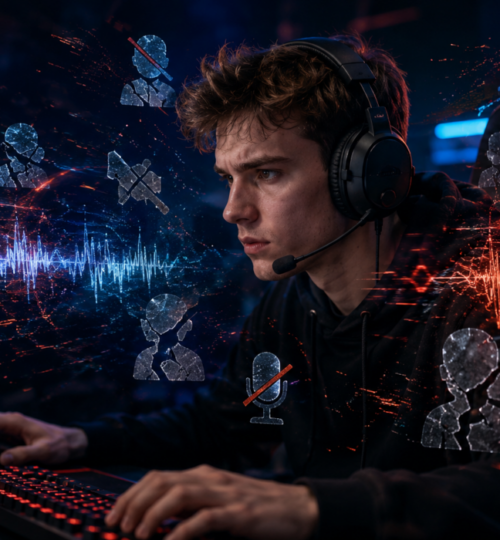
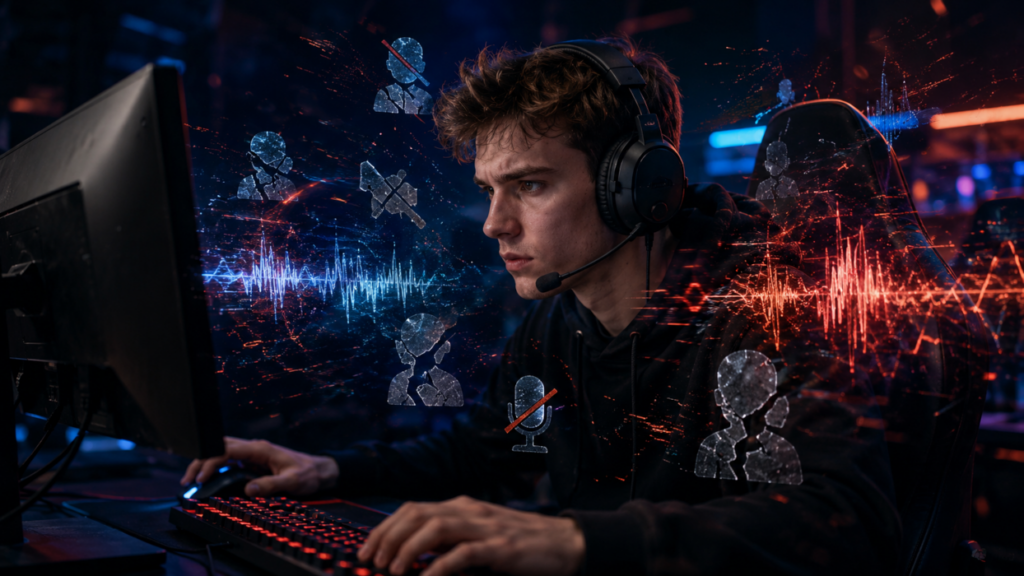
Online multiplayer games rarely fall apart because one player misses one shot. They fall apart because the team stops functioning as a team. The callouts get messy. Two players chase different fights. Someone tilts after a bad death. A flank gets ignored. The objective gets abandoned because everyone is arguing about what should have happened thirty seconds ago.
That is the real danger of pressure. It does not just test aim, mechanics, or game sense. It tests communication discipline. In competitive shooters, MOBAs, extraction games, battle royales, tactical co-op, and objective-based multiplayer, the squads that stay connected under stress usually outlast the squads with better individual talent but weaker comms.
Good communication is not about talking nonstop. In fact, nonstop talking is often the problem. Squad cohesion under pressure comes from knowing what to say, when to say it, when to shut up, and how to keep the team pointed at the next playable moment instead of the last mistake.
Pressure Exposes Weak Comms Fast
Every squad sounds coordinated when nothing is happening. The real test starts when the plan breaks. Maybe the opening push fails. Maybe the enemy team rotates faster than expected. Maybe the sniper who was supposed to hold the lane gets picked early. Maybe the team loses track of the objective timer because everyone is tunnel-visioning damage.
That is when bad habits show up. Players start giving emotional updates instead of useful information. “He’s one shot” gets repeated five times, but nobody says where “he” went. Someone calls for a push while another player is already backing up. A support player asks for peel, but the damage players are too deep to respond. The in-game situation is already hard, and now the voice channel is working against the team.
Under pressure, players often confuse talking with helping. They fill the channel because silence feels uncomfortable. That noise makes the squad slower. It forces teammates to sort through panic, frustration, and half-information while also trying to aim, move, reload, manage cooldowns, watch angles, and track enemies.
Clean comms do not remove pressure. They make pressure playable.
Callouts Need Location, Threat, and Intent
A useful callout gives the squad enough information to act. A bad callout creates more questions. The difference is usually structure.
“Behind us” is better than nothing, but it is still thin. “Two behind us, left staircase, pushing our healer” gives the team something real. It identifies the number, the location, and the threat. The next player can react without needing a follow-up question.
The best callouts usually contain three pieces of information. Where is it happening? What is the threat? What are you doing about it? That last piece matters because it prevents duplicated effort. “I’m watching right tunnel” tells the rest of the squad they do not all need to turn around. “I’m backing off point, need cover” tells teammates the fight is shifting. “I’m holding ult for next fight” gives the team timing information without a long explanation.
In older competitive communities, this kind of discipline separated serious squads from casual stacks. The teams that lasted did not always have the flashiest players. They had shared language. They knew the map names, the lane names, the common rotations, and the meaning behind short phrases. That saved time. Time wins fights.
Modern games have more ping systems, UI markers, minimap data, and automated alerts, but voice still matters. Pings can show where something is. Voice explains why it matters.
The Shot Caller Cannot Be Fighting the Whole Channel
Every squad needs a decision structure. That does not mean one person gets to act like a dictator for the entire match. It means the team needs to know whose voice wins when the situation gets messy.
A shot caller’s job is not to be the smartest player in the lobby. The job is to reduce hesitation. Under pressure, hesitation is deadly. If three players see three different options and nobody has final say, the squad often splits itself apart. One player commits. One player waits. One player rotates late. Then everyone dies in pieces and starts arguing.
The shot caller should keep decisions short. “Reset.” “Hard push left.” “Play objective.” “Give space.” “Collapse on mid.” These calls work because they are simple enough to obey while fighting. Long speeches do not survive contact with the enemy.
The rest of the squad has a job too. They need to respect the call once it is made. Even a slightly wrong team decision can be better than four separate correct ideas happening at the same time. If the call fails, review it later. Mid-fight debate usually turns a risky play into a guaranteed loss.
Strong teams also know when the shot caller needs input. A lurker may see a rotation the leader cannot see. A support player may know the team cannot survive another push. A tank or front-line player may feel the enemy pressure before the backline understands it. The key is timing. Feed the shot caller clean information, then let the call happen.
Keep the Channel Clear During Combat
Combat comms should be short, direct, and relevant. This sounds obvious until a team fight starts and everyone begins broadcasting their inner monologue.
There is a time for planning, a time for reactions, and a time for silence. During active fights, players should avoid complaining about damage, blaming teammates, narrating obvious events, or giving long theories about enemy strategy. The fight is not a podcast. The team needs information that changes decisions.
Useful combat comms include enemy positions, low-health targets, cooldown status, ultimate timing, reloads, rotations, objective status, and immediate danger. Less useful comms include “How did that hit me,” “No way,” “Where are you guys,” “This guy is cheating,” and “I told you we should have gone right.” Those may be natural reactions, but they clog the channel at the worst possible time.
This does not mean players need to become emotionless machines. Competitive gaming is emotional. That is part of why it matters. But disciplined squads create a rule for themselves. During the fight, help the team. After the fight, talk.
That one habit can save more rounds than any aim drill.
Tilt Spreads Through Voice Faster Than Gameplay
A single tilted player can infect the whole squad. It happens fast. One sarcastic comment after a death. One accusation. One frustrated sigh into the mic. Suddenly the mood changes. Players stop trusting each other. They play tighter, slower, angrier. Someone makes a selfish play to “prove” something. Someone else stops talking because they do not want to get snapped at.
Tilt is not just an individual problem. It is a communication problem.
Good squads do not pretend tilt never happens. They contain it. A player can be angry and still give clean comms. A player can disagree with a call and still follow it. A player can have a bad map and still help with information, trades, utility, and objective timing.
One practical rule is to ban blame during live play. Not forever. Just until the match or round is over. Replace “Why didn’t you help me?” with “I’m down, two pushing from blue room.” Replace “You left me alone” with “I need one with me next hold.” Replace “Stop feeding” with “Wait for three before next push.”
The second version still addresses the problem, but it gives the squad a usable next step. That is the difference between venting and leading.
Pre-Match Roles Prevent Mid-Match Confusion
Many communication breakdowns start before the match even begins. Players queue up together, assume everyone understands the plan, then get surprised when each person plays a different version of the game.
A squad should know its basic roles before pressure hits. Who opens fights? Who watches flank? Who tracks objective timing? Who makes rotation calls? Who saves utility for defense? Who plays for trades? Who gathers information? Who has permission to disengage first?
These roles do not need to be rigid. Games change. Enemy teams adapt. But starting with a shared structure gives the squad a default setting. When chaos hits, players fall back on their jobs instead of freelancing.
This matters even more in mixed-skill groups. Veteran players often assume newer teammates understand unwritten rules. They usually do not. A newer player may not know when to rotate, when to hold, when to bait, when to trade, or when to die on objective. That does not mean they are useless. It means the squad has to define expectations.
Clear roles reduce resentment. Players are less likely to blame each other when everyone knows what each person was supposed to handle.
The Best Squads Use Repeatable Language
Squad cohesion improves when communication becomes repeatable. The team should not need a fresh explanation for every common situation. Short phrases should carry shared meaning.
“Play slow” might mean stop chasing, hold angles, wait for cooldowns, and force the enemy to move first. “Full reset” might mean stop staggering deaths and regroup at spawn. “Trade me” might mean the entry player is about to take first contact and needs a teammate close enough to punish the enemy. “Give space” might mean surrender the current position without turning it into a desperate last stand.
These phrases only work if the squad agrees on them. Otherwise, they become vague noise. One player’s “play slow” may mean hide and wait. Another player may think it means keep poking from distance. Those are not the same thing.
Legacy teams often built this language over months or years. Clans, ladders, and long-running communities developed their own vocabulary. That shared language became part of their identity. Modern squads can build the same thing faster by being intentional. After matches, identify the calls that caused confusion and clean them up.
The goal is not fancy terminology. The goal is speed.
Recovery Comms Matter After a Lost Fight
Most teams communicate poorly after losing a fight. They either go silent, argue, or instantly blame the most visible mistake. None of that helps the next spawn, next round, or next objective.
The moments after a lost fight should answer a few practical questions. Who is alive? Can anyone escape? Are we resetting or contesting? What enemy resources were used? What is the next objective timing? Where should we regroup?
A clean recovery call might sound like this. “We lost two. Back out. They used blade and shield. Regroup left side, next push with our support ult.” That gives the squad a plan, resource info, and a location. It also stops stagger deaths.
Staggering is one of the most common signs of broken cohesion. One player dies late, then another tries to save them, then a third arrives early, and suddenly the team has fed three waves of pressure into the enemy. This is not always a mechanics issue. It is often a reset communication issue.
Losing a fight is normal. Losing the next fight before it starts is preventable.
Silence Can Be a Strategic Tool
Some players think a quiet teammate is not contributing. That can be true, especially if they are withholding useful information. But silence itself is not the enemy. Bad noise is.
A good squad has moments where the channel gets intentionally quiet. During a clutch. During a stealth rotation. During a sound-based hold. During a final reload before a coordinated hit. In those moments, extra talking can ruin focus.
The problem is unmanaged silence. If nobody calls enemy movement, objective timing, or flank pressure, silence becomes neglect. Managed silence is different. It gives space for the most relevant player to speak.
A simple rule helps. The player with the most urgent information gets priority. A player in a 1v1 clutch does not need three dead teammates giving conflicting instructions. A flank watcher who sees the enemy rotation needs room to call it. A support player under dive pressure needs to be heard immediately.
Good comms are not equal airtime. They are correct timing.
Pings and Voice Should Work Together
Modern games have made ping systems better, and smart squads should use them. Pings are fast, visual, and less emotionally loaded than voice. They help players mark enemies, items, rotations, danger zones, and objectives without flooding the channel.
But pings are not a replacement for leadership. A danger ping tells the team something is there. Voice tells the team whether to push it, avoid it, bait it, or collapse on it. A location marker can show an enemy position, but a voice call can add “low health,” “alone,” “has ult,” or “baiting.”
The strongest squads combine both. Ping first when speed matters. Add voice when context matters. Do not ping spam. Repeated pings can become just as distracting as panic comms, especially if they do not tell the team what action to take.
Pings also help players who are quieter on mic. Not every valuable teammate is loud. Some players process faster visually. Some stay calmer when they are not forced to speak constantly. A squad that respects both voice and ping communication gets more information from more players.
Review the Breakdown, Not Just the Death
Post-match review often gets lazy. Players focus on the death that ended the round instead of the communication failure that made the death likely.
A squad might say, “We lost because our entry died first.” Maybe. But the better question is why the entry was alone, why the trade was late, why the support cooldown was unavailable, why nobody called the enemy stack, or why the team pushed with two players still rotating.
The death is the visible result. The breakdown usually happened earlier.
Good review keeps the focus on patterns. Did the squad talk over the shot caller? Did players give vague location calls? Did the team fail to reset? Did people keep arguing during combat? Did the flank watcher stop calling? Did the objective timer get ignored? Did the same player keep making unsupported plays because the role was never defined?
The best teams are not soft on mistakes. They are specific about them. Specific criticism can be fixed. Vague anger just becomes background noise.
Squad Culture Decides Whether Comms Hold
Communication systems only work if the squad culture supports them. A team can agree on clean callouts, roles, and review habits, but if players punish each other for speaking, the system dies.
Players need to feel safe enough to give bad news. “I lost the flank.” “I used cooldown early.” “I cannot contest.” “I need help.” These calls are not weakness. They are information. Squads that mock those calls train players to hide problems until it is too late.
That does not mean every mistake gets excused. Competitive teams should hold standards. But there is a difference between accountability and public execution over voice chat. One builds better players. The other builds quiet players who stop trusting the team.
Older gaming communities understood this better than people give them credit for. Long-term squads survived because players had history together. They knew who tilted, who clutched, who needed direction, who could lead, and who needed a reset after a rough map. That social knowledge mattered. It still does.
A squad is not just five mics or four usernames in a party. It is a small pressure system. Every voice adds weight or removes it.
Cohesion Is a Skill, Not a Vibe
Squad cohesion is often treated like chemistry, as if it magically appears when the right players queue together. Chemistry helps, but cohesion is built through habits. Teams get better at staying together because they practice staying together.
They define roles. They use shared calls. They keep combat comms clean. They let one voice lead the decision. They recover after lost fights. They review the actual breakdown instead of farming blame. They use silence, pings, and voice with purpose.
The difference shows up in the ugliest moments. A weaker squad panics when the enemy breaks the plan. A stronger squad absorbs the hit, makes a short call, resets the shape, and keeps playing. That is not luck. That is trained communication under pressure.
In competitive multiplayer, everyone wants sharper aim, better settings, stronger hardware, and smarter strategies. All of that matters. But a squad that cannot hear itself think will throw winnable games no matter how good the players are individually. The mic is part of the loadout. Treat it like one.