In every competitive game, the scoreboard tells only part of the story. It shows kills, damage, healing, assists, objective time, economy, captures, deaths, and sometimes a rating number that tries to compress an entire match into a single grade. But anyone who has played serious team games knows the truth: the player who wins the round is not always the one at the top of the board.
Sometimes the most valuable player is the one who called the rotate before anyone else saw it. Sometimes it is the support who burned every cooldown to keep the entry alive. Sometimes it is the tank who died first but created the only opening the team needed. Sometimes it is the quiet player who never tilts, never clutters comms, and keeps the squad from mentally collapsing after a bad round.
That is where the psychology of team roles becomes so important. Team roles are not just mechanical assignments. They shape identity, decision-making, confidence, communication, leadership, and even how players handle pressure.
Modern esports titles like VALORANT, Overwatch 2, League of Legends, Counter-Strike, Dota 2, Rocket League, and Apex Legends all rely on different role structures, but the human dynamics underneath them are surprisingly similar. A great team is not just five players with good mechanics. It is a system of personalities, responsibilities, trust, and timing.
Roles Give Players a Mental Job
At the simplest level, roles tell players what they are supposed to do. In VALORANT, Riot frames the game around a 5v5 tactical FPS structure with agents built around different jobs, commonly understood through roles like Duelist, Initiator, Controller, and Sentinel. Those roles do more than define abilities. They give players a mental framework for what success looks like in a round.
A Duelist is expected to create pressure. An Initiator gathers information or forces defenders out of position. A Controller shapes space with smokes or denial tools. A Sentinel protects territory, watches flanks, or slows enemy pushes. None of those jobs guarantee kills by themselves, but they define how a player should think.
That mental clarity matters. A player without a role is constantly asking, “What should I be doing?” A player with a role can focus on execution: “How do I do my job better this round?”
The same applies in Overwatch 2, where heroes are formally grouped into Tank, Damage, and Support roles. Blizzard describes tank heroes as the ones who soak pressure and lead the charge, while damage and support heroes fill different offensive and sustaining responsibilities.
When a role is clear, the player can reduce decision overload. Instead of trying to do everything, they filter the match through their responsibility. That is a psychological advantage. In fast games, clarity is speed.
The Entry Player and the Psychology of Risk
Every team has someone who has to go first. In shooters, that might be the entry fragger. In hero shooters, it might be a tank diving into space. In MOBAs, it might be the engage support or jungler starting a fight. These players often live in the most emotionally volatile role on the team because they are judged by outcomes that are not always fully under their control.
The entry player can make the correct move and still die. They can create the opening, force enemy cooldowns, expose positions, or pull attention away from teammates, yet the scoreboard may simply show another death.
This creates a psychological burden. Entry roles require confidence, short memory, and trust. If an entry player becomes afraid of dying, the whole team becomes passive. If they become reckless, the team feeds. The sweet spot is controlled aggression.
Good teams understand this. They do not simply tell the entry player, “Stop dying.” They ask better questions. Was the timing right? Was utility layered properly? Did the team trade? Did the call match the plan? Did the death create value? The entry role teaches one of the oldest lessons in competitive gaming: not every death is a mistake, and not every kill is meaningful.
The Support Role and Invisible Value
Support players often understand the psychology of team roles better than anyone because their value is frequently indirect. Support is not just healing. In many games, support means enabling others to succeed. It can involve vision control, utility timing, resource management, defensive positioning, communication, and emotional stability. A support player may spend an entire match making other people look good.
That can be frustrating in casual environments, where players often reward visible carry moments more than enabling plays. But in organized competition, support value becomes obvious. A clutch save, a perfect smoke, a timely stun, a blocked angle, a revive, a peel, or a calming comm can decide the match.
Research on esports teamwork has repeatedly emphasized communication, cohesion, role understanding, and social support as major factors in team performance. One esports teamwork study found that players rely on game experience and role interdependence to build shared team understanding, especially when coordinating with unfamiliar teammates.
That lines up with what veteran players already know. Supports are often the glue. They track enemy habits, stabilize chaos, and notice problems before they become disasters. They are not always the loudest voice, but they often carry the team’s structure. The best support players do not ask, “How do I top the stats?” They ask, “What does my team need next?”
Leadership Is a Role, Even When the Game Does Not List It
Most games have official roles, but teams also develop unofficial psychological roles. One player becomes the shot-caller. Another becomes the morale anchor. Another becomes the analyst. Another becomes the quiet mechanical specialist. Another becomes the chaos agent who breaks patterns.
Leadership in esports is not always tied to the highest skill player. In fact, the best fragger is not always the best leader. Leadership requires emotional regulation, communication discipline, and the ability to simplify information under pressure.
Recent esports leadership research has described influential leaders as players who help communication, motivate teammates, and build confidence.
That matters because competitive games are information storms. Too many calls can paralyze a team. Too few calls leave everyone guessing. A good in-game leader filters the noise. They decide what matters now.
A strong leader does not need to control every movement. They create shared direction. They keep the team from drifting into five separate solo queues.
Role Identity Can Help or Trap a Player
Roles create identity. A player might think of themselves as “the sniper,” “the healer,” “the tank,” “the objective guy,” “the lurker,” “the flex,” or “the captain.” That identity can build confidence and mastery. When a player knows who they are in the team, they often perform with more conviction. But role identity can also become a prison.
A Duelist who believes they must always carry may over-peek. A support who believes they are “not supposed to fight” may miss opportunities to secure kills. A tank who sees their job only as soaking damage may forget that space creation is often more important than raw durability. A veteran player who built their reputation in one role may resist adapting when the meta changes.
Modern games constantly challenge role identity. Balance patches, new characters, map pools, economy shifts, and strategy trends can change what a role demands. Overwatch 2, for example, has repeatedly sparked discussion around role identity because the difference between tanking, supporting, damaging, and playmaking can blur depending on hero design and balance direction. The game’s Role Queue structure still organizes teams around Tank, Damage, and Support, but actual match responsibilities can be more nuanced than the labels suggest.
The strongest players have role identity without role rigidity. They know their job, but they are not emotionally attached to only one way of doing it.
Flex Players Are Psychological Translators
Flex players are fascinating because they often understand multiple roles from the inside. A true flex player is not just someone who can fill. They understand how each role thinks. They know what the entry needs from support. They know what the support needs from the tank. They know what information the lurker is waiting for. They know when a star player needs space and when that same player needs restraint.
This makes flex players valuable beyond mechanics. They can translate between teammates. When a Duelist says, “I had no support,” and a Controller says, “You went too early,” the flex player may understand both sides. They can identify whether the problem was timing, utility, spacing, communication, or expectation.
In veteran communities, flex players often become the hidden backbone of teams because they reduce friction. They are adaptable, but more importantly, they are empathetic inside the game’s logic. They see the battlefield from multiple mental camera angles.
Toxicity Often Comes From Role Misunderstanding
A huge amount of team conflict comes from players misunderstanding what other roles are actually doing.
The damage player blames the support for not healing. The support blames the damage player for bad positioning. The tank blames everyone for not following. The lurker blames the team for pushing too early. The team blames the lurker for baiting. Everyone may be partly right, but the argument becomes emotional because each player is judging the match from their own role’s perspective.
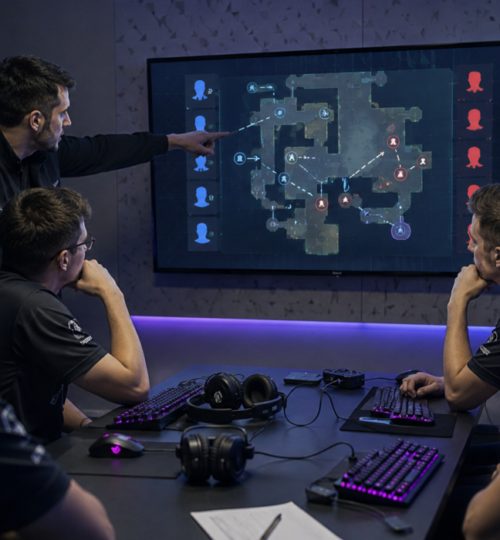
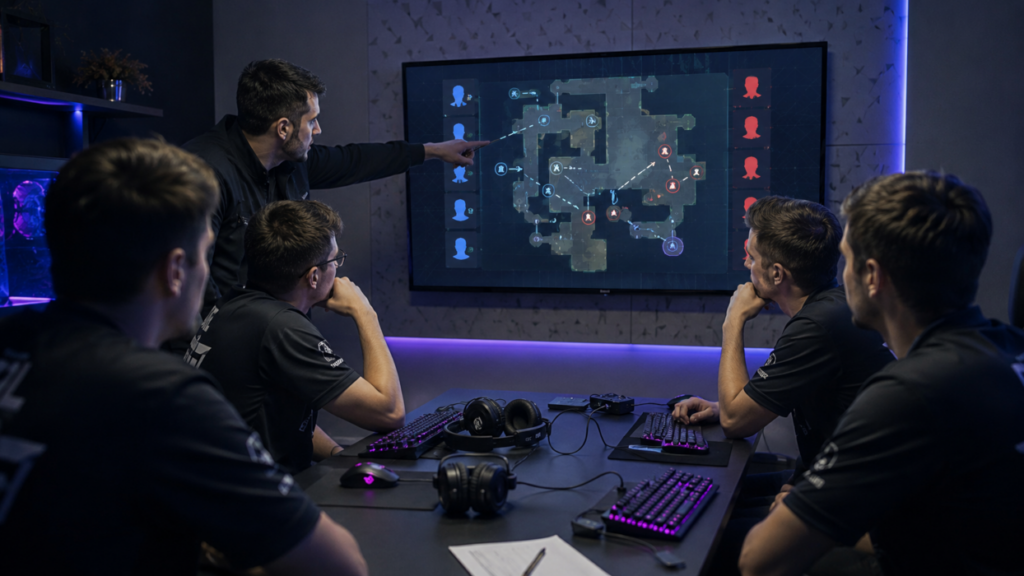
This is why role empathy matters. Good teams review situations from the full system, not just one viewpoint.
Instead of saying, “You threw,” a better team asks:
- “What was the plan?”
- “What information did we have?”
- “Who needed to move first?”
- “What utility was missing?”
- “What timing did we expect?”
- “What did the enemy do differently?”
Those questions turn blame into analysis. That shift is massive. Teams that cannot talk about role mistakes without ego rarely improve for long.
The Objective Player and the Discipline of Boring Wins
Not every role is glamorous. Some players specialize in doing the boring thing that wins. They hold the backline. They watch the flank. They rotate early. They sit on the objective. They delay instead of chase. They save resources. They refuse the flashy duel. They make the correct low-ego play again and again.
These players are essential in legacy competitive communities because veteran players understand that games are not won only through highlights. They are won through habits. The objective player often has the discipline to ignore temptation.
That discipline is psychological. It requires patience, humility, and trust that the team will value the right play even when it does not produce a clip.
In many ways, the objective player represents the difference between casual skill and competitive maturity. Casual players ask, “Can I win this fight?” Competitive players ask, “Does taking this fight help us win the match?”
Team Chemistry Is Role Chemistry
People often talk about “chemistry” like it is magic, but in games, chemistry usually means role expectations are aligned. The entry knows when support utility is coming. The support knows when the entry wants to go. The leader knows who needs simple instructions and who needs freedom. The flex knows when to fill a gap. The objective player knows when the team is committing or resetting.
Chemistry is not just friendship. Players can like each other and still play terrible team games. Real chemistry is shared timing, shared language, and shared trust.
This is why restored ladders, organized matches, tournaments, and team profiles matter in a legacy esports community. They give players a place to build identity over time. Random matchmaking can create exciting moments, but long-term competitive communities create reputations. Players become known for their roles, habits, leadership, reliability, and clutch factor.
That history matters. A player’s role is not just what they pick in the lobby. It becomes part of their competitive story.
The Future of Roles: More Hybrid, More Mental
As games evolve, roles are becoming more hybrid. Supports deal damage. Tanks initiate and duel. Controllers lurk. Duelists create space but also gather information. MOBAs constantly redefine lane priorities. Tactical shooters blur utility and fragging. Battle royales force players to swap between scouting, anchoring, fighting, and rotating based on the zone.
That does not mean roles are disappearing. It means roles are becoming more psychological than purely mechanical. The future belongs to players who understand why a role exists, not just what buttons it uses. The best competitors will be the ones who can adapt their identity without losing their purpose. A role is not a cage. It is a lens.
Why Team Roles Still Matter
The psychology of team roles explains why competitive gaming is so much deeper than raw mechanics. Aim matters. Reaction time matters. Game knowledge matters. But team roles decide how those skills are organized under pressure.
A great team needs courage from its entry players, patience from its objective players, awareness from its supports, clarity from its leaders, adaptability from its flex players, and trust from everyone.
That is the beauty of team games. They force players to become more than individuals chasing stats. They ask players to understand timing, sacrifice, confidence, communication, and identity.
For a legacy gaming community built on ladders, tournaments, rivalries, player profiles, and team history, that lesson hits even harder. The names on the leaderboard matter, but the roles behind those names are what made the matches memorable. The best teams are not just collections of talent. They are organized minds under pressure.