A Major Turning Point for Diablo 4
Diablo 4 Season 13 is not just another seasonal reset. It lands alongside Lord of Hatred, the game’s second major expansion, and that makes this one of the most important moments in Diablo 4’s post-launch life so far. Blizzard lists Season of Reckoning as launching on April 27, 2026 at 4:30 p.m. PDT, while the Lord of Hatred expansion page presents the expansion as arriving April 28, 2026, depending on region and rollout timing. That means players are getting a seasonal refresh, a new campaign chapter, two new classes, and a major systems update in one very dense launch window.
For a game built around resets, builds, endgame farming, and seasonal momentum, Season 13 has a different kind of weight. Most Diablo seasons ask players to come back for a new mechanic or temporary power system. This season asks players to come back because the foundation of the game is expanding. Lord of Hatred brings the story back to Mephisto, opens the long-discussed region of Skovos, and adds the Paladin and Warlock to the class lineup. That changes the conversation from “what is the seasonal gimmick?” to “what does Diablo 4 look like after this expansion?”
For veteran players, this is the kind of launch that feels closer to an old-school expansion moment than a simple live-service update. For modern players, it is a chance to jump in during a reset where everyone is testing new systems, chasing new ladders, and figuring out where the meta lands.
Season 13 Start Date and What Makes It Different
Season 13 is officially called Season of Reckoning. Blizzard’s launch article states that the season begins with the Lord of Hatred expansion on April 27, 2026 at 4:30 p.m. PDT. The same announcement makes something very important clear: this season includes seasonal rewards and features such as Season Rank, Season Blessings, and the return of the Tower and Leaderboards Beta, but it does not introduce a season-specific story, theme, or unique gameplay mechanic.
That is a massive distinction. In previous seasons, the hook often centered on a new temporary system. Season 13 is more about absorbing the expansion launch and giving players a structured seasonal path through the new era of Diablo 4. It is less about adding a short-lived gimmick and more about giving the player base room to explore the new campaign, new classes, new endgame hub, and larger progression updates.
For competitive-minded players, that matters. Seasonal resets are where the race begins. The first week is when build creators, leaderboard pushers, dungeon grinders, and economy-minded players start shaping the early meta. With Paladin and Warlock entering the field, Season 13 will likely be one of the most experimental Diablo 4 seasons to date. The best builds will not be fully settled on day one. Players will be testing survivability, burst windows, leveling efficiency, boss damage, crowd control, mobility, and how the new class mechanics scale into endgame.
Lord of Hatred Brings the Fight Back to Mephisto
The story centerpiece of this update is Lord of Hatred. Blizzard frames the expansion around a final stand against Mephisto, the Prime Evil of Hatred, as his corruption spreads toward Skovos. The expansion follows the events of Vessel of Hatred, with Neyrelle still tied to Mephisto’s soulstone and Sanctuary facing the next stage of his influence.
That is a strong narrative hook because Mephisto has been one of Diablo’s most important villains since the earlier games. Diablo 4 has spent years building toward this confrontation, and Lord of Hatred appears designed to move the game beyond setup and into payoff. The campaign sends players to Skovos, a region rooted deeply in Diablo lore as the ancient birthplace of Sanctuary’s first civilization and former home of Lilith and Inarius. Blizzard describes the area as a mix of volcanic lands, forests, sunken zones, towns, dungeons, sea horrors, cultists, and Hell-touched threats.
That setting gives the expansion a distinct identity. Nahantu gave Vessel of Hatred a jungle-heavy mood with Spiritborn energy, mercenaries, and a darker continuation of Neyrelle’s journey. Skovos sounds more mythic and ancient, with a stronger connection to the original birth of Sanctuary. For longtime Diablo players, that is exactly the kind of setting that can make an expansion feel bigger than a new map. It is not just another place to grind. It is a place tied to the deepest bones of the franchise.
The Paladin Returns to Sanctuary
The Paladin is the headline class for many old-school fans. Diablo players have been asking for a holy warrior archetype since Diablo 4 launched, and Lord of Hatred finally delivers it. Blizzard says players who pre-purchase Lord of Hatred can play the Paladin early, with the expansion itself including the class as part of the full package.
Blizzard’s description positions the Paladin as a reborn defender of Sanctuary tied to the Wardens of Light, an order devoted to protecting the innocent without falling into corruption or blind creed. Mechanically, the class appears built around holy power, durability, divine offense, and flexible combat roles. Blizzard’s expansion page outlines several Paladin fantasy paths, including the Arbiter, Zealot, Judicator, and Juggernaut. These archetypes suggest a class that can move between fast holy strikes, aggressive melee pressure, celestial punishment, and defensive retaliation.
That could make the Paladin a major factor in both solo play and coordinated endgame groups. Diablo 4 has always had tanky builds, support-adjacent builds, and high-survivability melee options, but the Paladin brings a much more iconic fantasy to that space. If the class captures even part of the old Diablo 2 Paladin identity, expect players to immediately test aura-style effects, holy damage scaling, shield-based play, defensive uptime, and group utility.
For a revived competitive community, the Paladin is exactly the kind of class that sparks ladder conversation. Some players will chase the fastest leveling route. Others will look for hardcore-safe builds. Others will try to break boss encounters with defensive scaling or holy burst. The first few weeks of Season 13 should be full of build theory, patch reactions, and leaderboard surprises.
The Warlock Adds a Darker Kind of Power
The second new class is the Warlock, and it gives Diablo 4 a very different flavor from the Paladin. Blizzard describes the Warlock as a forbidden caster who bends demons and the powers of Hell to their will. The important distinction is that Warlocks are not servants of Hell. They weaponize Hell against itself.
That class fantasy has a lot of room to breathe in Diablo 4. The Sorcerer already controls elemental power. The Necromancer commands death, bone, blood, and undead forces. The Warlock appears to sit in a nastier, more infernal lane, using rituals, alchemy, spellcraft, summoned demons, and raw hellfire. Blizzard’s Warlock preview describes the class as tearing open the veil between worlds, binding demons, disrupting battlefields with conjured hellfire, and commanding demonic legions.
The Warlock also has its own class quest. Blizzard says players can visit Ked Bardu after reaching Level 15 once Lord of Hatred launches to begin the “Disciple of the Forbidden” quest. That gives the class a narrative initiation point instead of making it feel like a purely mechanical add-on.
From a gameplay perspective, Warlock could become one of the most watched classes in Season 13. Summon-heavy classes often create balance challenges in ARPGs because pets, damage-over-time effects, burst windows, and survivability can scale in unusual ways. If Warlock builds can combine strong battlefield control with reliable damage and defensive demon tools, the class may quickly become a top pick for players who enjoy methodical power rather than pure melee aggression.
Skovos Becomes a New Endgame Hub
One of the most practical expansion additions is the new region of Skovos and its capital city, Temis. Blizzard describes Temis as an ideal endgame hub after players complete the Lord of Hatred campaign. That is not just flavor. Endgame hubs matter in ARPGs because players spend countless hours managing stash space, checking systems, entering activities, and adjusting builds between runs.
Temis includes the Artificer’s Obelisk and Stash, allowing players to access both the Tower and Pit from the new hub. Blizzard also added a Solo Warlock Ladder to the Leaderboards with the expansion. That is a small detail with a big competitive implication. When a new class launches, class-specific ladders give players a clean way to measure performance without comparing a fresh toolkit against years of refined Barbarian, Rogue, Sorcerer, Druid, and Necromancer strategies.
The return of the Tower and Leaderboards Beta gives Season 13 a stronger competitive spine than a casual seasonal refresh. The Tower has already become one of Diablo 4’s clearest attempts to create repeatable, comparable, leaderboard-friendly endgame content. With the new Build Viewer feature, players can inspect captured build snapshots from leaderboard entries, giving the community better tools for understanding what top players were using at the time of their ranked Tower runs.
That is huge for community discussion. Build transparency helps reduce confusion around leaderboard performance. It also helps newer players learn why certain setups are winning, rather than only seeing a name and a clear time.
Skill Trees, Loot Filters, Talismans, and Build Variety
Lord of Hatred is not only adding campaign content and classes. Blizzard says the expansion brings major Skill Tree reworks, new skill variants for every class, level cap increases, and a new Loot Filter to make desired items easier to find.
That combination matters because Diablo 4’s long-term health depends on build variety. New classes are exciting, but existing classes also need reasons to feel fresh. If the skill variants give old classes new build paths, Season 13 could avoid the problem of everyone abandoning their mains just to try Paladin or Warlock. Barbarian, Rogue, Druid, Necromancer, Sorcerer, and Spiritborn players should all have new reasons to revisit their favorite archetypes.
The Loot Filter is also a very welcome quality-of-life addition. ARPGs live and die by loot, but loot becomes exhausting when players spend more time reading trash drops than making meaningful decisions. A good loot filter helps players focus on gear that fits their build, especially once they are deep into farming loops where efficiency matters.
Blizzard’s latest patch notes also show continued post-launch tuning around expansion systems. Patch 3.0.2, released May 13, 2026, included Talisman updates such as unique drop sounds and distinct minimap icons for Set Charms, along with class-specific Talisman adjustments. That suggests Blizzard is actively smoothing out readability and balance issues as players settle into the new expansion systems.
What Season 13 Means for Returning Players
For returning players, Season 13 is probably one of the best re-entry points Diablo 4 has had. The seasonal structure gives everyone a fresh start, while Lord of Hatred gives the game enough permanent content to make the return feel justified. You are not just logging in for a borrowed seasonal power that disappears later. You are stepping into a larger version of the game.
Players who skipped Vessel of Hatred should also note that Lord of Hatred includes the first expansion. Blizzard states that Lord of Hatred includes Vessel of Hatred, allowing players to experience the events leading into Mephisto’s next move. That is important for anyone who fell away after the base campaign and wants to catch up without piecing the story together out of order.
For competitive players, the big question is how quickly the meta stabilizes. Paladin and Warlock will attract massive attention, but the skill tree overhaul and loot changes may also shake up older classes. That creates a short but exciting window where experimentation matters. The first strong guides will help, but they will not replace hands-on testing. Season 13 is the kind of reset where players who understand systems early may gain an edge before the broader player base catches up.
Final Thoughts: A Reckoning Worth Watching
Diablo 4 Season 13 feels like a reset with expansion-level consequences. The season itself does not bring a separate seasonal story or temporary gimmick, but that is not really the point this time. The real story is Lord of Hatred, the arrival of Skovos, the return of the Paladin, the debut of the Warlock, and a wider systems refresh that affects how players build, farm, and compete.
For a legacy gaming community built on ladders, competition, player identity, and long-term multiplayer history, this is the type of Diablo moment worth paying attention to. Season 13 is not only about who clears fastest during launch week. It is about how Diablo 4’s class ecosystem changes when holy warriors and forbidden demon-binders enter the field together.
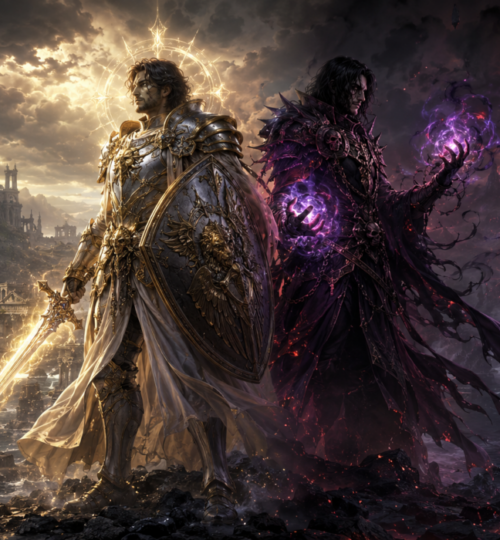
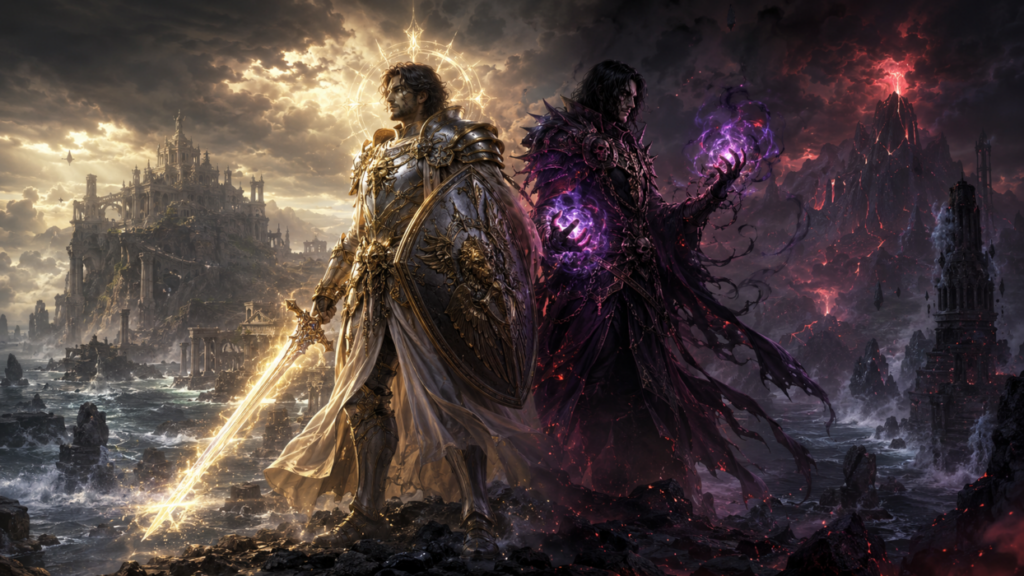
The Paladin gives Sanctuary its long-awaited shield of divine judgment. The Warlock gives players a dangerous new way to turn Hell’s own power against itself. Skovos gives the story a mythic new stage. The Tower, Leaderboards Beta, Build Viewer, and new endgame hub give competitive players more structure to chase.
Season 13 may be called Season of Reckoning, but for Diablo 4, it feels more like a test of identity. Blizzard is asking players to return not just for another round of loot, but for the next version of the game. Whether that version becomes the new standard will depend on balance, endgame depth, class design, and how well the community responds once the launch rush fades. But one thing is already clear: this is one of the biggest Diablo 4 updates yet, and Sanctuary is about to get loud again.