
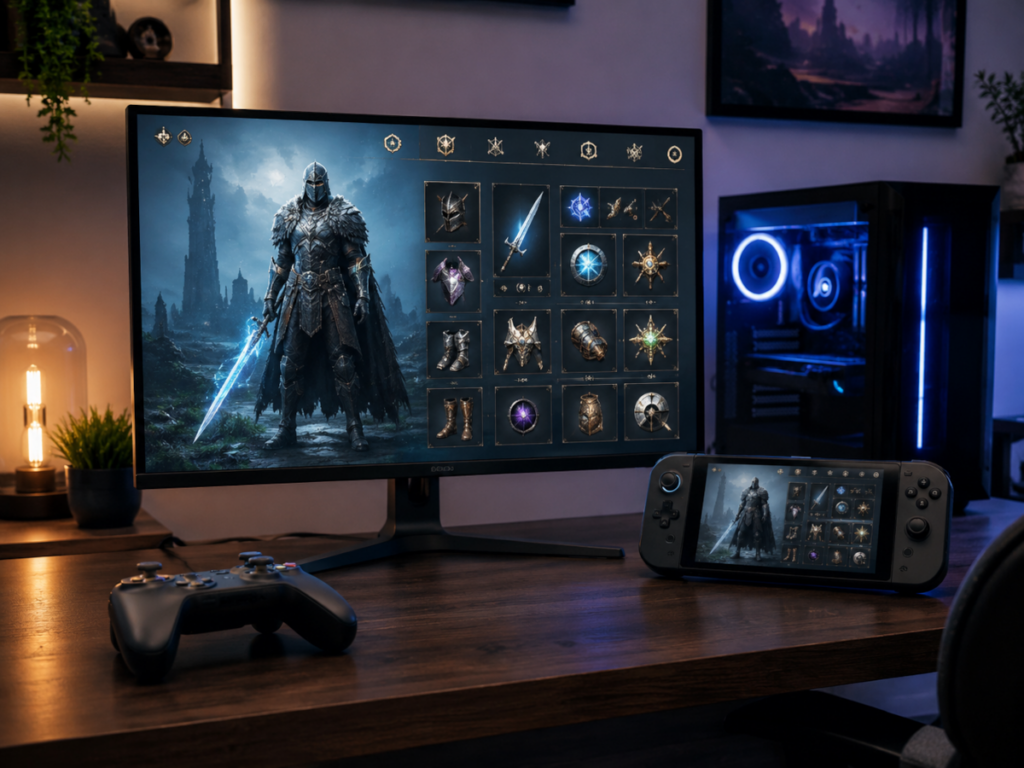
Cross-progression has become one of those features players now notice most when it is missing. Years ago, changing platforms often meant starting over. Your skins stayed behind. Your ranked climb stayed behind. Your battle pass progress stayed behind. Your friends might follow you, but your account history did not. For veteran players who have lived through console generations, launcher migrations, account merges, and platform-exclusive ecosystems, that kind of reset feels brutal.
Today, games are no longer tied to one box under one television. A player might grind ranked on PC, relax on console, check cosmetics on a handheld, and eventually return years later on a different platform. For live-service games, competitive shooters, MMOs, fighting games, racing games, and sports titles, cross-progression is not just a convenience feature. It is a trust feature.
Done right, cross-progression makes a game feel bigger than the hardware. Done wrong, it turns account linking into a minefield.
Cross-Progression Is Not the Same as Crossplay
Crossplay answers one question: can players on different platforms play together?
Cross-progression answers a different question: does your identity, progress, unlocks, purchases, stats, and history move with you?
That distinction matters. A game can let Xbox, PlayStation, PC, and Switch players compete in the same lobby while still keeping their progression locked to separate accounts. That might work for a casual party game, but it becomes painful in any title where investment matters. Competitive rank, battle passes, cosmetics, player levels, achievements, loadouts, currencies, and seasonal rewards all create a sense of ownership. When that ownership is fragmented, players feel punished for switching devices.
The modern expectation is simple: if the game asks players to invest time and money for years, the account should survive platform changes.
Done Right: One Identity, Many Platforms
The strongest cross-progression systems start with a unified account identity. Fortnite is one of the clearest examples of this model. Epic’s support documentation explains that purchased content and progress are accessible across Xbox, PlayStation, PC, Switch, and mobile as long as the platform accounts are linked to the same Epic Games account, with some exceptions such as V-Bucks behavior across platforms. Epic also notes that progress syncing for Fortnite, Fall Guys, and Rocket League depends on linking platform accounts to an active Epic Games account.
That is the key design lesson: the platform account should not be the true soul of the player. The publisher account should be.
When the publisher account becomes the center, players can move between devices without feeling like they are borrowing a different version of themselves. Their locker, friends, progress, and seasonal grind remain attached to the same identity. It also makes support easier because the developer has one central account structure instead of trying to reconcile several isolated platform profiles after the fact.
This is especially important for younger games that launch with cross-progression from the beginning. Retrofitting account systems years later is far harder than designing them properly at launch.
Done Wrong: Confusing Account Linking
The biggest cross-progression failures usually begin with account linking confusion. Players do not always know which account is the “main” account. They might have played on console first, then created a PC account later. They might have an old publisher login they forgot about. They might have bought cosmetics on one platform and earned ranked progress on another. Suddenly, linking becomes scary because one wrong click can feel like it might erase years of history.
This is where games need ruthless clarity. Before any account link, merge, or primary account selection, the system should show the player exactly what will happen. Which account is becoming primary? Which cosmetics transfer? Which currencies do not? Which ranked stats survive? Which platform restrictions apply? Can the choice be undone? Is it a merge, a link, or a replacement?
If players need Reddit threads, support tickets, and YouTube tutorials just to understand whether their inventory will survive, the system is already failing.
Done Right: Respect the Old Grind
Warframe is an interesting example because it had to solve cross-platform progression for a long-running game with years of player investment. Its official cross-platform progression guide explains that players need or create a PC Warframe account, then link accounts one platform at a time to form a Cross Platform Save Account. It also clarifies that players do not need to download or play on PC just to use the system.
That kind of structure matters because older games carry baggage. Players may have separate inventories, platform histories, purchases, and account ages. Cross-progression for a game with ten years of history is not the same as cross-progression for a game that launched last month.
The “done right” part is respecting that history instead of pretending it does not exist. Longtime players do not want a platform migration to flatten their identity. They want the game to recognize that their account is a record of time spent, events completed, clans joined, gear earned, and money invested.
For legacy communities like ours, that point hits home. A leaderboard, a profile, or an old tournament record is not just database information. It is community history. Cross-progression works best when developers treat account data with that same seriousness.
Done Wrong: Partial Transfers Without Plain Language
Partial cross-progression is sometimes unavoidable. Platform holders, storefront rules, premium currency restrictions, regional policies, and licensing agreements can complicate what transfers. The problem is not always the limitation itself. The problem is when the limitation is poorly explained.
A player can usually accept, “Your rank and cosmetics transfer, but this currency balance stays platform-specific because of storefront rules.” What players hate is discovering the limitation after linking accounts or buying content.
Apex Legends provides a useful modern reference point. EA’s support page says Apex players automatically have access to Cross Progression when their platform account is linked to their EA Account. That kind of automatic model is convenient, but any automatic system must be extremely transparent because players may not feel in control when multiple platform histories are involved.
When cross-progression is automatic, the game needs strong messaging. When it is manual, the game needs strong confirmation screens. Either way, the player should never have to guess.
The Competitive Angle: Rank, Stats, and Integrity
Cross-progression gets even more delicate in competitive ecosystems. Cosmetics are emotional, but rank is identity. Stats are reputation. Match history is proof. Tournament eligibility can depend on platform, region, input method, account age, anti-cheat status, and prior competitive behavior.
A good competitive cross-progression system needs to carry player identity while still protecting competitive integrity. That means ranked progress should not create exploits. Players should not be able to use platform movement to dodge bans, reset matchmaking history, duplicate rewards, or manipulate skill ratings. If a player has a suspension on one platform, a unified account system should not let them escape it by launching elsewhere.
This is where developers have to balance freedom with enforcement. The goal is not just “play anywhere.” The goal is “play anywhere without breaking the ladder.”
For esports communities, this is huge. Player profiles are not just vanity pages. They represent trust. If cross-progression creates identity confusion, smurfing loopholes, or stat manipulation, it damages the competitive scene around the game.
Done Right: Cross-Progression Plus Cross-Entitlement
The gold standard is when progress, saves, achievements, add-ons, and ownership all move together. Xbox Play Anywhere is built around that philosophy for supported games. Microsoft says that when a game supports Xbox Play Anywhere, progress is saved with Xbox, allowing players to pick up where they left off across Xbox consoles, Windows PC, and supported handheld devices, with saves, add-ons, and achievements coming with them.
That is a powerful model because it reduces friction at every level. The player does not have to wonder whether they bought the “wrong” version. They do not have to rebuild progress on a handheld. They do not have to treat console and PC as separate lives.
For developers, this kind of ecosystem support can help keep players engaged longer. A player who can continue their save on a different device is less likely to churn when their habits change. Maybe they travel. Maybe they upgrade from console to PC. Maybe they want to play from the couch sometimes. Cross-progression keeps the game attached to the player instead of the machine.
Done Wrong: Treating Cross-Progression Like a Bonus
The industry mistake is treating cross-progression as a luxury feature instead of basic infrastructure. In 2026, that mindset feels dated. If a game has battle passes, premium cosmetics, ranked seasons, account levels, limited-time rewards, and long-term player profiles, then cross-progression should be part of the foundation.
Players are not asking for magic. They are asking for continuity.
When cross-progression is missing, the message can feel like this: “Your time mattered only on that platform.” That is not a great message to send to players who are already juggling multiple ecosystems.
This is especially damaging for games that release late on new platforms. If a title launches on console first and comes to PC later, or hits PC first and console later, players want to know whether their earlier investment will carry over. Without cross-progression, every new platform launch becomes a restart tax.
What Players Actually Want
Players do not need every system to be perfect, but they need it to be honest, predictable, and safe. The best version of cross-progression usually includes a few core principles:
First, the game should clearly separate account identity from platform identity. Second, it should explain what transfers before the player commits. Third, it should protect purchases and earned rewards as much as possible. Fourth, it should prevent competitive abuse. Fifth, it should offer support paths when account linking goes wrong.
Most of all, it should feel boring in the best way. Cross-progression should not feel like a dangerous ritual. It should feel like logging in.
Why This Matters More for Legacy Communities
For a revived competitive community, cross-progression is more than a technical feature. It reflects a larger shift in how gaming history is preserved. Players no longer live on one platform forever. Communities survive across hardware generations, storefront changes, publisher account systems, Discord servers, forums, and rebuilt websites.
That is why account continuity matters. The same player who competed on a ladder years ago may return on a different machine, with a different username, a different platform, and a different friend group. Good systems help reconnect that history. Bad systems scatter it.
In a competitive scene, continuity builds identity. Identity builds rivalry. Rivalry builds community.
The Bottom Line
Cross-progression done right respects the player’s time. It understands that modern gamers are not tied to one device, one storefront, or one generation. It lets people move without losing themselves.
Cross-progression done wrong turns progress into a hostage situation. It creates fear around account linking, confusion around purchases, and frustration around platform changes. It makes players feel like the game values the transaction but not the history behind it.
The best systems are clear, unified, secure, and player-first. They protect the grind, preserve the account, and keep the community connected across every screen.
For competitive gaming, that is not just convenience. That is the future of player identity.