
The Esports World Cup has never been shy about scale, but the 2026 edition has pushed the conversation into a different category. A $75 million total prize pool is not just another headline number. It is a signal. It tells players, clubs, publishers, sponsors, broadcasters, and fans that elite esports is continuing to move closer to the structure of traditional global sport, where the competition itself is only one piece of a much larger machine.
For longtime competitive gaming communities, especially those that remember when online ladders were run by volunteers, clan forums, scrim nights, IRC channels, and homegrown stat pages, a purse this large can feel almost unreal. Many legacy esports scenes were built on pride, reputation, brackets, and maybe a modest cash prize if the organizer could find a sponsor. The Esports World Cup 2026 exists at the opposite end of that spectrum. It is a seven-week global event with 25 tournaments across 24 games, more than 2,000 players, more than 200 clubs, and an industry-shaping prize pool designed to reward both individual game excellence and cross-title organizational strength.
But the real story is not only the $75 million. The real story is what it costs to make an event like this possible, and what that cost says about the future of esports.
A Prize Pool That Changes the Conversation
Prize pools have always had a strange power in esports. They attract attention fast because they are easy to understand. A viewer does not need to know the details of a game’s meta, tournament format, or qualification path to understand that $75 million is a serious number.
At EWC 2026, that money is not sitting in one giant winner-take-all pot. It is spread across several layers of competition. The Club Championship alone accounts for $30 million, with the top 24 clubs earning a share and the champion club receiving $7 million. More than $39 million is allocated across individual game championships, while the remaining prize money supports awards, qualifiers, and related competitive pathways.
That structure matters. It means the EWC is not simply rewarding one team that catches fire in one title. It is rewarding clubs that can build competitive depth across multiple games. That favors organizations with infrastructure, scouting, coaching staffs, content teams, international rosters, and long-term planning. In other words, it favors esports clubs that operate more like modern sports organizations than loose collections of talented players.
For players, the upside is obvious. A larger prize pool means more meaningful earnings opportunities. For organizations, it creates a reason to invest across more titles. For fans, it gives the event a clear identity: this is not just a tournament series, it is a battle to determine which club has the strongest overall esports program.
The Purse Is Only the Visible Cost
The $75 million prize pool is the number everyone sees, but it is not the full cost of hosting a global esports event. In many ways, the purse is only the tip of the iceberg.
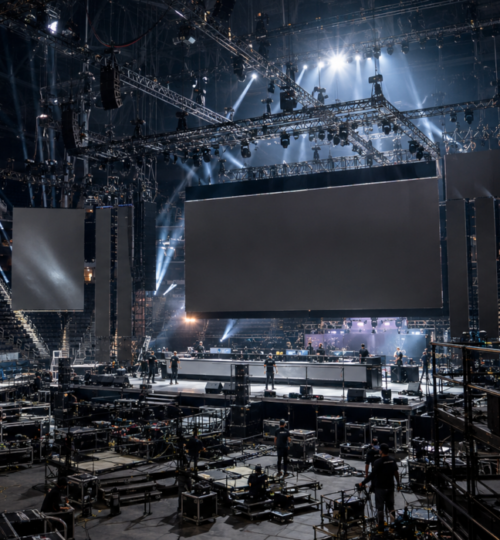
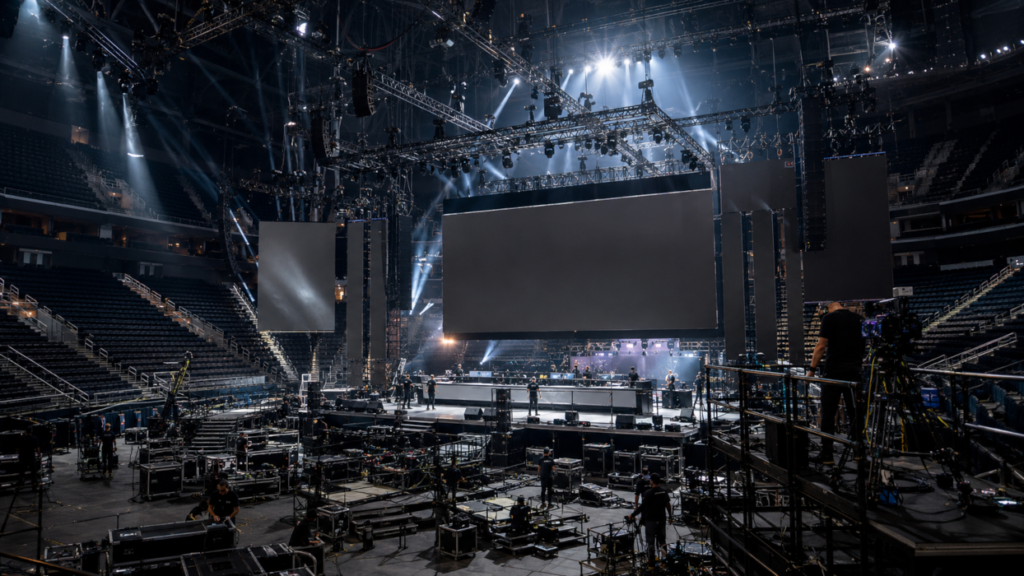
Behind that number are venue costs, production crews, broadcast systems, staging, travel coordination, player hospitality, security, tournament administration, marketing, translation, co-streaming programs, talent fees, technical operations, internet infrastructure, practice areas, fan activations, and festival experiences.
A modern esports event at this level is not just a few PCs on a stage. It is a multi-week entertainment operation that needs to function for live audiences, online audiences, media partners, publishers, players, sponsors, and teams at the same time. Every match has to be captured, produced, distributed, clipped, translated, moderated, archived, and monetized. Every competitive ruling has to be handled professionally. Every technical failure has to be solved quickly enough that the audience barely notices.
That is where the true cost of hosting comes into focus. The prize pool may get the headlines, but the operational cost determines whether the event feels world-class or chaotic.
Why Multi-Game Events Are So Expensive
Running one esports tournament is already complicated. Running 25 tournaments across 24 games is a different beast entirely.
Each game has its own competitive format, publisher relationship, ruleset, hardware requirements, observer tools, broadcast standards, anti-cheat expectations, player needs, and fan culture. A Counter-Strike 2 event does not operate the same way as a Rocket League event. A fighting game bracket has different demands than a MOBA, a battle royale, a racing title, or Chess. Mobile esports adds another layer of device management, network stability, and regional audience strategy.
That creates a huge logistical challenge. The event organizer has to build a schedule that makes sense across time zones, audience demand, player preparation, and venue availability. It also has to avoid making major finals compete with one another too aggressively. Fans can only watch so much at once, and sponsors want their visibility protected.
The more titles involved, the more difficult it becomes to create a clean viewing experience. That is one reason the EWC model is interesting. It treats esports less like one game trying to be a sport and more like an Olympic-style competitive festival where many disciplines live under one larger identity.
That approach is ambitious, but ambition is expensive.
The Club Championship Changes Team Economics
The Club Championship may be the most important part of the EWC formula. It changes the incentive structure for esports organizations.
In many traditional esports circuits, clubs focus on individual games. A team may be elite in League of Legends, Counter-Strike, Dota 2, Rocket League, or Valorant, but those achievements usually sit inside separate ecosystems. The EWC connects those ecosystems by giving clubs points and financial rewards across multiple titles.
That encourages organizations to think differently. Instead of asking, “Can we win this tournament?” a club may ask, “Can we build a portfolio strong enough to compete across the entire event?”
That has consequences. It can push organizations to sign more rosters, enter more games, invest in scouting, and develop stronger support systems. It can also create pressure. Not every club has the budget to chase relevance in multiple titles. The richest and most connected organizations may gain an advantage because they can afford wider participation.
For smaller clubs, the question becomes strategic. Do they specialize deeply in one or two games and aim for breakout results, or do they stretch resources across more titles to chase Club Championship points? Either choice carries risk.
This is where big prize pools can reshape the ecosystem. They do not simply reward existing winners. They influence how organizations build themselves.
Player Opportunity Comes With Player Pressure
For players, a $75 million purse represents opportunity. It can validate years of grinding, make careers more sustainable, and create life-changing moments. That matters in an industry where many competitors burn out early, earn inconsistently, or rely on streaming and sponsorships to stabilize their income.
But the pressure is enormous.
Events of this scale are not casual LANs with a few cameras and a bracket sheet. They are high-visibility international stages where one bad map, one mistake, one disconnect, or one missed rotation can affect a player’s reputation and a club’s financial outcome. The more money involved, the more scrutiny follows.
That can be good for professionalism. It encourages better coaching, sports psychology, practice discipline, nutrition, rest, travel planning, and contract support. But it can also increase stress on players who are already operating in a demanding environment.
Veteran esports fans know that competition has always had emotional weight. Clan pride, ladder rank, match reports, forum arguments, rivalries, and championship runs could feel massive even without huge money attached. Add millions of dollars to the equation, and the emotional stakes become heavier.
Publishers Gain a Global Showcase
Publishers are another key part of the cost equation. No major esports event operates in a vacuum. Games are owned, updated, licensed, patched, marketed, and controlled by publishers. For an event like EWC 2026, publisher cooperation is essential.
The upside for publishers is exposure. A game featured on a global stage gets competitive legitimacy, broadcast visibility, and renewed attention from players. For older or established titles, that visibility can help keep the ecosystem alive. For newer titles, it can accelerate competitive adoption.
The challenge is alignment. Publishers need the event to represent their game well. They care about production quality, competitive integrity, branding, player conduct, sponsor categories, patch timing, and audience reception. Organizers need publishers to provide access, support, and a clear competitive path.
When this works, everybody benefits. When it does not, the event can feel disconnected from the game’s core community. That is a risk with any large multi-game event. A tournament can be polished and expensive while still missing the grassroots culture that made a game matter in the first place.
The Fan Experience Is Part of the Budget
Modern esports events are not built only for the people in the arena. They are built for multiple fan experiences at once.
There is the live attendee who wants atmosphere, access, seating, merchandise, side activities, and a reason to stay on-site between matches. There is the hardcore online viewer who wants clean observing, strong analysis, minimal delays, and deep competitive context. There is the casual viewer who may only tune in for finals or highlights. There is the social media viewer who experiences the event through clips, reactions, and drama rather than full broadcasts.
Each group costs money to serve.
A seven-week esports festival has to keep energy alive for far longer than a weekend major. That requires programming beyond the matches themselves. It needs fan activations, creator involvement, content output, interviews, shoulder programming, highlight packages, community segments, and consistent storytelling.
That last word is important: storytelling. Big prize pools attract attention, but stories keep people watching. Fans need reasons to care beyond the money. They need rivalries, underdogs, redemption arcs, regional pride, club identity, and player personalities.
Without that, even the biggest purse can feel strangely hollow.
The Risk of Bigger Always Needing to Be Bigger
There is a danger in esports becoming addicted to escalation. A $75 million purse is impressive, but it raises the bar. Once an event markets itself around record-breaking scale, fans and stakeholders may expect the next edition to be even larger.
That can become difficult to sustain. Prize pools are powerful marketing tools, but esports health cannot be measured by prize money alone. A scene with massive payouts but weak grassroots participation is not truly healthy. A tournament with huge production value but little connection to everyday players may entertain viewers without strengthening the long-term ecosystem.
The best version of EWC 2026 is one where the top-level spectacle inspires broader participation. A young player watches a final, then joins a ranked ladder. A local team enters a qualifier. A club develops new talent. A community revives old rivalries. A game’s competitive scene gains fresh energy.
The worst version is one where the event becomes a yearly showcase for already-dominant organizations while smaller communities watch from the outside.
That is the tension at the heart of modern esports growth.
What Legacy Communities Should Take From EWC 2026
For older multiplayer communities, the EWC is both inspiring and humbling. It shows how far competitive gaming has come from the days of forum ladders, homemade brackets, server browser rivalries, and clan tags that carried real weight.
But it also proves something that legacy communities already know: structure matters.
Prize money gets attention, but structure keeps competition alive. Clear rules, trusted match reporting, fair rankings, visible player history, team identity, archived results, and community memory are the foundation of esports. The modern industry may now operate with massive stages and million-dollar payouts, but the core competitive loop is familiar to anyone who spent years grinding ladders and chasing reputation.
The difference is scale.
EWC 2026 is esports at stadium size. Legacy ladders were esports at community size. Both matter. In fact, the biggest events need the smaller ecosystems beneath them. Without everyday players, amateur teams, grassroots tournaments, community admins, and long-running competitive histories, the top of the pyramid has nothing to stand on.
The Real Cost Is Commitment
The true cost of hosting an event like the Esports World Cup 2026 is not only financial. It is organizational commitment. It is the willingness to coordinate publishers, clubs, players, broadcasters, sponsors, venues, fans, and competitive systems across an enormous calendar.
The $75 million purse is the headline, and it deserves attention. It will change lives for some players and influence strategy for major clubs. But the deeper story is that esports is continuing to professionalize around large-scale, cross-title competition.
That future is exciting, but it should be watched carefully. Bigger prize pools can elevate the industry, but only if they support sustainable scenes, fair opportunity, and real competitive integrity. Money can amplify esports, but it cannot replace the community roots that made esports worth watching in the first place.
For veterans of online competition, that is the lesson. The numbers may be bigger now, the stages brighter, and the broadcasts cleaner, but the heart of esports is still the same: players competing, teams building identities, communities remembering the battles, and everyone chasing the next match that proves who really belongs at the top.