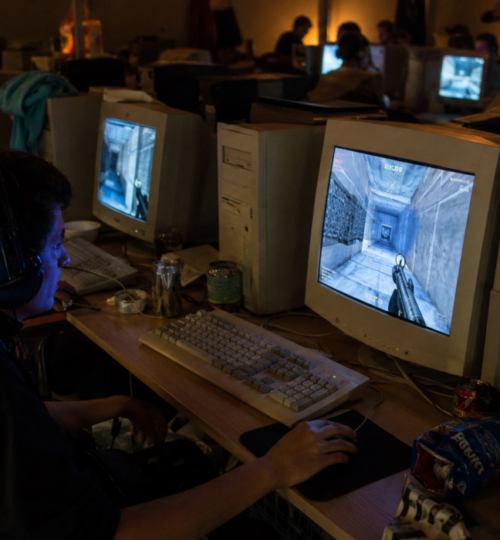
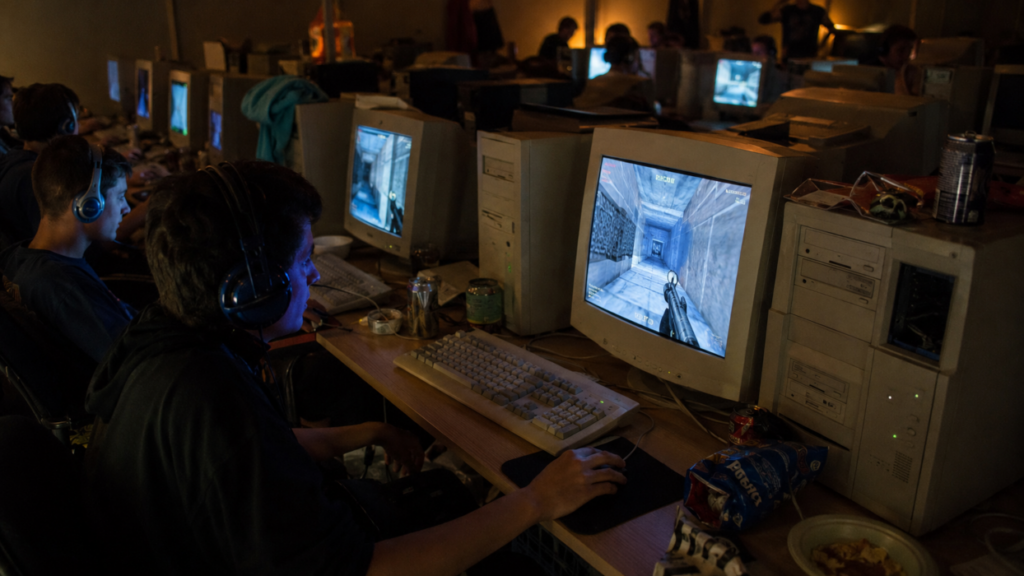
For years, the gaming industry has treated the next big release as the center of gravity. New engines, new platforms, new monetization models, new battle passes, new hardware, and new esports ecosystems all arrive with the promise that the future is somewhere ahead of us. Yet if you look closely at the multiplayer landscape in 2026, something interesting is happening. A surprising number of classic games from the early 2000s, and the surrounding legacy era, are not only still playable, but still populated.
These are not just museum pieces sitting in someone’s Steam library. They are games with active servers, Discord groups, community forums, ladder archives, modding scenes, tournament nights, map rotations, and veteran players who still remember exactly how a match should feel. Titles like Counter-Strike: Source, Star Wars: Battlefront II Classic, Quake Live, Team Fortress 2, Garry’s Mod, RuneScape, and Age of Empires II continue to prove that longevity in online gaming is not always about graphical fidelity or marketing budget. Sometimes it is about feel, identity, accessibility, and the stubborn loyalty of communities that refuse to let their games die.
For a legacy esports hub returning after a decade away, this resurgence is more than nostalgia. It is a reminder that competitive gaming history still has unfinished business.
Classic Games Never Really Left
The word “resurgence” can be misleading because many of these games never fully disappeared. They may have faded from mainstream coverage, but their core communities kept playing. Servers stayed online. Modders kept fixing problems. Clan tags kept showing up in public lobbies. Old rivalries quietly survived.
What has changed is visibility. Modern players are rediscovering games that veterans never abandoned. The wider industry is also starting to recognize that older multiplayer titles can remain valuable long after their original release windows. Steam charts, community server browsers, fan-run tournaments, and content creators have made it easier to see that these games still have life.
In some cases, the active population is small but deeply committed. In others, the numbers are still impressive by any modern standard. Team Fortress 2 and Garry’s Mod remain large enough to surprise players who assumed they were relics. Counter-Strike: Source continues to pull in a dedicated base despite Counter-Strike 2 dominating the modern competitive conversation. Star Wars: Battlefront II Classic still maintains activity nearly two decades after release, especially around nostalgia waves, Star Wars events, and community-organized play.
The lesson is clear: a game does not need to be the biggest title in the world to remain meaningful. For many players, a few hundred or a few thousand dedicated competitors can be more valuable than millions of anonymous users drifting through the newest seasonal grind.
The Feel Factor Still Matters
One reason older multiplayer games survive is that they often have a physical feel that newer games struggle to replicate. Movement, aim, timing, recoil, map flow, hit feedback, and server rhythm all create a kind of muscle memory that stays with players for decades.
Veterans do not return to Counter-Strike: Source because it has the most advanced visuals. They return because its movement, gunplay, and pacing still feel distinct. Quake players do not keep arena shooters alive because the genre dominates the market. They do it because strafe jumping, rocket control, map timing, and direct mechanical skill create a competitive language that few modern games speak fluently.
The same is true for Star Wars: Battlefront II Classic. Its battles are not built around the same cinematic design priorities as modern shooters. They are faster, rougher, more readable, and more immediately understandable. Classes have clear roles. Maps become familiar battlegrounds. Heroes feel powerful without needing modern live-service layering. The game’s age becomes part of its charm because the design is easy to grasp and hard to master.
Modern games often chase frictionless onboarding, cinematic immersion, and constant progression. Classic games often offer something different: a clear ruleset, immediate consequences, and a sense that the player’s hands matter more than the reward track.
Community Servers Are the Real Live Service
Before every major publisher wanted a live-service empire, multiplayer communities were already doing the work. Server admins, modders, league operators, ladder managers, map makers, and forum moderators kept games alive through sheer commitment.
That infrastructure is one of the biggest reasons early 2000s titles still function today. Community servers give players control over rules, map pools, moderation, competitive formats, and social standards. They also allow different subcultures to exist inside the same game. One server can be casual. Another can be competitive. Another can be roleplay-focused. Another can run custom maps that would never survive in a polished matchmaking playlist.
Garry’s Mod is the obvious example of this philosophy taken to its extreme. The game’s longevity is inseparable from user-generated servers, custom modes, roleplay communities, sandbox creativity, and social experimentation. Its official structure matters less than the worlds its players build inside it.
The same principle applies across older shooters, RTS titles, and MMOs. The longer a game survives, the more its community becomes part of the game itself. Players are not just logging into software. They are returning to a neighborhood.
That is why legacy forums, archived ladders, clan histories, and old match records still matter. They are not just data. They are proof that people were there.
Nostalgia Opens the Door, But Gameplay Keeps People There
Nostalgia is powerful, but it is not enough by itself. A player may reinstall an old game because they remember a clan match from 2006, a favorite map, a late-night scrim, or a username they have not seen in years. But they keep playing only if the game still holds up.
This is where many classic multiplayer games have an advantage. Their best qualities were not tied to temporary hype cycles. Strong map design, readable mechanics, clean competitive loops, and player-driven identity age better than seasonal content calendars.
A good match on an old game can still create the same emotional spike it did twenty years ago. A clutch round, a perfectly timed flank, a last-second capture, a duel won by pure aim, or a comeback against an old rival can feel more memorable than unlocking another cosmetic in a newer title.
That does not mean nostalgia is irrelevant. It is often the spark. It brings veterans back and gives younger players a reason to investigate. But the staying power comes from design. The classics that survive are usually the ones that still deliver a strong session once the nostalgia wears off.
Mods, Fixes, and Fan Stewardship Extend Lifespans
Another major reason classic games remain active is community maintenance. Older games often survive because players are willing to patch around the edges, document fixes, host replacement services, create compatibility guides, and preserve essential files.
Modding can also create a second life. Some communities build quality-of-life improvements. Others restore cut content, rebalance weapons, expand maps, or create entirely new modes. Even when official support slows down or disappears, fan stewardship can keep a game playable for years.
This matters because multiplayer games are fragile. Server browsers break. Master servers go offline. Anti-cheat systems age. Operating systems change. Old installers become inconvenient. Account systems vanish. Without community intervention, many games would become technically difficult to play even if demand still existed.
The early 2000s generation of PC players learned to solve problems. They forwarded ports, edited config files, downloaded patches from forums, used third-party server browsers, and joined community hubs before matchmaking became the default. That problem-solving culture is still part of why these games endure.
There is a certain pride in keeping a classic game running. It feels less like consuming a product and more like maintaining a piece of multiplayer history.
The Competitive Scene Is Smaller, But Often Stronger
Classic games rarely compete with modern esports on production scale. They are not filling arenas every weekend or dominating sponsorship decks. But smaller competitive scenes can still be intense, organized, and deeply rewarding.
In fact, smaller scenes often have advantages. Players know each other. Reputations matter. Rivalries last longer. Admins are closer to the community. Rule changes can be discussed directly. Tournament formats can be adjusted based on what players actually want instead of what looks best in a broadcast package.
Legacy ladders and tournaments were built on this kind of intimacy. A match result was not just a number. It was a challenge accepted, a server joined, a dispute settled, a screenshot uploaded, and a ranking earned. That structure gave players ownership over the competitive ecosystem.
Modern matchmaking is efficient, but it can feel anonymous. Classic ladder systems were slower and sometimes messier, but they created identity. You knew the teams. You knew the players. You knew who dodged, who showed up, who carried, who talked too much, and who backed it up.
That is one of the reasons restored leaderboards and profiles carry emotional weight. They reconnect players with the competitive record of a scene that mattered to them.
Younger Players Are Discovering What Veterans Already Knew
The classic game revival is not only driven by older players. Younger gamers are also discovering these titles, sometimes through YouTube, Twitch, Steam sales, memes, speedrunning, mod videos, or friends who grew up with them.
For younger players, classic games can feel refreshing because they are often less burdened by modern design habits. There may be fewer pop-ups, fewer currencies, fewer menus, fewer daily chores, and fewer psychological hooks. The game simply asks you to play.
That simplicity can be powerful. A player raised on modern live-service design may find an older server browser strangely freeing. Pick a server. Join a match. Learn the map. Get destroyed. Improve. Come back tomorrow.
Of course, older games can also be rough. Interfaces may feel dated. Netcode may vary. Communities can be intimidating. Some titles require guides or community patches. But those rough edges are often part of the appeal. They make the game feel less corporate and more human. The new generation is not just looking backward. They are discovering alternate futures that gaming could have followed.
Preservation Is Becoming a Competitive Issue
Game preservation is often discussed in terms of single-player history, but multiplayer preservation may be even harder. A multiplayer game is not just code. It is servers, accounts, rules, communities, voice comms, forums, ladders, demos, patches, mods, and shared memory. When a multiplayer game dies, a whole social world can disappear with it.
That is why the survival of early 2000s titles matters. These games show that preservation is not passive. It requires infrastructure. It requires people who care enough to host, archive, moderate, document, and rebuild. It also requires platforms willing to keep older games accessible.
For legacy esports communities, this creates an opportunity. Restored leaderboards, match histories, team profiles, and tournament archives are not just nostalgia features. They are preservation tools. They allow old players to reconnect, new players to understand the lineage, and active communities to build on top of what came before. Competitive history should not vanish every time the industry moves on to the next platform cycle.
Why These Games Still Matter in 2026
The continued activity around classic multiplayer titles says something important about the state of gaming. Players are not only chasing novelty. They are chasing meaning. They want games that feel good, communities that remember them, systems that reward skill, and spaces where their time leaves a mark.
The early 2000s produced many games that were built before the modern attention economy fully reshaped multiplayer design. They were not perfect. Some were unbalanced, buggy, chaotic, and technically awkward. But they often gave players enough freedom to create their own culture. That culture is what survives.
A classic game with active servers is more than an old executable. It is a living archive. Every match played today adds another layer to a story that began decades ago. Every returning veteran, every new player, every revived ladder, and every community tournament proves that multiplayer history is not finished.
For a revived esports hub, that should feel familiar. The goal is not simply to recreate the past. It is to reconnect the past to the present and give players a reason to compete again.
The resurgence of early 2000s titles is not just about old games refusing to die. It is about communities proving that when the foundation is strong enough, the match never really ends.