
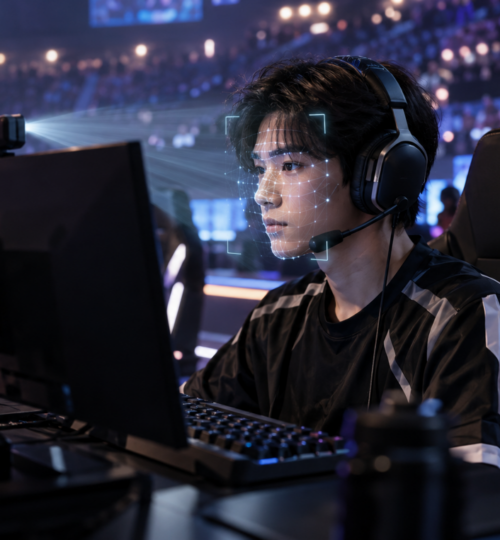
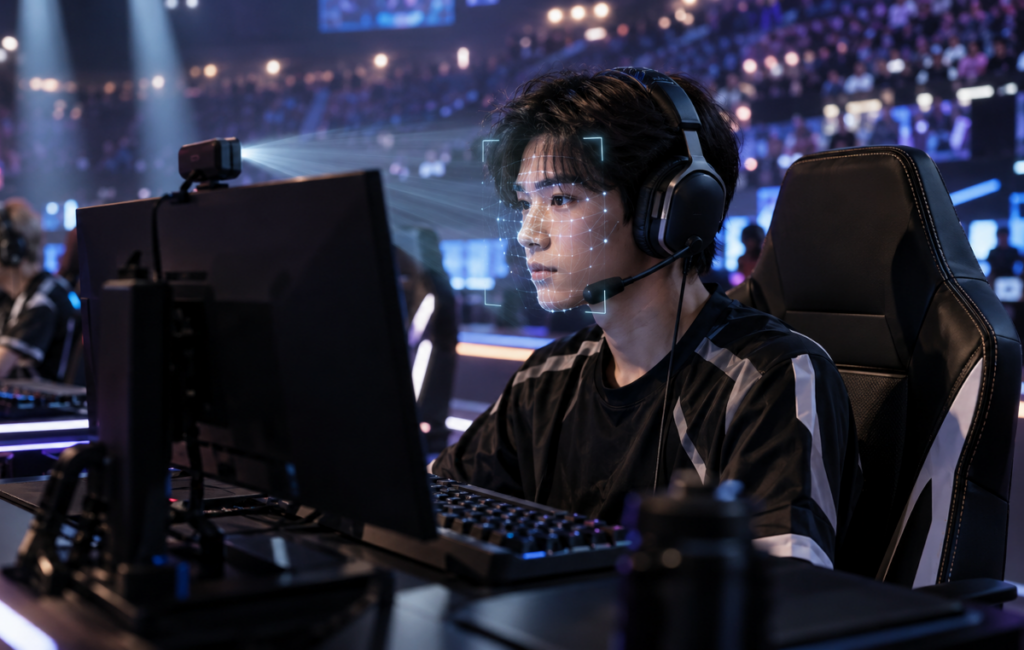
Competitive gaming has spent years trying to answer a deceptively difficult question: how do you prove that the person behind an account is really the person who is supposed to be playing? Passwords prove that someone knows a secret. Two-factor authentication proves that someone has access to a second device or account. Hardware identifiers can associate a machine with previous activity. None of those methods, by themselves, prove that the human sitting at the keyboard is the registered competitor.
Esports platforms are beginning to push identity verification much closer to that line. FACEIT already requires some players to submit government-issued identification and a facial capture, and its newer Selfie Recheck system can require another facial scan when suspicious activity is detected.
That does not mean fingerprints and face scans are about to become universal requirements across competitive gaming, but the industry now has working examples of systems designed to connect a digital account with a specific physical person. That shift has obvious competitive benefits. It also creates one of the most serious privacy questions esports has faced.
The Account Has Always Been the Weak Link
Competitive platforms can build sophisticated anti-cheat software and still run into a basic identity problem. A banned player can create another account. A high-ranked account can be sold. Someone can pay another player to boost an account. A competitor can borrow a friend’s verified profile, and a tournament organizer may have very little evidence that the registered owner is actually the person playing.
These problems become harder to tolerate as competition becomes more serious. An anonymous matchmaking account playing casual games presents a different risk from an account entering an open qualifier, collecting prize money, building a professional ranking, or competing for promotion through an organized league structure.
Traditional verification methods attack pieces of the problem. Email verification discourages disposable accounts only slightly. Phone verification raises the cost of creating additional accounts, but phone numbers can still be replaced or acquired. Hardware fingerprinting can associate suspicious accounts with the same computer, although players legitimately change hardware, travel, use gaming centers, attend LAN events, or compete from team facilities.
Government ID verification moves the platform closer to a persistent identity. FACEIT describes its current verification process as a combination of a smartphone, facial capture, and an accepted identity document. The company says verified identity can also be checked again later when suspicious activity suggests possible account selling, multi-account use, or another form of verification abuse. That is already far beyond the familiar email-and-password account model.
Face Rechecks Change What Verification Means
There is an important difference between proving identity once and proving identity repeatedly. A player who uploads identification during registration has demonstrated that the account was connected to a real identity at that moment. That does little to stop the account from being transferred afterward. If another person buys or borrows the account, the original verification can remain technically genuine even though the person now playing is different.
Recurring biometric checks are designed to close that gap. FACEIT’s Selfie Recheck system can trigger a facial capture on accounts flagged by automated systems. The captured face is compared with information associated with the original verification, and a flagged player may be blocked from matchmaking until the check is completed.
For competitive integrity, the logic is easy to understand. Account ownership becomes harder to transfer because the platform can occasionally demand evidence that the original verified person is still operating it.
That changes identity verification from an enrollment procedure into an active enforcement mechanism. A competitive account starts behaving more like a credential assigned to an individual rather than a username that can quietly change hands. For esports organizers dealing with smurfing, ban evasion, account selling, and fraudulent qualifier participation, that is a powerful tool.
Biometrics Do Not Always Mean Sending Your Face to a Server
The word biometric can describe very different technical systems, and lumping them together creates unnecessary confusion. Modern passkeys provide a good example. A phone or PC may ask for a fingerprint, face scan, PIN, or device password before allowing a passkey to authenticate an account. Under FIDO’s passkey model, the biometric processing remains on the user’s device. The website receives cryptographic proof that the authentication was approved, rather than receiving the fingerprint or facial data itself.
That distinction matters enormously. An esports platform could require a passkey protected by Windows Hello, Face ID, Android biometrics, a fingerprint reader, or a hardware security key without building its own central biometric database. The platform would gain phishing-resistant authentication while the player’s raw biometric information stayed under control of the local authenticator.
Identity matching against a government document is different. A system that compares a facial capture against an ID photograph must process enough information to determine whether those images represent the same person. FACEIT currently uses identity-verification provider Daon for its verification process, according to its support documentation.
So there are really two separate directions esports could take. One uses biometrics locally to unlock strong cryptographic credentials. The other uses biometric recognition to establish or repeatedly confirm the actual identity of the player. The second approach carries far more baggage.
Why Competitive Platforms Would Want It
The strongest argument for biometric identity checks is persistence. Cheaters and banned players often operate around the cost of enforcement. If creating another account requires only another email address, enforcement is cheap to defeat. Add a phone number and the price rises. Add hardware checks and the process becomes more annoying. Tie the account to verified identity and recurring facial checks, and creating a convincing replacement becomes substantially harder.
FACEIT’s recent enforcement provides a useful example of where this approach is heading. Its 2026 documentation describes identity verification requirements in some competitive settings alongside hardware IDs, IP information, TPM, Secure Boot, and additional anti-cheat requirements. FACEIT also reported banning accounts during a Challenger Rank review for issues including smurfing, verification abuse, and ban evasion.
The security model becomes layered. Anti-cheat software asks whether the machine is behaving legitimately. Account analytics ask whether the profile’s activity looks legitimate. Hardware data asks whether multiple accounts appear connected. Identity verification asks whether the human being involved is who the platform expects. Recurring biometrics could make the final layer much harder to fake.
That could have major value in open qualifiers. Tournament administrators have always had an easier time verifying players once everyone reaches a physical venue. Online qualification is different. Teams can be scattered across countries, competitors may have never met an administrator face to face, and some events begin with thousands of online entrants. A short identity check before high-stakes matches could provide stronger evidence that the registered competitor is actually present.
The Privacy Cost Is Much Higher Than Losing a Password
The obvious problem with biometric information is that players cannot replace their faces or fingerprints the way they replace a compromised password. A password database breach can be serious, but affected users can reset their credentials. If a company mishandles biometric templates, the long-term consequences are harder to contain because the underlying physical characteristics remain attached to the person.
Privacy law already reflects this sensitivity. In the United Kingdom, biometric data used to uniquely identify a person is treated as special-category data under UK GDPR rules. The Information Commissioner’s Office says organizations using biometric recognition must establish a lawful basis for processing it and satisfy additional requirements that apply to special-category information.
Several U.S. states also regulate biometric collection. Illinois’ Biometric Information Privacy Act requires covered private entities to provide written information about collection, purpose, storage duration, and obtain a written release before collecting biometric identifiers or biometric information. It also requires a publicly available retention and destruction policy. Texas law similarly requires notice and consent before a biometric identifier is captured for a commercial purpose.
For a global esports platform, this means biometric authentication cannot simply be bolted onto account settings like another checkbox. The technical design, retention policy, vendors, player age, geographic location, deletion procedures, and legal basis all become part of the system. That is a much heavier responsibility than storing hashed passwords.
False Rejections Become Competitive Problems
No biometric system is perfect. Facial matching can fail because of lighting, camera quality, appearance changes, device problems, accessibility issues, damaged identification documents, or limitations in the verification system itself. FACEIT’s own support documentation includes troubleshooting for unsuccessful face matching and other identity-verification errors.
Normally, an authentication failure is an inconvenience. In esports, timing can turn it into a competitive issue. Consider a player preparing for a qualifier who receives a mandatory identity check ten minutes before the match. The player’s webcam has failed, the phone camera refuses to focus, or the automated comparison rejects the capture. The security system has now affected tournament participation even though no cheating occurred.
Any serious biometric system would therefore need human review, recovery procedures, clearly defined deadlines, and alternatives for legitimate failure cases. Otherwise, identity enforcement can become another source of disputes between players and administrators. Competitive communities already know how quickly trust disappears when automated systems make decisions that players cannot challenge.
Minors Make the Model Even More Complicated
Esports has another characteristic that separates it from banking, corporate security, and many other identity-heavy systems. A significant portion of the player base is under 18. Competitive games regularly produce highly skilled teenagers, and open online ecosystems allow young players to reach serious levels of competition long before they can independently sign many legal agreements.
That creates difficult questions around consent and identity data. Who approves biometric enrollment for a 15-year-old competitor? What information can be retained? How is that data deleted later? What happens when a young player enters competitions across jurisdictions with different rules?
FACEIT already handles age differently in some identity-related processes. Its documentation for ESEA payment verification, for example, instructs players under 16 to have a parent or guardian provide the required identity information for that payment process. Expanding biometric checks across ordinary competitive accounts would require much broader answers.
Passkeys May Be the More Practical First Step
There is a middle ground between passwords and recurring facial identification. Esports platforms could aggressively adopt passkeys for high-value accounts. Professional players, tournament administrators, team managers, high-ranked competitors, and anyone with access to prize money or sensitive team functions would gain much stronger protection against phishing and account theft.
A device could require a fingerprint or facial unlock locally while the gaming platform receives only the cryptographic authentication result. WebAuthn specifically allows biometric user verification to occur inside the authenticator without revealing the biometric data to the website.
That model would not stop a player from voluntarily handing an unlocked account to someone sitting beside them, so it cannot replace competitive identity checks in every situation. It would, however, solve a large portion of ordinary account-security problems without requiring esports operators to hold biometric identity records themselves.
The distinction between authentication and identification becomes important here. Authentication asks whether the person logging in controls an approved credential. Identification asks who that person actually is. Competitive gaming may increasingly need both, but they do not need to be performed by the same system.
Identity Could Become Another Layer of Anti-Cheat
Anti-cheat development has steadily moved outward from the game client. Competitive platforms now examine operating-system security features, hardware identifiers, account history, behavioral signals, network data, and relationships between accounts. FACEIT’s current CS2 competition requirements already demonstrate how identity verification can operate beside hardware and anti-cheat controls rather than replacing them.
Biometric identity checks fit naturally into that layered model because they attack a problem software detection cannot solve cleanly: whether the authorized human is actually present. The most aggressive version would resemble continuous identity enforcement. A platform could demand a facial recheck after unusual account transfers, sudden geographic changes, suspected boosting, high-value tournament qualification, or evidence of ban evasion. Some of those ideas remain hypothetical, but FACEIT’s existing suspicious-activity rechecks show that periodic identity confirmation is already technically and operationally possible.
That does not mean esports accounts are destined to require webcams staring at players every time they queue. The better systems would probably reserve stronger identity checks for specific risk events, major competitions, disputed accounts, and prize-bearing activity.
If biometric verification becomes routine, the real dividing line will not be whether esports can identify players. The technology already exists. The harder question will be how often a competitive platform should be allowed to prove that the person behind the account is still the same human being who registered it.