Cloud Gaming Has Grown Up, But Fighters Are Still the Final Boss
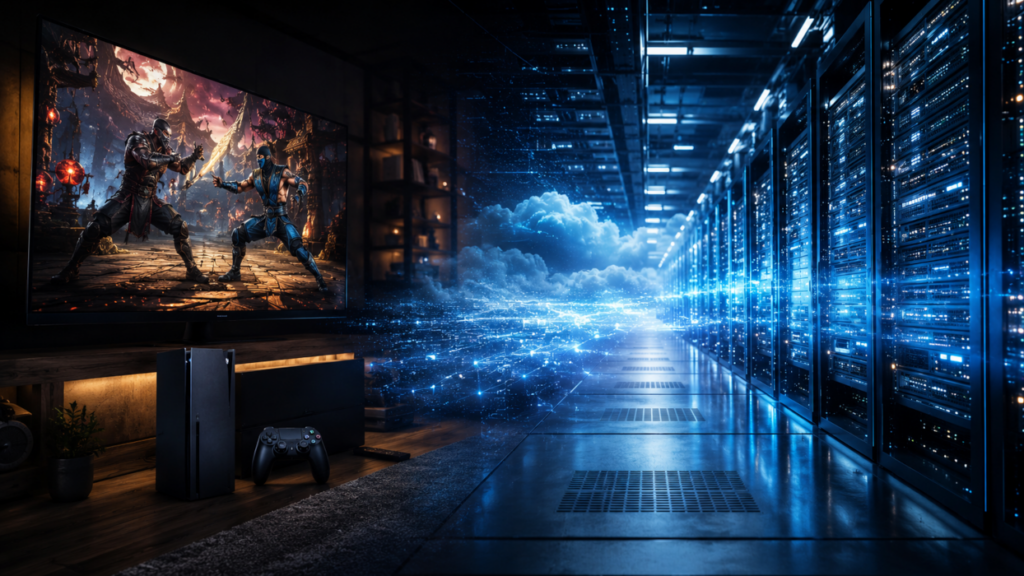
Cloud streaming is no longer a party trick. The old joke was that cloud gaming worked fine until you tried to aim, block, parry, tech a throw, or do anything that required muscle memory. That joke is getting less funny every year. Services like GeForce NOW, Xbox Cloud Gaming, PlayStation Plus Premium, Amazon Luna, and Boosteroid have pushed cloud play into living rooms, handhelds, browsers, smart TVs, and low-powered laptops. The pitch is simple. Skip the hardware arms race. Stream the game from a data center. Play almost anywhere.
For a lot of games, that pitch works. Single-player RPGs, turn-based strategy games, racing games with forgiving handling, co-op shooters, and casual multiplayer can feel surprisingly good under the right conditions. A stable connection, a nearby server, modern encoding, and a wired controller can make cloud gaming feel far closer to local hardware than many veterans expected.
Competitive fighting games are different. They are brutal measuring tools. A fighter does not just ask whether cloud streaming is playable. It asks whether a player can block a low, punish a whiff, confirm a jab, anti-air on reaction, and keep combo timing intact while every frame matters. That is a much nastier test.
The answer in 2026 is mixed. Cloud streaming can handle fighting games for practice, casual sets, lab work, and lower-stakes online play under ideal conditions. It is not ready to replace local hardware for serious tournament-level competition.
The Latency Stack Is the Real Opponent
Fighting-game players talk about input delay like it is one number, but the real delay chain is a pile of small hits. Your controller adds delay. The device receives the input. The game engine processes it. The frame gets rendered. The display shows it. Online play adds network delay between players. Cloud gaming adds another trip, because your input has to travel to a remote machine before the game even reacts on your screen.
That extra trip is the heart of the problem. On a local console or PC, the machine is in the room. In cloud streaming, the machine is in a data center. Even if the provider is fast, physics still has a vote. Distance matters. Routing matters. Packet loss matters. Wi-Fi congestion matters. Your ISP’s path to the cloud server matters. Two players with the same download speed can have wildly different results because cloud gaming cares more about consistency and round-trip time than raw bandwidth.
Amazon’s own cloud gaming infrastructure guidance has described under 50 ms round-trip latency as the target for the best experience, while action games can remain playable up to around 100 ms. That is a useful general gaming range, but fighting games are far less forgiving than “action games” as a broad bucket. A shooter can hide or soften some delay through aim systems, animation blending, prediction, or pacing. A fighter exposes the delay directly through timing windows.
The most painful part is not always average latency. It is variance. A stable 45 ms may feel learnable. A connection that bounces between 35 ms and 85 ms feels cursed. Your timing changes from exchange to exchange. Combos drop. Blocks come late. The player starts blaming the game, the controller, the monitor, the opponent, the universe, and then probably the family router.
Why Fighters Punish Streaming More Than Shooters
Modern competitive shooters also demand low latency, but fighters operate on a different rhythm. In many 2D and 3D fighters, a single frame can change the result of a round. Players train around startup frames, active frames, recovery frames, safe pressure, punish windows, throw breaks, fuzzy defense, wake-up timing, and hit confirms. That training depends on consistency.
A streamed fighter can feel fine during movement and still fail in the moments that matter. Walking back and forth may feel clean. Throwing fireballs may feel fine. Then the match enters close range, and suddenly the extra delay changes everything. A jump-in that should be anti-aired slips through. A punish that works offline becomes late. A reaction super becomes a guess. The match still functions, but the competitive truth gets muddy.
Rollback netcode helped save online fighting games because it attacks a different problem. Instead of waiting for both players’ inputs before moving forward, rollback predicts inputs and corrects the game state when needed. That makes online play feel more responsive than old delay-based systems. The fighting-game community has pushed hard for rollback because it protects the feel of local input far better than older online models. Recent interest in adding rollback to older games, including fan and modding efforts around legacy titles, shows how deeply players care about responsiveness in this genre.
Cloud streaming does not remove the need for rollback. It adds another layer before the rollback even begins. The player is no longer just connecting to an opponent. The player is also connecting to a remote gaming rig. That means a cloud-streamed fighting game can have great netcode and still feel off because the player’s own input is arriving late to the hosted machine.
That is why “the game has rollback” is not enough. Rollback fixes player-to-player online feel. It does not magically erase the input path from your controller to a server farm.
GeForce NOW Is the Performance Leader, But Fighters Still Ask More
Nvidia has pushed hardest on the high-performance end of cloud gaming. GeForce NOW’s premium tiers focus on higher frame rates, higher resolutions, longer sessions, and a larger supported game library. Nvidia’s current GeForce NOW messaging highlights premium memberships built around faster frame rates and higher resolutions, while the service supports play across browsers and dedicated apps.
The 2025 RTX 5080-class upgrade for GeForce NOW Ultimate made the gap even more interesting. Nvidia announced Blackwell-based SuperPods, support for very high refresh streaming, up to 100 Mbps streaming quality, AV1-related improvements, and low-latency networking efforts such as L4S through ISP partnerships. That is not casual living-room fluff. That is Nvidia trying to make cloud gaming feel like a serious performance platform.
That matters for fighters because frame rate and decode speed are part of the feel. A 120 Hz or higher stream can reduce the time between visible updates. Better encoding can make motion clearer. Lower server-side latency helps. A nearby GeForce NOW data center on a strong wired connection can feel shockingly responsive.
Still, there is a ceiling. Cloud streaming can get close enough to impress, but competitive fighting players are not grading on a casual curve. They compare it to a local PC or console plugged into a low-latency monitor. They compare it to offline brackets. They compare it to years of muscle memory. A small delay that a casual player ignores may be enough for a tournament player to reject the whole setup.
GeForce NOW is probably the best case for streamed fighters right now. That does not make it the standard for serious competition. It makes it the least compromised option.
Xbox Cloud Gaming Is Better, But Its Strength Is Access
Xbox Cloud Gaming has moved forward too. Microsoft’s Xbox updates in late 2025 included user-selected streaming resolution and support up to 1440p for Game Pass Ultimate subscribers. That followed years of Xbox Cloud Gaming being tied to the Game Pass value pitch, where the service works less like a high-end rented PC and more like a broad access layer for a subscription library.
That model is powerful. It gets players into games quickly. It works across devices. It lowers the barrier for people who do not own current hardware. For community nights, casual play, trying new releases, or keeping a player connected while away from their main setup, that is a real win.
For competitive fighters, Xbox Cloud Gaming has a tougher case. The service is built around convenience and ecosystem reach first. That does not mean it is bad. It means its value is not mainly about shaving every possible millisecond. A fighting-game player looking for the tightest possible response will usually prefer local Xbox hardware, local PC hardware, or a higher-performance cloud option if they insist on streaming.
The other issue is game availability. Cloud libraries are curated. Competitive communities often form around specific versions, specific platforms, specific patches, and specific controller support. If the cloud service does not carry the right title, the right edition, or the right input options, the latency debate ends before it starts.
PlayStation Plus Premium Has a Different Problem
Sony’s cloud streaming has expanded in useful ways. PlayStation Plus Premium supports cloud streaming for select games on PS5, PlayStation Portal, and PC, and Sony has also expanded Portal cloud support for select digital PS5 games in a player’s library.
That is good for access. It lets players sample games without installing them, keep playing away from a main console, and make better use of the Premium tier. For a lot of PlayStation players, that is exactly what cloud streaming should be.
For fighting games, the challenge is sharper. PlayStation is deeply tied to the fighting-game scene, especially through major tournament setups and player familiarity with PS hardware. That history creates high expectations. If a streamed PlayStation fighter feels even slightly heavier than local play, serious players will notice instantly.
PlayStation cloud streaming may be useful for training mode, story content, casual matches, or trying a fighter before installing it. It is not where most competitive players will want to run bracket matches. Local PS5 setups are still the safer standard because they remove the extra streaming hop and reduce variables for both players.
The Home Setup Can Make or Break the Experience
Cloud providers love talking about data centers, GPUs, bitrates, and apps, but the home setup still decides a lot. A cloud fighter over Wi-Fi in a busy apartment building is asking for pain. A wired Ethernet connection to a low-latency display is a different story. The same service can feel playable in one room and terrible in another.
The best-case setup is boring, which is usually how competitive players like it. Wired internet. Wired controller, or a very low-latency wireless controller. Game mode enabled on the TV or, better yet, a gaming monitor. No downloads running in the background. No overloaded router. No weak mesh node in another room. No Bluetooth weirdness. No browser tab chaos.
Cloud streaming also exposes bad ISP routing. A speed test may show huge download numbers, but that does not guarantee a clean path to the nearest cloud gaming server. Competitive fighters care about response stability, not just picture quality. A pretty 1440p stream with inconsistent input timing is still bad for ranked sets.
There is also the controller question. Fighting-game players use pads, arcade sticks, leverless controllers, and specialty devices. Cloud services and streaming devices do not always treat those inputs equally. A setup that works perfectly on local PC may become awkward through a TV app, browser, mobile device, or cloud client. Input support is part of the competitive equation, not a side issue.
Tournament Integrity Is the Bigger Wall
Even if cloud streaming becomes good enough for many players, tournament use brings another layer of problems. Competitive events need fairness, repeatability, and trust. Local setups are not perfect, but they are controllable. Organizers can standardize monitors, consoles, patches, controllers, audio, and network rules.
Cloud streaming adds variables that bracket staff cannot fully control. One station might connect to a different server path. A temporary network issue could affect one match. Stream quality might degrade during local congestion. An ISP issue could hit a venue at the worst time. Even if the average experience is good, tournament players will not accept a loss that feels like it came from the stream instead of the opponent.
Offline majors will not swap local fighting-game setups for cloud rigs anytime soon. Smaller online events might allow cloud participation, especially for accessibility or casual brackets, but serious rule sets will likely keep preferring local hardware on each player’s side. The reason is not nostalgia. It is competitive clarity.
Ranked ladders face the same issue. A legacy esports community can support cloud players, but it should be honest about match quality. If one player is on a local machine and another is on a cloud stream, the cloud player is accepting extra delay on their own side. That may be fine for participation. It should not become the official standard for top-tier competition.
Cloud Streaming Is Great for Discovery and Practice
The strongest role for cloud fighters is not championship play. It is access. Cloud streaming can let a player try a new fighter without a huge download. It can help someone lab matchups on a laptop while traveling. It can keep older players connected when their main rig is down. It can let a community run casual nights with lower friction.
That matters. Fighting games need more players, not fewer. The genre has always had a skill wall, and hardware cost adds another barrier. If cloud streaming gets a curious player into training mode faster, that is good for the scene. If it lets someone test a game before buying a stick, that is good too. If it helps a returning veteran shake off rust before reinstalling everything locally, even better.
Cloud streaming can also help preservation-adjacent play if services support older titles, though licensing and availability remain messy. Legacy communities understand that pain better than most. A game can have a loyal scene and still be hard to access cleanly. Streaming could help, but only if the right games stay available and input quality is respected.
The Honest Verdict for Competitive Fighters
Cloud streaming is closer than it has ever been. On the best services, with the best connection, using the right device, it can feel good enough to surprise even skeptical players. Nvidia’s high-end cloud push shows that streamed games can be fast, sharp, and technically impressive. Microsoft and Sony are expanding access in ways that make cloud play feel normal instead of experimental. The direction is obvious. Streaming will keep growing.
Competitive fighters remain one of the hardest tests in gaming. The genre does not forgive delay, jitter, weak controller support, bad routing, overloaded Wi-Fi, or inconsistent displays. Rollback netcode raised expectations for online play, and cloud streaming now has to meet those expectations while carrying extra network baggage.
For casual sets, training, travel, and discovery, cloud streaming already has a place. For ranked warriors who care deeply about timing, it is usable only under strong conditions. For serious tournaments, local hardware still wins. The cloud can join the fight, but it has not earned the main stage setup yet.