
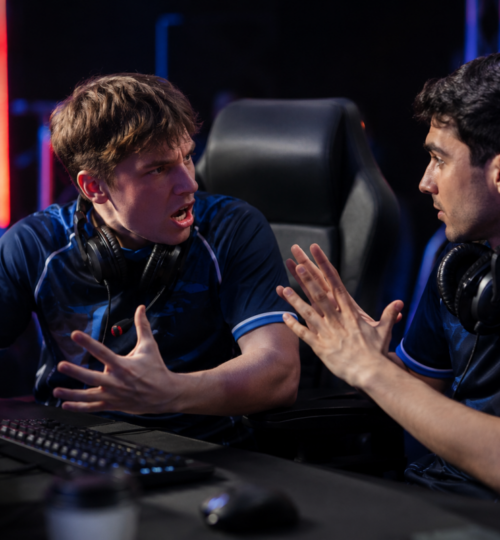
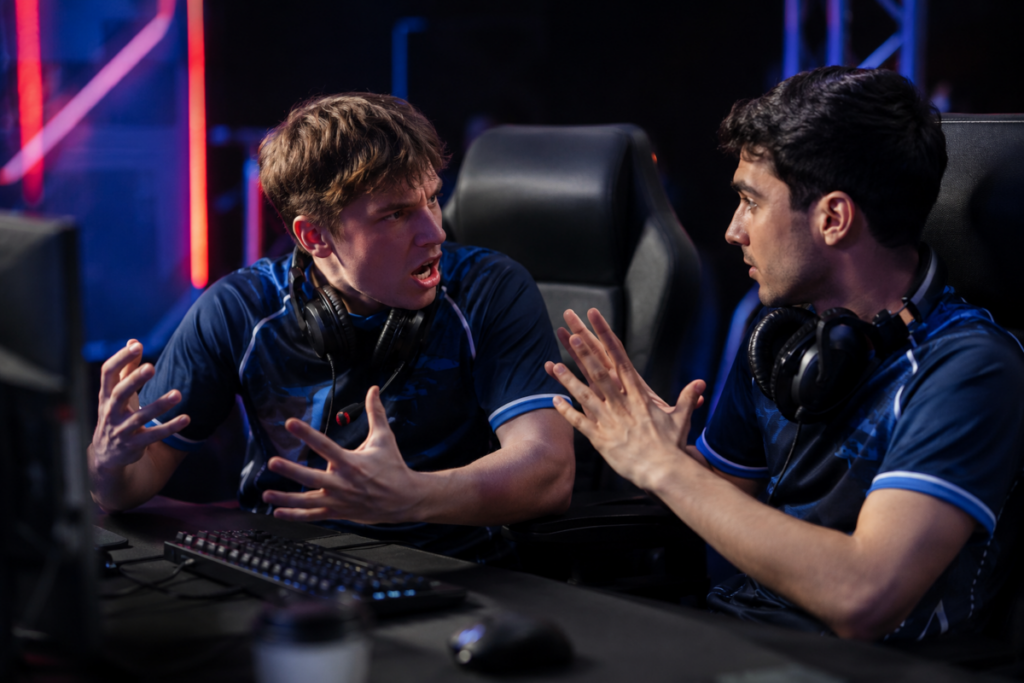
Competitive gaming has always had fire in it. Long before esports had franchised leagues, broadcast desks, ranked matchmaking, and prize pools, players were already talking trash in lobbies, calling out mistakes, defending their teams, and chasing the rush of beating someone who thought they were better. That energy is part of what made online multiplayer culture so addictive in the first place. Competition without emotion feels sterile. Rivalries, pressure, nerves, confidence, and pride all matter. But there is a line.
The problem is that the line is not always obvious in the heat of a match. A player who demands better rotations might see themselves as a leader. Their teammates might hear a tilted player looking for someone to blame. A little trash talk between rivals can create memorable moments. The same words aimed at a random teammate after one mistake can ruin the match. Competitive drive pushes players to improve. Toxicity pushes players away.
For a revived legacy community like Global Warfighter League, that distinction matters. A league can survive intense competition. It can even thrive on it. What it cannot afford is a culture where people dread queueing up, joining a ladder, or entering a tournament because they expect abuse more than competition.
Competition Needs Emotion
The idea that players should never get angry is unrealistic. Competitive gaming is built around pressure. Players invest time into learning maps, builds, weapons, mechanics, strategies, matchups, and team roles. When a match goes wrong, frustration is natural. That frustration is not automatically toxic.
A player saying, “We need to stop feeding mid,” may sound blunt, but it can be useful. A teammate saying, “Reset, group up, we can still win,” is competitive leadership. Even direct criticism can be fair when it focuses on the game, the strategy, or the decision that needs to change.
Competitive drive becomes valuable when it raises the level of play. It asks better questions. Why did we lose that round? Why did we give up map control? Why did our comms fall apart? Why did we keep taking the same fight? That kind of pressure can sharpen a team. Good competitive players care. They hate losing, but they use that frustration as fuel.
Toxicity Is Different
Toxicity starts when the focus shifts from winning the match to attacking the person. There is a massive difference between criticizing a play and insulting a player. “That push was too early” is game feedback. “You’re trash” is personal abuse. “Hold your angle next round” is direction. “Uninstall” is ego disguised as criticism.
Toxicity usually does one of three things: it humiliates, distracts, or destroys trust. Once a player feels targeted, they stop thinking clearly. Instead of focusing on rotations, timing, aim, or objective play, they start defending themselves emotionally. The team loses communication. The match becomes two battles at once: one against the opponent, and one inside the squad.
That is why toxicity is not just a manners issue. It is a performance issue. A toxic player may believe they are “just being competitive,” but if their behavior makes teammates play worse, communicate less, or leave the community entirely, they are hurting the same competitive environment they claim to care about.
Trash Talk Has Rules, Even When Nobody Says Them Out Loud
Trash talk has always existed in gaming. It existed in LAN rooms, clan matches, ladder forums, voice servers, and early online lobbies. Some of it was funny. Some of it created legendary rivalries. Some of it crossed the line even back then. The difference between healthy trash talk and toxicity often comes down to context.
Trash talk works best when it is mutual, limited, and aimed at the competitive moment. Two rival teams hyping up a match, making bold predictions, or joking after a close round can add personality. It becomes a problem when it targets identity, ability, mental health, personal life, race, gender, sexuality, disability, nationality, or anything outside the match itself.
There is also a difference between talking trash to an opponent and abusing a teammate. Opponents can often mute, respond, or take it as rivalry. Teammates are trapped in the same competitive objective. When internal comms turn hostile, the team collapses from within. The cleanest rule is simple: attack the play, not the person.
The “Old School Lobby” Excuse Is Weak
A lot of veteran players remember an era when online lobbies were rougher. Many communities treated harsh language as normal. Players often had to develop thick skin just to participate. Some people look back on that era with nostalgia and say modern players are too sensitive. But nostalgia can hide the cost.
Plenty of players left those spaces. Plenty never joined voice chat. Plenty avoided ladders, clans, or tournaments because the atmosphere was exhausting. Just because someone survived a toxic environment does not mean the environment was good for competition.
Old school gaming culture had great things worth preserving: loyalty, rivalries, clan identity, forums, match reports, community reputation, and the feeling that players were building something together. But toxicity was never the best part of that culture. It was often the thing that kept good players from sticking around. A modern competitive community can keep the intensity without keeping the worst habits.
Competitive Drive Builds Standards
Real competitive drive is not just anger after a loss. It is discipline. The best players hold themselves accountable. They review mistakes. They respect practice. They understand that communication is part of skill. They know that leadership means keeping a team focused, not just being the loudest person in voice chat.
Strong competitors raise standards by example. They show up on time. They report scores honestly. They respect match rules. They do not rage quit when things go bad. They do not accuse everyone of cheating after every loss. They do not treat new players like punching bags just because they are still learning.
That is the difference between ego and drive. Ego says, “I lost because everyone else failed me.” Drive says, “What could I have done better, and how do we fix it next time?”
Toxicity Is Usually Bad Leadership
Many toxic players think they are being leaders because they are vocal. But volume is not leadership. Blame is not leadership. Rage is not leadership.
A real in-game leader keeps the team useful under pressure. That does not mean being soft. It means being effective. A good captain can say, “Stop chasing kills, play objective,” without turning the channel into a personal attack. A strong teammate can call out mistakes without making players afraid to communicate.
Fear kills comms. When players expect to be mocked for every missed shot or bad call, they go quiet. Quiet teams lose information. Lost information loses rounds. Toxicity often presents itself as honesty, but it is usually poor emotional control. Honest feedback has purpose. Toxic feedback has a victim.
Where Communities Should Draw the Line
Every competitive community needs standards that are clear enough to enforce and flexible enough to allow personality. Nobody wants a sterile league where players are afraid to show emotion. But nobody wants a ladder where abuse becomes the price of entry either.
A healthy line might look like this, competitive behavior includes direct strategy talk, match criticism, rivalry banter, emotional reactions, and high expectations. Toxic behavior includes harassment, slurs, threats, repeated personal insults, targeted humiliation, griefing, throwing, doxxing, cheating accusations without evidence, and behavior meant to make someone quit rather than improve.
The key question is not, “Was the player emotional?” The better question is, “Did the behavior serve the match, or did it damage the community?” That question cuts through a lot of excuses.
Why This Matters More in Community Leagues
In random matchmaking, players may never see each other again. In a league, ladder, or tournament ecosystem, reputation matters. Players return. Teams form histories. Rivalries build over months or years. A single toxic player can poison more than one match. They can damage recruitment, discourage new teams, and make admins spend more time handling drama than building competition.
Legacy communities especially depend on trust. Players need to believe that matches are fair, disputes are handled seriously, and competition is worth investing in. If the environment feels lawless, good players leave first. The loudest players remain, and the community slowly becomes smaller and harsher. That is not competitive strength. That is decay.
The Best Rivalries Still Have Respect
The most memorable rivalries are not built on pure hatred. They are built on stakes. Two teams that respect each other can still want to destroy each other in-game. In fact, respect often makes the rivalry better because the win means more.
Beating a strong opponent feels different from beating someone you think is worthless. If a team spends all week mocking another squad, then wins, the result feels cheap. If both teams know the other side is dangerous, the match becomes an event.
Respect does not remove intensity. It gives intensity weight. That is the culture competitive communities should aim for: hard matches, real rivalries, sharp comms, honest criticism, and enough respect that people want to come back for the rematch.
The Player’s Responsibility
Every player has a role in setting the tone. You do not have to be an admin, captain, or veteran member to influence a community. The way players talk after losses matters. The way they treat new members matters. The way they handle disputes matters.
A player can be fierce without being abusive. They can demand better without humiliating teammates. They can talk trash without making it personal. They can hate losing without making everyone else hate playing. That is the mature version of competitive drive. It is not weaker. It is stronger because it lasts.
The Line Is Performance, Respect, and Intent
So where is the line between toxicity and competitive drive? It sits at the point where intensity stops serving the match and starts damaging the people in it. Competitive drive is focused on winning, improving, and raising standards. Toxicity is focused on blame, humiliation, and control. One builds better players. The other burns through them.
Gaming does not need to become emotionless. Esports does not need to lose its edge. Communities do not need to ban personality, rivalry, or frustration. But they do need to understand that competitive culture is not measured by how much abuse people tolerate. It is measured by how many players want to keep competing.
The best communities are not the quietest. They are the ones where players can go hard, lose hard, learn hard, and still come back tomorrow ready for another match.