The Stage Is Now Inside the Match
In-game concerts used to sound like a novelty feature, the kind of thing a publisher might try once for press attention before returning to normal seasonal content. That phase is over. The modern live event is no longer a side attraction. It has become one of the strongest ways a game can prove that it is more than a product sitting on a hard drive. It is a place.
Fortnite made that obvious to everyone who was paying attention. Travis Scott’s Astronomical event hit 12.3 million concurrent players in April 2020, according to Fortnite’s own announcement, and Epic later said 27.7 million unique players took part across five showings. Reuters reported the same total, along with more than 45 million total views across the run. Those numbers were not just big for games. They were absurd by live entertainment standards.
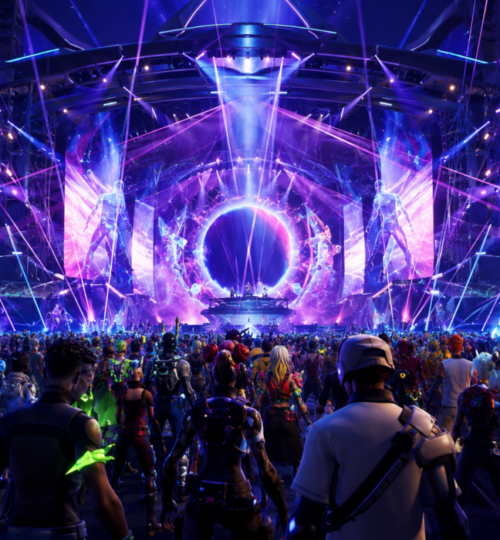
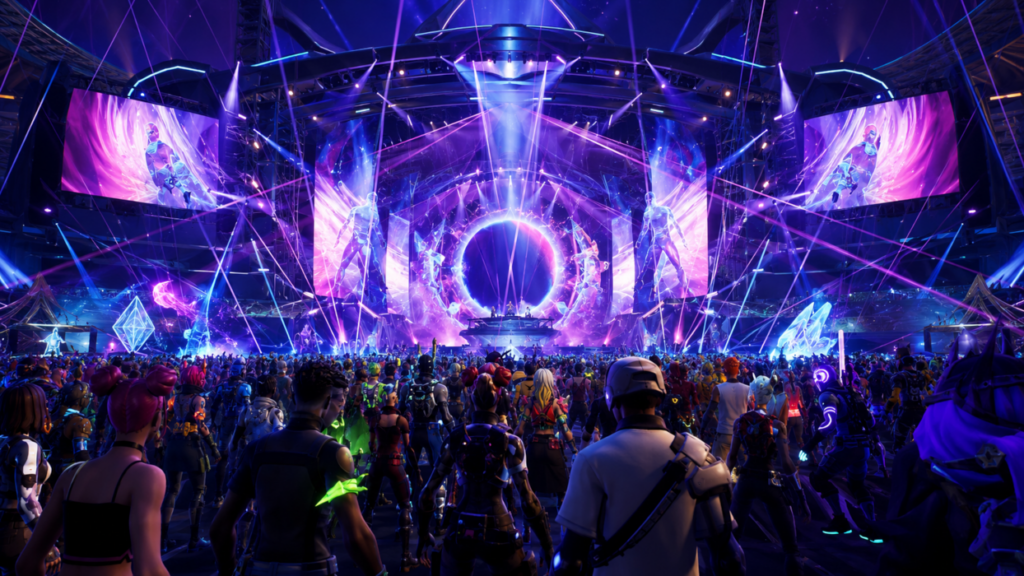
The key point is not that a famous artist appeared in a popular game. That part is easy to understand. The bigger shift is that millions of players were not watching a video inside a menu. They were logged into a shared event, wearing their skins, standing with friends, emoting, reacting, and becoming part of the spectacle. The audience was not outside the show. The audience was inside the show.
That changes everything for gaming communities, especially legacy communities built around ladders, clans, tournaments, and shared identity. A live event does not need a scoreboard to matter. It creates memory. It gives players a timestamp. It gives a community something to argue about, laugh about, and attach itself to. That is old-school multiplayer culture dressed in new technology.
Fortnite Turned the Lobby Into a Venue
Fortnite did not invent virtual concerts, but it turned them into mainstream gaming culture. Marshmello’s 2019 performance was the first major proof that a battle royale map could pause combat and become a stage. Travis Scott’s Astronomical pushed the idea into a different category. The event was short, strange, polished, and impossible to recreate in a normal arena. A giant Travis Scott avatar walked across the island. Gravity shifted. Players were thrown through surreal scenes. The concert worked because it did not try to mimic a physical show too closely.
That is the design lesson many publishers still miss. The best in-game events are not webcam concerts with better lighting. They are interactive productions built around the strengths of the game engine. Scale can break normal rules. Physics can become choreography. The crowd can fly, swim, bounce, teleport, or fight between segments. The artist is not bound by a stage. The map becomes the stage.
Ariana Grande’s Rift Tour in Fortnite followed the same logic, presenting a scheduled multi-show experience across August 6 to August 8, 2021, rather than a single one-time broadcast. Epic described it as a musical journey inside Fortnite, with multiple showtimes so players in different regions could attend. That scheduling detail matters. Games are global. Live events inside games have to respect time zones, server demand, and replay culture in a way that old venue touring never had to handle.
Then Fortnite kept going. Remix: The Finale in November 2024 featured Snoop Dogg, Ice Spice, Eminem, and Juice WRLD, and The Verge reported that the event tied directly into the next season and chapter launch. Polygon reported that more than 14 million concurrent players joined in-game, with more than 3 million additional viewers watching streams online. That is not just a concert anymore. That is a season finale, album promo, brand event, social hangout, and platform showcase packed into one appointment.
Roblox Built the Youth Culture Version
Roblox approached the same idea from a different angle. Fortnite events often feel like massive cinematic takeovers. Roblox events feel more like custom-built hangout spaces wrapped around music, merch, quests, and avatar identity. The Lil Nas X Concert Experience on Roblox drew more than 35 million visits according to IQ Magazine, while a Roblox staff account later referenced more than 37 million attendees. The exact framing differs by source, but the signal is clear. Roblox proved that young audiences would show up for music inside a game platform at enormous scale.
The Twenty One Pilots Concert Experience showed another layer. Roblox and Warner Music Group announced the event in September 2021 as an interactive virtual concert, and the official Roblox page promoted setlist control, quests, hidden tokens, virtual merch, and rewards. That is very different from a standard stream. The player has things to do. The crowd has a reason to return. The event becomes part concert, part scavenger hunt, part fan club, and part storefront.
That format fits Roblox because identity is already central to the platform. Players do not just attend as generic viewers. They arrive as avatars they have built, styled, and paid for. For music labels, that is powerful. A hoodie in the real world is merch. A digital outfit in Roblox can become social proof inside a player’s daily hangout space. The value continues after the music stops.
There is a hard business edge hiding under the fun. Virtual goods, branded spaces, and limited-time rewards create revenue without shipping boxes, renting arenas, or printing tickets. That does not make physical concerts obsolete, not even close. It does mean gaming platforms now compete for the same attention window that used to belong to music videos, award shows, and livestream premiers.
Minecraft Proved Players Could Build Their Own Scene
Minecraft sits in a different lane because many of its music events have been community-built rather than publisher-controlled. During the pandemic years, Minecraft festivals gained attention because artists and organizers could create venues inside a familiar sandbox. Variety covered the rise of Minecraft music festivals in 2020, including Block by Blockwest, as musicians experimented with digital gathering spaces while physical shows were limited.
The Minecraft angle matters because it feels closer to old community server culture. A group of players builds a space, promotes an event, handles moderation, and gives people a reason to log in. That sounds a lot like the old clan forum era, just with better tools and a far larger potential audience.
For legacy esports communities, this is where the topic gets interesting. Not every event has to be backed by Epic, Warner Music, or Disney. Smaller games, private servers, modded worlds, and community hubs can host social events that sit beside competition. A clan anniversary, awards night, rivalry reunion, draft reveal, charity showmatch, or season kickoff can all borrow from the in-game concert playbook without needing a celebrity avatar the size of a skyscraper.
Live Entertainment Is Now Part of Game Retention
Publishers care about in-game events because they bring players back at specific times. Battle passes and ranked resets create routine. Concerts and live events create urgency. That urgency is rare in a world where most digital content can be paused, skipped, replayed, or watched later at double speed.
A scheduled event gives players a reason to message the squad. It turns the login screen into an appointment. Even players who have drifted away may return for one night because the event feels like something people will talk about the next day. That fear of missing out can be annoying, but it works.
The effect is strongest when the event ties into the game itself. A concert that leaves the map unchanged may be fun, but a concert that triggers a new season, changes a location, unlocks cosmetics, or introduces a story beat becomes part of the game’s history. Players remember where they stood. They remember who was in voice chat. They remember the server lag, the jokes, the broken queue, and the one friend who missed it by five minutes.
That kind of memory is valuable. Competitive communities have always understood this. Nobody remembers every ladder match from 2006, but they remember the rivalries, disputes, upsets, forum posts, late-night scrims, and championship runs. Live events tap into that same social glue. They give people shared stories.
The Blurred Line Is Not a Gimmick Anymore
The phrase “game platform” used to mean hardware, storefront, or online service. Now it can mean a social venue, entertainment network, creator economy, and media channel at the same time. Disney’s 2024 plan with Epic makes that direction impossible to ignore. Disney announced a $1.5 billion investment in Epic Games tied to a new games and entertainment universe connected to Fortnite, built around Disney, Pixar, Marvel, Star Wars, Avatar, and more.
That move says the quiet part loudly. Major entertainment companies no longer see games as merchandise extensions for movies. They see games as places where audiences can spend time with the brand between releases. That means the next big Star Wars or Marvel push might not just be a trailer drop. It might be a playable event, an explorable space, a social premiere, or a limited-time game mode.
For players, the upside is obvious. Games can feel alive. A world that changes around shared events feels less static than a menu full of daily quests. The downside is also real. Too much brand crossover can make a game feel like a mall with guns. There is a point where every island, map, and lobby starts to feel rented out to whichever company paid for the week.
The best events respect the game first. The worst ones treat players as foot traffic.
Esports Can Learn From the Showmanship
Traditional esports has spent years trying to look like sports television. Studio desks, analyst segments, player walkouts, sponsor reads, and polished broadcasts all have their place. Still, esports sometimes forgets that games can do things physical sports cannot. In-game concerts and live events are a reminder that competition does not have to be the only shared moment.
A season championship could include an in-client fan zone. A ladder reset could open with a live map event. A community awards show could happen inside a playable lobby. A new tournament bracket could be revealed through an interactive space instead of a static web page. None of that replaces good matchmaking, clear rules, anti-cheat, or fair dispute handling. It adds atmosphere.
Legacy communities should pay attention here because they already have what many modern platforms try to fake. They have history. They have names people remember. They have old rivalries, screenshots, leaderboards, archived teams, and stories that newer platforms cannot buy. The in-game event model gives those communities a way to present history as an active experience instead of a dusty archive.
A revived multiplayer hub could host a “legacy night” where old ladders are showcased, veteran players are recognized, and current players compete in featured matches. That is not a concert, but it comes from the same design mindset. Make the community gather at the same time. Give them something to see. Give them something to do. Give them a reason to say, “I was there.”
The Risks Are Bigger Than Bad Music
The growth of in-game events brings problems that players should not ignore. Licensing gets messy fast. Music rights, artist likenesses, virtual merch, global territories, replay permissions, and user-generated clips all create legal friction. A physical concert is already complicated. A game event adds platforms, avatars, streaming, cosmetics, and player-created content into the mix.
Moderation is another issue. A live crowd inside a game can be funny, chaotic, and hostile in the span of five seconds. Voice chat, emotes, usernames, user-made signs, and chat spam can turn a branded event into a mess if the tools are weak. Roblox and Fortnite are built with large-scale moderation systems, but smaller communities need to think carefully before copying the model.
There is also the preservation problem. A normal album can be replayed. A film can be archived. A match can be recorded. A live in-game event is harder to preserve because the experience depends on servers, player position, interactivity, game version, cosmetics, and timing. Once the event ends, the real version may be gone. Videos capture the view, but not the presence.
That should hit home for any legacy gaming community. We already know how much history disappears when old forums die, stat pages break, image hosts vanish, and server browsers go dark. If games keep becoming live entertainment venues, preservation has to be part of the plan from the start. Screenshots, match data, event logs, player lists, VODs, and written recaps all matter.
Players Still Decide What Feels Real
The future of in-game entertainment will not be decided only by publishers, music labels, or film studios. Players will decide what feels worth showing up for. They are very good at smelling fake energy. A lazy crossover can trend for a day and be forgotten by the weekend. A well-built event can become part of gaming memory for years.
The best events understand that players are not passive viewers. They want agency, even in small ways. They want to move, react, stand next to friends, wear the right skin, unlock something weird, clip a moment, and talk trash in voice chat. That is the difference between watching entertainment and inhabiting it.
Gaming and live entertainment are not merging because executives discovered a new buzzword. They are merging because games already solved the hardest part of online culture. They gave people shared spaces where identity, competition, performance, and friendship can exist at once. The concert is just one more activity inside the arena.