
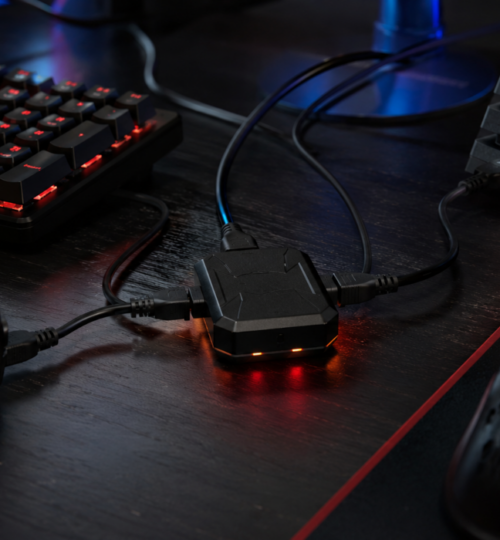
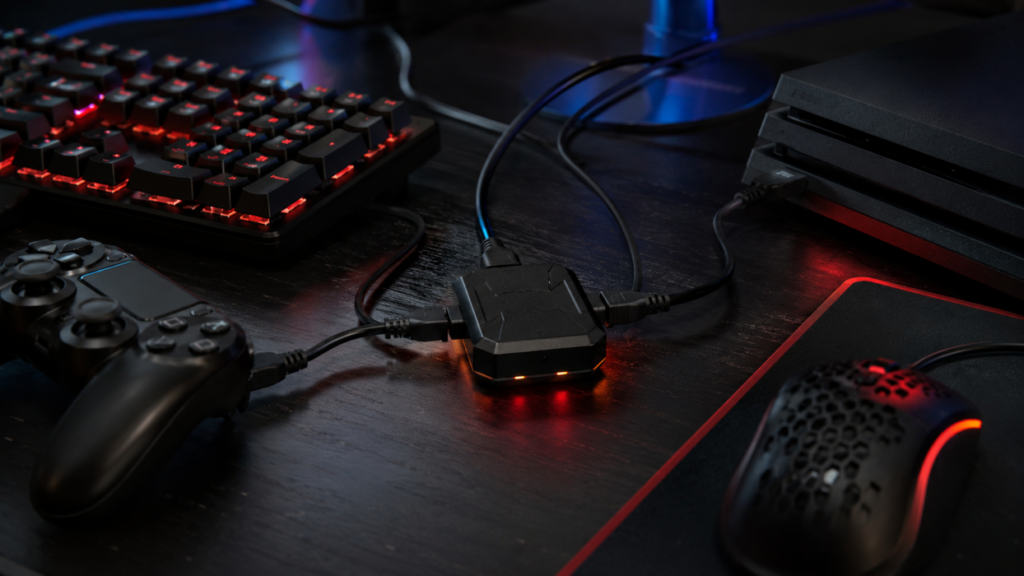
Hardware-level input spoofing has become one of the dirtiest problems in competitive multiplayer because it hides in a space most players never see. The cheat is not always a wallhack on a desktop. It is not always an aimbot process sitting in memory. Sometimes it is a little box between a controller, mouse, keyboard, or console, quietly translating one form of input into another and feeding the game a story that is technically false.
That is why this fight feels different. Traditional anti-cheat was built to catch software. Scan memory. Check running processes. Watch for signatures. Flag injected code. Ban the account. That model still matters, but hardware spoofing attacks the trust chain before the game even gets a clean look at what the player is doing. The match server sees controller input. The player may be using mouse aim. The recoil pattern looks impossibly stable. The movement looks machine-clean. The device reports just enough normal behavior to avoid easy detection.
For legacy competitive communities, this is not some abstract industry problem. Ladders, tournaments, scrims, pickup matches, and ranked queues only work when players believe the result came from skill. Once hardware devices start bending aim assist, recoil, macros, and control identity, every close match gets poisoned by suspicion.
The Cheat Moved Outside the Game
Old-school cheating usually had a digital smell. Trainers, memory editors, modified files, and injected DLLs left traces. Anti-cheat teams learned to hunt those traces, and cheat makers learned to hide them. That race still exists, but input spoofing moved part of the battle outside the machine.
Devices like XIM-style adapters, Cronus-style scripting boxes, Titan-style adapters, strike packs, and similar tools can sit between the player and the platform. Some translate mouse and keyboard movement into controller signals. Others automate repeat actions, smooth recoil, alter stick behavior, or trigger actions faster and more consistently than a human hand should. The player still has to aim, move, and shoot, but the device bends the rules around them.
That is the part that makes the debate so ugly. Some users hide behind arguments about accessibility, comfort, or preference. Legitimate accessibility hardware absolutely has a place in gaming, and anti-cheat teams have to protect those players. The problem starts when a device is configured to gain aim assist while using mouse precision, flatten recoil, run macros, or disguise an input method that the game was not balanced around. That is not preference. That is a competitive advantage built on deception.
Why Mouse and Keyboard Spoofing Hits Console Shooters So Hard
Console shooters often tune aim assist, recoil, dead zones, and sensitivity curves around controllers. Sticks are less precise than a mouse, so the game gives controller players help. That help may include slowdown near a target, rotational assistance, or other tuning that makes controller play viable in fast fights.
Spoofing breaks that contract. A player can use mouse-like precision while the game still thinks a controller is connected. That means they may receive controller-side aim behavior while aiming with a more precise device. In high-skill shooters, that is not a small edge. It changes how duels feel, how peeks resolve, and how much confidence players have in the ranked ladder.
This is why games such as Rainbow Six Siege, Apex Legends, and Call of Duty have spent years trying to address third-party input devices. Siege’s MouseTrap system was built to detect console input spoofers. Apex’s anti-cheat team has taken a public hard line against devices that manipulate input behavior. Call of Duty’s Ricochet team has also moved toward detecting suspicious input patterns rather than only chasing device names.
That shift matters. Naming devices is always one step behind. The box gets a firmware update. The adapter changes how it reports itself. The script gets tuned. The better move is to study behavior, then ask whether the input stream looks like a person or like a device trying to imitate one.
The Hard Part Is Proof
Players want instant bans. Developers want high confidence. Those two desires collide.
Input detection is messy because humans are inconsistent in surprisingly consistent ways. Real players overshoot. They correct late. They panic. They make small mistakes under pressure. Their recoil control changes based on fatigue, weapon choice, stance, frame rate, and stress. A hardware-assisted player may still look human for most of a match, especially if the settings are tuned softly.
The anti-cheat team has to separate the cracked veteran from the assisted fraud. That is not easy. A player with 5,000 hours can have incredible mouse control. A controller demon can track targets in ways that look absurd to casual players. A disabled player may rely on an adapter for valid reasons. A new gaming mouse can change movement behavior overnight. A false ban in this category is not just a support ticket. It is a reputation hit, and in ranked communities, reputation is currency.
So modern detection tends to be layered. It may examine input timing, analog stick curves, recoil behavior, micro-corrections, button cadence, device signatures, account history, match telemetry, and platform security signals. No single signal should carry the whole case. The stronger systems build a pattern over time, then act when enough evidence stacks up.
That slower approach frustrates honest players, but it is better than turning ranked into a ban casino.
DMA Cheats Raised the Stakes on PC
Hardware cheating is not limited to controller spoofing. On PC, direct memory access devices have become a high-end threat. These setups can use external hardware to read system memory from another machine, pulling game data while avoiding many normal software checks. The cheat can operate outside the usual process space, which makes it harder for classic anti-cheat tools to see.
Riot’s Vanguard has become the most aggressive example of this arms race. Riot pushed hard into system security, including IOMMU enforcement, Secure Boot expectations, virtualization-based security, and motherboard BIOS fixes tied to DMA defenses. The reason is simple. If a cheat can read memory through hardware before the operating system has locked down the device path, normal anti-cheat checks may arrive too late.
That creates a weird new standard for competitive PC gaming. Anti-cheat is no longer only about the game client. It is about boot order, firmware, motherboard behavior, security settings, and whether the platform can prove that the system is not giving unknown hardware free access to memory.
Plenty of players hate that direction. They are not wrong to be wary. Kernel-level anti-cheat and strict system requirements raise privacy, compatibility, and control concerns. Linux players, custom PC builders, and privacy-minded users have good reasons to ask hard questions. Still, the industry is being pushed there because cheat makers already crossed that line. Once cheating leaves the application layer, defense follows it down.
The Privacy Fight Is Not Going Away
Anti-cheat teams are asking players to accept deeper trust. Players are asking studios to prove they deserve it. That tension is not going to vanish.
A game asking for kernel-level access is a big ask. A game blocking launch because of BIOS settings is also a big ask. Players remember bad launches, broken drivers, false positives, and companies that were not transparent. They do not want a shooter acting like enterprise security software unless the studio can explain why the trade is needed.
The best anti-cheat teams communicate plainly. They explain what problem they are solving, what signals they collect, what settings are required, and how appeal paths work. Vague statements do not cut it anymore. Competitive players may accept aggressive defense, but they want proof that the cure is not reckless.
There is also a platform split here. PC can support deeper system checks, but that creates friction with open systems. Consoles are more locked down, but adapters can exploit trust in approved input paths. Cloud gaming adds another wrinkle because the input stream and game simulation may live in different places. Every platform has a weak point.
Why Detection Is Becoming Behavioral
The future of input spoofing detection is behavioral because hardware identity can lie. A device can claim to be a controller. A firmware update can change its footprint. A user can copy safe-looking settings from a forum. The device name matters less than what the player’s inputs do under pressure.
Behavioral detection watches the rhythm of play. It looks at how recoil is controlled across long samples, how aim corrections occur, how button presses line up with weapon fire, how analog movement behaves, and whether the signal has machine-like regularity. It can compare patterns across weapons, modes, patches, and input types.
This is where anti-cheat gets both powerful and dangerous. Powerful because it can catch cheating that device scans miss. Dangerous because behavior is not always clean evidence. A pro player and a cheater can both look abnormal compared to the average user. That means behavioral systems need careful thresholds, human review in serious cases, and strong appeal processes.
A community ladder has the same problem on a smaller scale. Admins can watch demos, compare match history, review disputes, and look for patterns, but gut feeling is not enough. Suspicion should start the review. Evidence should decide the action.
The Accessibility Problem Needs Respect
Anti-cheat cannot treat every adapter as evil. Some players need alternate input setups to play at all. That includes adaptive controllers, custom switches, remapping tools, foot pedals, one-handed setups, and other assistive gear. A serious enforcement policy must leave room for real accessibility.
The line should be based on competitive effect. A device that allows a player to press the buttons they physically cannot press is not the same as a device that grants recoil scripts or aim assist abuse. A remap for comfort is not the same as a macro that fires a perfect sequence every time.
Studios need better language here. So do communities. Calling every non-standard device cheating throws disabled players under the bus. Pretending cheat boxes are harmless accessibility tools insults everyone else. The policy has to be clear enough that honest players understand it and strict enough that bad actors cannot hide behind it.
What This Means for Legacy Ladders and Modern Ranked Play
For a revived competitive hub, hardware spoofing changes how rulebooks should be written. Old rules about modified files and known hacks are not enough. Modern rules need to address input manipulation directly.
A strong rule set should ban automation, recoil scripts, unauthorized input translation used to gain aim assist, rapid-fire devices, macros that perform gameplay actions, and hardware setups that disguise one control method as another in restricted ladders. It should also define allowed accessibility exceptions and require players to disclose unusual setups in official events when needed.
The enforcement side should avoid theater. Public witch hunts wreck communities. Private review, demo requests, match telemetry, admin panels, and consistent evidence standards do more good than rage threads. If a player is removed, the reason should be specific enough to protect trust without teaching cheat makers how to dodge the system.
Competitive communities survived for years on reputation because the same names played each other every night. That still matters. The difference now is that reputation needs technical support. Admins need policies that account for devices, scripts, spoofed inputs, and pattern-based review, not just obvious wallhacks.
The Cat Keeps Changing Shape
The cat-and-mouse game is not slowing down. Cheat makers will soften scripts to look more human. Adapter makers will change firmware. Players will tune settings to stay below detection thresholds. Anti-cheat teams will respond with deeper telemetry, stronger platform checks, and better behavior models.
The next phase will likely feel less like catching a file and more like proving a chain of trust. The system will ask whether the device is what it claims to be, whether the operating system is secured, whether memory access is controlled, whether inputs look human, and whether the player’s history supports the current performance.
That is uncomfortable, but competitive gaming has always been shaped by trust. In 2004, trust was a server admin, a demo file, a GUID ban, and a community that remembered names. In 2026, trust includes firmware, telemetry, security settings, and input science. Same fight. Sharper tools.