Disclaimer: The views and opinions expressed in this article are solely those of the author. The mention of any products, services, or methods does not constitute an endorsement.
Ranked multiplayer has always put pressure on strangers to cooperate before they have any reason to trust one another. Five players can enter a lobby with different playstyles, different expectations, different tolerance for risk, and very different ideas about what “playing correctly” means. Add visible rank, promotion pressure, losing streaks, role disputes, smurfs, uneven matchmaking, and a limited window to recover from mistakes, and the social side of competition can become as demanding as the game itself.
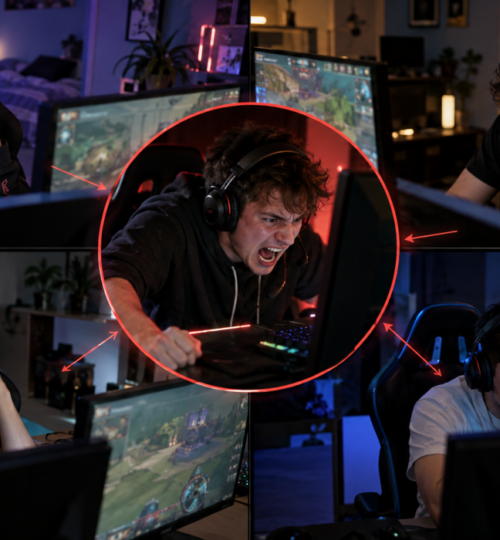
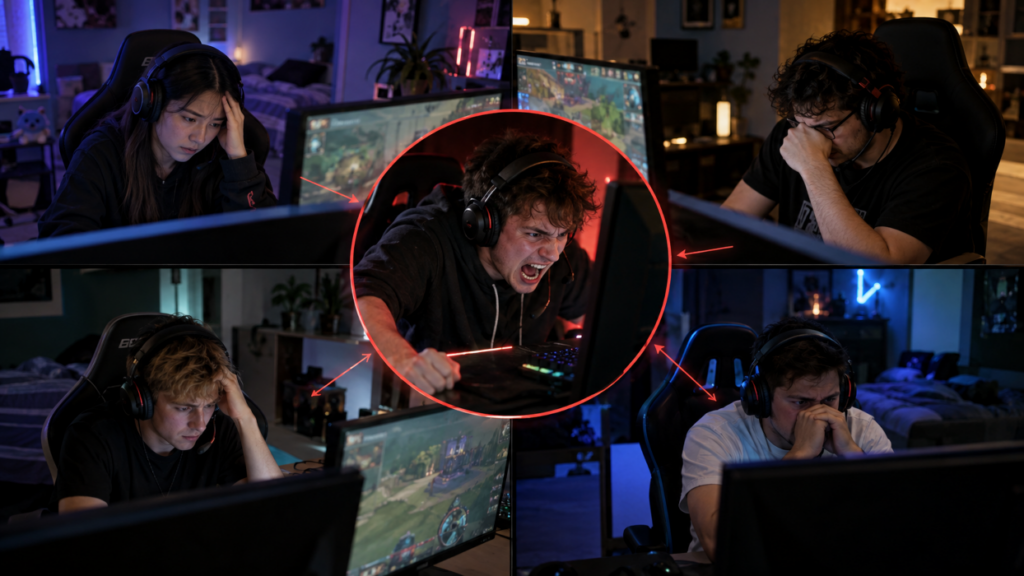
That pressure is part of what makes ranked play compelling. The problem begins when competitive intensity turns into behavior that actively reduces the team’s ability to compete. Flaming a teammate after a missed shot, spamming surrender votes, turning every death into an argument, refusing to communicate after one bad round, or spending the rest of a match proving somebody else was wrong all consume attention that could have gone toward winning the next fight. A constructive queue is not a polite queue where nobody gets frustrated. It is one where frustration does not become another gameplay disadvantage.
Toxicity Has a Competitive Cost
Players often discuss toxicity as a community or moderation problem, but in ranked play it is also a performance problem. Information arrives quickly, decisions are interdependent, and a teammate who stops processing useful calls because the channel has become hostile is effectively playing with less information. The same thing happens when two players begin litigating the previous round while the other three are trying to set up the next one.
Research increasingly supports the idea that toxic behavior can spread rather than remain isolated to one offender. A 2025 PLOS One study using a large set of Call of Duty: Modern Warfare III Team Deathmatch data found that exposure to toxic voice behavior had measurable effects on short-term engagement and increased the probability that exposed players would use similar language during the same match. The size of those effects varied depending on whether the toxicity came from teammates or opponents and whether the player’s team won or lost, so the results should not be treated as universal across every game or mode. Still, the basic pattern matters for ranked systems because one player can change the behavior of several others before the scoreboard closes.
That helps explain a familiar ranked collapse. One player makes a mistake, another responds with blame, the first player becomes defensive, somebody else joins the argument, and suddenly every new mistake carries social baggage from the previous one. The mechanical match is still happening, but the team is now spending part of its mental bandwidth managing conflict. In games built around timing, positioning, target priority, utility usage, economy, rotations, or synchronized pushes, that loss of shared attention is expensive.
Constructive Communication Is About Actionable Information
Good ranked communication does not require five strangers to become friends. It requires players to separate information that can affect the next decision from commentary that only evaluates somebody’s last decision. “Two pushing B, one tagged, smoke down in five” gives the team something to use. “Why are you always out of position?” may contain a criticism, but it gives no immediate instruction, no timing, and no clear recovery path.
The distinction becomes more obvious under pressure. A teammate who says, “Hold the angle, I can flash for you,” is coordinating an action. A teammate who says, “Stop peeking like an idiot,” may be reacting to the same tactical problem, but the message adds hostility while forcing the recipient to extract the useful part. Ranked comms work better when they reduce processing cost rather than increase it.
This does not mean competitive games need sanitized conversation. Banter, frustration, sharp calls, and emotional reactions have always existed in multiplayer competition, and some groups enjoy a rougher communication style among friends. The line changes when communication stops serving the match and starts targeting the person. A premade group can understand tone, history, and intent that a solo-queue teammate cannot, which is one reason the same sentence can land very differently depending on who says it and where.
Tilt Turns Small Errors Into Teamwide Problems
Ranked players rarely become toxic because they entered the queue planning to ruin an evening. More often, the trigger is cumulative frustration. A lost clutch follows a bad previous match, a teammate ignores a call, someone types a sarcastic comment, and the player begins interpreting every later decision through the assumption that the team is incompetent.
Once that happens, blame can become a form of self-protection. If the loss is entirely somebody else’s fault, then the player never has to examine the missed trade, greedy re-peek, late rotation, poor cooldown usage, or bad economy choice that was actually under personal control. That mindset may feel stabilizing in the moment, but it is terrible for improvement because ranked progression depends on finding repeatable mistakes in your own play.
Constructive players can still be angry. The difference is that they keep the anger from becoming the team’s operating system. They shorten communication, stop arguing about completed plays, and move attention toward the next controllable decision. Sometimes the highest-value comm in a deteriorating lobby is simply returning to clean information after everybody else has stopped doing it.
Developers Are Moving Moderation Closer to the Match
Modern moderation systems increasingly try to intervene before disruptive behavior becomes a permanent feature of a player’s habits. Riot said its Riot Voice Evaluation system expanded English voice moderation across nearly all Riot regions in 2024, spanning PC, Xbox, and PlayStation for VALORANT. Riot has also used escalating communication penalties and automated text evaluation across its games, reflecting a broader industry move toward detecting patterns rather than relying only on isolated post-match reports.
Blizzard has taken a similar approach in Overwatch 2. By Season 18, its Defense Matrix work included real-time text moderation that can hide messages classified as potentially harmful or offensive, while still allowing players to reveal them if they choose. Earlier systems also used voice transcription, reporting, endorsement restrictions, and ping-based communication as ways to reduce the damage caused by abusive channels without removing useful team coordination.
Rainbow Six Siege provides another useful example because Ubisoft has tied behavior to a visible reputation framework. In an August 2025 Siege X update, Ubisoft reported declines in its lowest reputation categories after system activation, along with lower text and voice communication report rates. Ubisoft also said that, among players temporarily banned after accumulating excessive negative reputation actions, three out of five did not go on to offend again during the period it measured. Those are publisher-reported figures rather than independent proof that reputation systems solve toxicity, but they suggest that feedback and consequences can change behavior for a meaningful share of players.
Pings Matter Because Voice Is Not Always the Best Channel
One of the biggest changes in modern team games is the quality of nonverbal communication. Contextual pings, radial wheels, map markers, danger alerts, cooldown indicators, and objective timers allow teams to exchange useful information without requiring every player to speak. That matters for players who avoid voice because of harassment, language barriers, disability, household noise, social preference, or simply the desire to concentrate.
Good ping systems also limit the amount of emotional interpretation attached to a call. A danger ping on a flank is harder to turn into a personal argument than a frustrated voice message after the flank succeeds. Designers have recognized this value. Blizzard, for example, has explicitly positioned Overwatch 2’s ping system as an alternative and supplement to voice communication, particularly outside the highest competitive tiers.
The design problem is that any communication tool can be turned into a harassment tool if repetition is unlimited. Anyone who has been spam-pinged after dying knows that a theoretically neutral signal can carry plenty of hostility. Rate limits, contextual cooldowns, smart muting, and controls that let players silence one communication channel without losing the rest are therefore part of competitive design, not merely quality-of-life extras.
Accountability Works Better Than Mid-Match Coaching
Ranked strangers frequently make the mistake of trying to coach one another during a live match. The intention may be legitimate, but unsolicited coaching often arrives after an error, when the recipient is already frustrated and has little time to process a lesson. Even accurate advice can sound like blame when delivered in the middle of a losing streak by somebody the player met three minutes earlier.
A better form of accountability is specific, immediate, and connected to shared execution. Asking for a slower setup, requesting utility before an entry, calling for a regroup, or saying which angle is uncovered gives teammates a choice they can act on. Debating whether somebody’s entire playstyle is wrong belongs after the match, preferably with players who actually asked for that discussion.
This also protects team morale from fake certainty. Ranked games contain incomplete information, and spectatorship from a death screen can create the illusion that the correct answer was obvious. The player who died may have had different audio, timing, cooldown information, visibility, or positioning than the teammate criticizing them. Teams lose less time when they treat uncertain situations as information problems instead of character judgments.
Muting Is a Competitive Tool, Not a Surrender
Some players resist muting because they fear losing a valuable call. That tradeoff is real, especially in tactical shooters and high-level team games, but there is a point where a channel produces more distraction than information. A player who has spent five minutes insulting teammates is unlikely to become the team’s most disciplined shot-caller in round six.
Selective muting is often better than abandoning communication entirely. Many games separate voice, text, pings, or individual players, allowing a competitor to remove the disruptive source while keeping the rest of the team connected. The goal is not punishment. It is restoring a usable information environment so the remaining players can keep competing.
Reporting serves a different purpose and should stay separate from the argument itself. Threatening to report somebody, recruiting the lobby into a report pile-on, or announcing every report generally adds another fight to the match. Quietly using the reporting tools after the relevant behavior gives moderation systems the signal they were built to receive without turning enforcement into another form of chat warfare.
Ranked Culture Is Shaped by What the Game Rewards
Punishment can remove repeat offenders, but healthy ranked play also depends on what the game makes easy, visible, and socially rewarding. A system that celebrates only kills, damage, or MVP placement can unintentionally devalue the communication, support play, objective work, and restraint that often decide close matches. Recognition systems, reputation signals, commendations, and better post-match feedback can give players reasons to value contributions that do not fit neatly on a combat scoreboard.
Those systems need care because popularity is not the same as good behavior. Premade groups can commend one another, unpopular roles can receive less recognition, and highly skilled players can be unpleasant while still collecting praise for carrying games. Reputation therefore works best as one signal among several, combined with behavior detection, report credibility, match history, and transparent penalties that give players a reasonable understanding of what triggered action.
The strongest ranked environments are usually the ones where the competitive incentives and the social incentives point in the same direction. Players do not need forced cheerfulness, scripted compliments, or a lobby full of strangers pretending every mistake was fine. They need tools and norms that keep useful information moving, make harassment costly, let people recover from one bad interaction, and keep the match focused on the decisions that can still change its outcome.