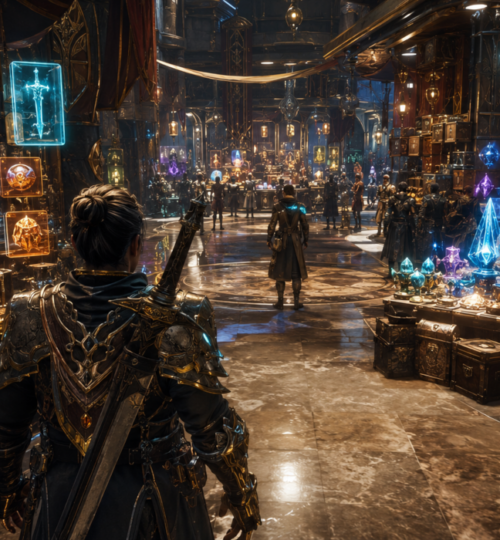

Diablo 4 Lord of Hatred Expansion: A New Chapter for Sanctuary’s Endless War
The world of Sanctuary has never been static. From the earliest days of Diablo II ladder resets to the live-service evolution of Diablo IV
For a game that spent years drifting in uncertainty, Pragmata has quietly pulled off something rare in modern development cycles.
There is something undeniably appealing about a small form factor gaming rig.
There is a moment every long-time multiplayer player recognizes. The servers grow quieter. Matchmaking takes longer.
For years, the trajectory of PC gaming hardware felt predictable. More cores, faster GPUs, and steadily increasing RAM capacity.
For a certain generation of gamers, Saturday mornings were sacred. Before esports arenas, before ranked ladders, before patch notes dictated the rhythm of play, there was a simpler ritual.
Virtual animals are a quiet feature that became a core experience. Massively multiplayer online games have evolved far beyond simple character progression and combat systems.
Cloud gaming has moved from a niche concept to a serious contender in the future of gaming.
There was a time when your choice of platform defined your multiplayer experience. If your friends were on a different console, you either bought the same system or you played alone.
The PC hardware space rarely stands still, but every so often a shift arrives that feels less like an upgrade and more like a crossroads.
Nvidia’s reveal of DLSS 5 was supposed to be one of the biggest gaming-tech stories of the week. In a purely technical sense, it still is.
For most of gaming history, non-player characters have lived inside carefully written boundaries. Their lines were typed into scripts.
For decades, many consumers have shared a quiet suspicion about modern electronics: devices do not seem to last as long as they used to.
For most of the history of PC gaming, Linux existed on the margins. Enthusiasts loved it for its openness, privacy, and control, but gamers rarely treated it as a serious platform for playing modern titles.
There is something timeless about being stranded far from home. For decades, Star Trek: Voyager told a story about survival on the edge of explored space.